


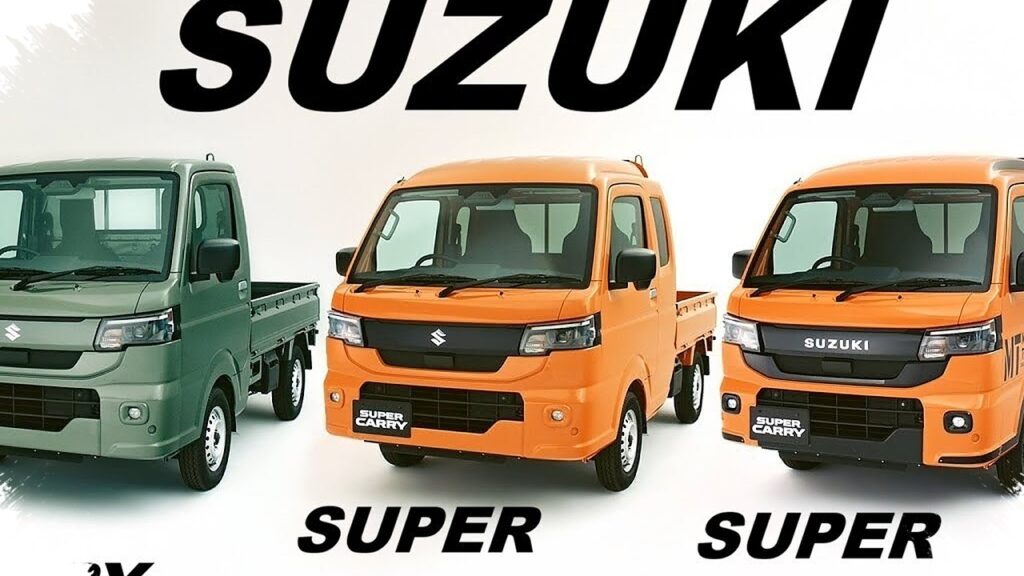
For many small businesses, the most valuable vehicle is not the one with the biggest engine or the flashiest design, but the one that keeps daily operating costs under control. That is where the Suzuki Carry Minivan 2026 stands out, with fuel efficiency that fits the demands of routine distribution work.
Its appeal is straightforward: it is built to work every day, carry goods consistently, and avoid unnecessary fuel spending. For UMKM operators that rely on repeated short trips and scheduled deliveries, that balance can matter as much as payload or durability.
Fuel use that stays within a practical range
The Suzuki Carry Minivan 2026, powered by a 1.5L DOHC engine, is reported to return around 15 to 17 km per liter on outside-city roads or highways at stable speeds. For a light commercial vehicle that often transports cargo, that level of efficiency is considered competitive.
In city use, fuel consumption is in the range of 13 to 15 km per liter. The result depends on driving style, road conditions, and the amount of load carried.
Those numbers are relevant because fuel spending is one of the most visible expenses in daily business operations. A vehicle that uses less fuel can help small businesses keep recurring costs lower and protect margins more effectively.
Longer reach from a single fill-up
With a fuel tank capacity of around 43 liters, the vehicle can theoretically cover about 645 to 731 kilometers in ideal outside-city conditions. That range gives the model an advantage for medium-distance distribution routes.
Fewer stops for refueling can make daily logistics easier to manage. For businesses with steady delivery schedules, that also helps keep routes more organized and productive.
Why the mechanical setup supports efficiency
The efficiency is not only about fuel numbers. The K15B-C engine with 1,462 cc displacement and DOHC technology is designed to deliver solid performance while maintaining efficiency through a precise injection system.
Its relatively light weight in the light commercial segment also contributes to the result. That setup helps the engine work more efficiently, whether the vehicle is carrying standard cargo or accelerating in traffic.
The Suzuki Carry Minivan 2026 uses a 5-speed manual transmission. This helps keep engine revs in an optimal range, supporting a better balance between usable power and fuel economy.
A vehicle that fits daily business use
For UMKM operators, an operational vehicle is more than transport. It is part of the cost structure, so fuel efficiency often becomes a deciding factor when choosing between models.
The Suzuki Carry Minivan 2026 is considered suitable for small to medium goods distribution. That makes it relevant for businesses that need frequent deliveries while keeping expenses under control.
It also fits package and document delivery services, where high mobility is essential and fuel efficiency has a direct effect on operating costs. In the food sector, it can support catering and mobile culinary businesses by helping reduce fuel spending when deliveries must be made to multiple points in one day.
Other suitable uses include mobile grocery sales and everyday cargo transport. These businesses typically need a vehicle that is agile, durable, and economical because routes are dense and travel happens every day.
Still competitive in the light commercial segment
Competition in the light commercial category often comes down to efficiency and reliability. The Suzuki Carry Minivan 2026 remains appealing because it offers fuel economy without giving up its core role as a working vehicle.
That position keeps it relevant for business owners looking for a practical solution. When operating costs are the main concern, a vehicle that is easy to maintain, tough enough for routine work, and efficient on fuel remains one of the most rational choices for daily distribution.