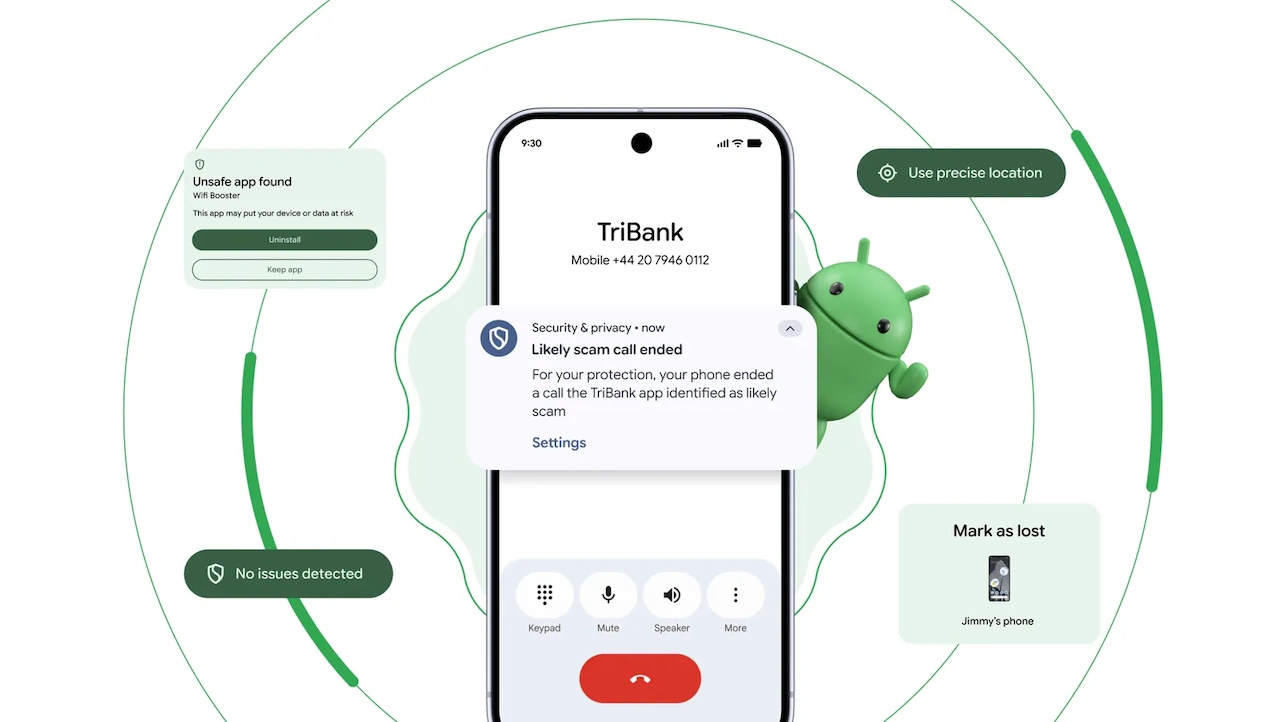
Android is preparing a new safeguard that can end suspicious calls from people claiming to be from a bank before the conversation goes any further. The move targets a fraud tactic that has remained effective because the caller ID can be made to look legitimate, which lowers user suspicion at the worst possible moment.
Google announced the update during The Android Show, alongside several other security improvements for Android. The broader direction is clear: reduce financial scams, strengthen protection when a phone is lost or stolen, and limit how much data apps can access.
Automatic checks for bank calls
The new feature is designed to verify whether a call that claims to come from a bank is actually valid. Google is working with several banks and financial companies to make that check happen automatically on the device.
Android will contact the relevant banking app to confirm whether there is an active official call for the user. If the app reports that no such call exists, Android will end the call automatically. The system will also reject calls from bank numbers marked as “inbound-only,” meaning numbers that are meant only to receive incoming calls.
Google says this type of impersonation has helped scammers steal nearly US$1 billion a year globally. That is one reason the company is pushing for a check that happens before the user has a chance to be manipulated by a convincing caller identity.
There is one important requirement. The user must have the bank’s app installed on the device for the verification to work. Google says the feature will be available on devices running Android 11 and later, with an initial rollout expected in the coming weeks. Early support will include Revolut, Itaú, and Nubank.
Tighter controls if a phone is stolen
Google is also expanding protections for situations where a phone is lost or stolen. The new controls center on the Mark as Lost feature in Find Hub, which is meant to make it harder for thieves to get into the device.
With the upgrade, users will be able to require biometric unlock in addition to a pattern or PIN. That adds another layer of friction for anyone trying to bypass the existing lock method and get access to the phone quickly.
Android will also hide Quick Settings options under certain conditions. That matters because it can prevent a thief from easily turning on new Wi‑Fi or mobile data connections, which could otherwise help them get around active protections.
This part of the update will arrive on all new devices with Android 17. Google also plans to bring it to devices running Android 10 or later in several countries, including Argentina, Chile, Colombia, Mexico, and the UK.
More limited access to location and apps
The security changes do not stop at calls and stolen-device protection. Google is also introducing a new location control for apps, so they can access location only when a feature that truly needs it is actively in use.
That narrower access should make location permissions easier to understand and reduce situations where apps can keep using location without a clear purpose. It is part of a wider effort to make data access more deliberate and less open-ended.
At the system level, Android is also getting a dynamic protection layer that watches for apps behaving in unusual ways. If the system detects suspicious activity, it will give users the chance to remove the app.
Taken together, the changes show Android moving toward more automatic, device-level security decisions. The most visible change for many users may be the one that can cut off fake bank calls in real time, closing a long-running gap that scammers have used to their advantage.
Source: www.androidpolice.com-

-

-

-