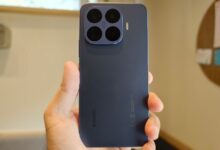
Honor’s Win Turbo is shaping up to stand out in a market where battery size still often stops at 5,000mAh to 6,000mAh. The biggest reason is simple: the device is reported to carry a 10,000mAh battery, and that kind of capacity immediately changes expectations for how long a phone can last under heavy use.
What makes the device even more notable is the endurance claim attached to it. Honor is said to promise up to 14 hours of gaming on a single charge, which places Win Turbo squarely in the territory of phones built for long, demanding sessions rather than light daily use.
A clear push toward heavy-use performance
The battery focus suggests Honor is positioning Win Turbo as a performance-oriented smartphone with a strong emphasis on stamina. That direction fits the needs of modern mobile gamers, especially as graphically demanding games and on-device AI features continue to place more pressure on battery life.
Manufacturers across the industry have been trying to answer that problem with larger batteries, but they also have to avoid making phones too thick or too difficult to cool. Honor appears to be approaching the challenge by combining capacity with more efficient power handling instead of relying on size alone.
AI-powered energy management is part of the plan
Reports around Win Turbo indicate that Honor wants to pair the large battery with AI-based power management. The idea is to distribute power dynamically while the phone is being used for gaming, streaming, or other intensive tasks.
That kind of system matters because demanding usage can drain a battery quickly if power is not controlled well. With smarter energy handling, Honor aims to keep performance stable while slowing down excessive energy loss during long sessions.
The company is also said to be using high-density battery material, which would help fit such a large capacity into a body that remains relatively slim. That detail is important, since high-capacity batteries are often associated with devices that are thicker and heavier than average.
Built for gamers, but not only for gaming
The 14-hour gaming claim sends a strong signal about the intended audience. Hardcore mobile gamers are likely the clearest target, but the same battery advantage also matters for long video streaming sessions and other forms of content consumption.
In that sense, Win Turbo is being framed as more than just a gaming phone. It is also being positioned as a device for users who want extended runtime for everyday heavy use without constantly searching for a charger.
Cooling and the chipset remain undisclosed
Honor is also said to be improving the cooling system on Win Turbo. That is a relevant detail because modern chipsets depend heavily on thermal conditions, especially during prolonged gaming.
The chipset itself has not been revealed. Some industry reports expect the phone to use either a flagship-class or sub-flagship processor with better power efficiency, but Honor has not confirmed that information.
Part of a wider battery trend
Win Turbo also reflects the broader rise of silicon-carbon battery technology in the smartphone industry. This approach allows manufacturers to increase energy density without dramatically enlarging the battery’s physical size.
Several Chinese brands, including Honor, Xiaomi, and OnePlus, are reportedly moving in that direction as they look to extend battery life in newer devices. At the same time, gaming-focused hardware remains active in the broader market through names such as ASUS with its ROG Phone line and Xiaomi through Black Shark in earlier periods.
Even so, gaming features are no longer limited to niche devices. High refresh rate displays, active cooling, and larger batteries are increasingly becoming part of mainstream smartphone competition, with a stronger focus on efficiency and long-term usability.
Honor has not announced a launch schedule for Win Turbo, and global availability remains unconfirmed. Pricing, fast charging support, and distribution outside China have also not been disclosed.
Source: selular.id