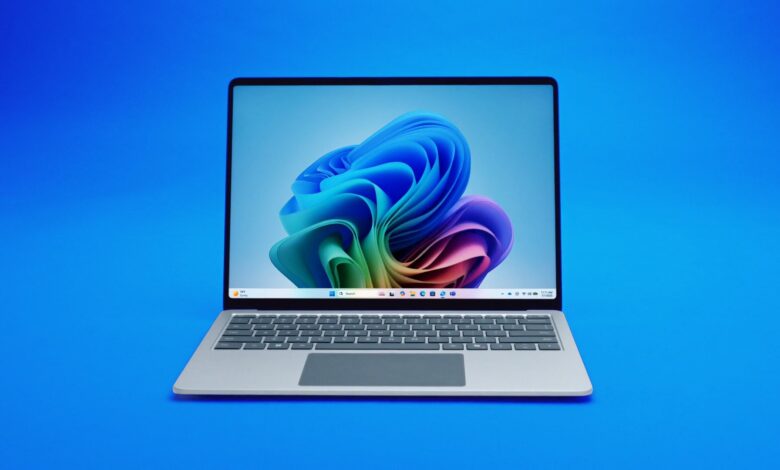
At roughly 70,000 rupees, the HP Omnibook 5 and the MacBook Neo are both trying to win over buyers who want a slim, portable laptop. Yet the better choice is not the one that weighs less, because the more important factor is how the device will be used every day.
The two machines take very different paths. MacBook Neo is built around Apple A18 Pro on ARM and runs macOS, while HP Omnibook 5 uses the Ryzen 5 AI 330 on x86 and runs Windows. That split shapes everything from battery life and portability to software flexibility and long-term workload handling.
What each laptop is really optimized for
MacBook Neo leans toward efficiency and mobility. Its 1.23 kg body, fanless design, and claimed 18-hour battery life make it easier to carry and more practical for long stretches away from a charger.
HP Omnibook 5 is built with a different priority. It weighs 1.7 kg, includes active cooling, and is better prepared for sustained performance under heavier use, even if that makes it feel more like a traditional work laptop than an ultra-portable one.
Memory, storage, and display separate them further
On raw specifications, HP Omnibook 5 has a clear advantage. The fn0074AU variant comes with 24GB of upgradeable DDR5 RAM and a 1TB SSD, while MacBook Neo is listed with 8GB unified memory and 256GB of storage.
The display story also favors different users. MacBook Neo offers a 2K IPS 60Hz panel with 100% sRGB coverage, while HP Omnibook 5 uses a FHD IPS LCD 60Hz screen with 62.5% sRGB. For streaming, visual work, and general media use, the MacBook Neo panel is the stronger one.
Everyday work depends on the workload
For browsing, office tasks, online classes, and general media consumption, MacBook Neo is still more than capable. Its Apple A18 Pro chip can also handle light creative work, including casual photo editing.
HP Omnibook 5 becomes more appealing when the workload grows. The larger memory and storage give it more breathing room for users who keep many tabs open, store lots of files, or run several applications at once.
Why the heavier laptop can be the safer pick
The difference becomes more visible during sustained use. HP Omnibook 5 uses a cooling fan, which can be audible under load, but that system helps the Ryzen AI 330 hold performance for longer periods.
MacBook Neo stays silent and cool in light daily tasks because it has no fan. However, performance under longer, heavier workloads can drop more noticeably when there is no active cooling to support it.
Gaming and software tilt the decision in opposite directions
Gaming is another area where the two models appeal to different users. Windows on HP Omnibook 5 opens access to a much larger game library, and its Radeon 840M is described as capable of handling older AAA titles, modern esports games, and other titles in certain scenarios.
MacBook Neo has improved prospects through the Game Porting Toolkit and growing native support. Even so, users may still need paid emulation tools such as CrossOver, and compatibility issues can still appear.
Software needs can also favor MacBook Neo for some buyers. It is positioned as the better option for users in sound engineering, audio engineering, or music production who rely on Logic and other Apple ecosystem tools.
The final choice is not about the lightest body
MacBook Neo makes the stronger case for buyers who care most about battery life, portability, display quality, and macOS. It is the easier machine to carry through a full day without worrying too much about charging.
HP Omnibook 5, however, offers more value for many buyers in this price range because it brings three times more memory, about four times more storage, active cooling for longer performance, and a clearer edge in gaming and heavier workloads. In the end, the better laptop depends less on which one is lighter and more on whether the buyer needs efficiency and macOS or capacity, Windows flexibility, and stronger sustained performance.
Source: tech.sportskeeda.com