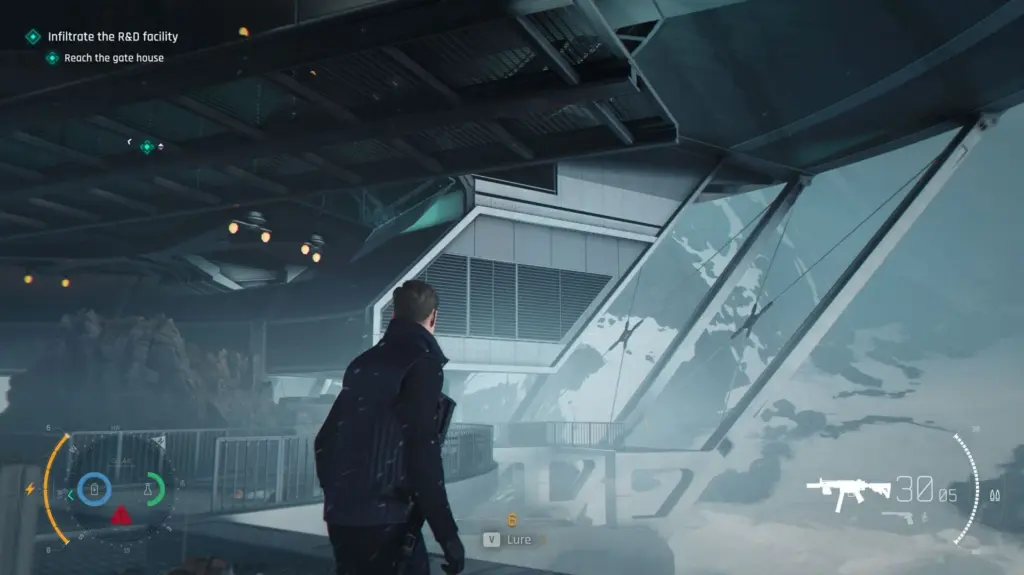
The current state of 007 First Light suggests that 1440p is the most comfortable target for many PC players. With the right mid-range hardware, the game can deliver strong image quality while still leaving enough headroom for high frame rates.
That balance is especially important because the game does not yet add the extra burden of Ray Reconstruction or Path Tracing. Without those heavier features, 1440p remains an attractive middle ground between sharp visuals and smooth performance.
Why 1440p stands out
A resolution of 2560×1440 gives the game enough room to look crisp without pushing frame rate too hard. That makes modern mid-range GPUs a realistic fit, especially models with at least 8 GB of VRAM.
Cards such as the Nvidia RTX 4070 and AMD Radeon RX 7800 XT are mentioned as examples of hardware that can handle the game well. In this setup, 1440p can come close to a 4K-like visual experience without demanding the same level of system power.
Recommended settings for a balanced setup
The suggested display setup starts with 2560×1440 in Fullscreen mode. V-Sync is enabled, transfer function is set to sRGB, and gamma correction stays at 1.00.
For upscaling, Nvidia users are pointed toward DLSS Super Resolution in DLAA. DLSS Frame Generation is set to 6x or 5x, while AMD users are directed to use FSR Upscaling Resolution based on the GPU in use.
Texture quality is set to Ultra, with Texture filter on Anisotropic 8x. Level of detail is set to High, terrain quality is set to Ultra, and reflection quality also remains on Ultra.
Lighting and related effects are handled with a mix of high and ultra presets. Shadow quality is set to Ultra, while volumetric fog quality, volumetric effects quality, and global illumination quality are set to High.
Where performance headroom comes from
The game’s VRAM counter in the settings menu gives players a useful way to track memory usage as they adjust presets. That makes it easier to see how each change affects the system without guessing.
With 8 GB VRAM or more, the recommended 1440p combination is described as a safe and practical balance. Players with 12 GB VRAM or more can even try 4K, although 1440p remains the more forgiving option for mid-range systems.
Post-processing is handled in a selective way. Motion Blur is turned off, but fullscreen blur effects, radial blur effects, wobble distortion effects, film grain effects, and chromatic aberration effects stay enabled.
What happens on stronger systems
Frame generation gives the configuration extra room to scale upward. With higher frame generation values, performance is said to rise beyond 250 FPS comfortably on this setup.
That level of output is especially appealing for high-refresh-rate monitors, where responsiveness matters as much as image quality. In that scenario, 1440p becomes more than just a sharp image target and starts to feel very fast in actual play.
Even so, performance will not be identical on every PC. If frame rate drops or stutter appears, some Ultra settings can be reduced to High without a major visual sacrifice.
A practical path for mid-range PC players
The absence of Ray Reconstruction and Path Tracing keeps the current load lighter than it could be. That is one reason 007 First Light appears more approachable for mid-range hardware at 1440p.
For players who want a straightforward setup, the main idea is simple: keep textures, shadows, reflections, and terrain strong, then tune upscaling and frame generation to match the GPU and VRAM available. On systems in the recommended range, that approach keeps the game looking sharp while preserving the speed that many players will want.
Source: tech.sportskeeda.com