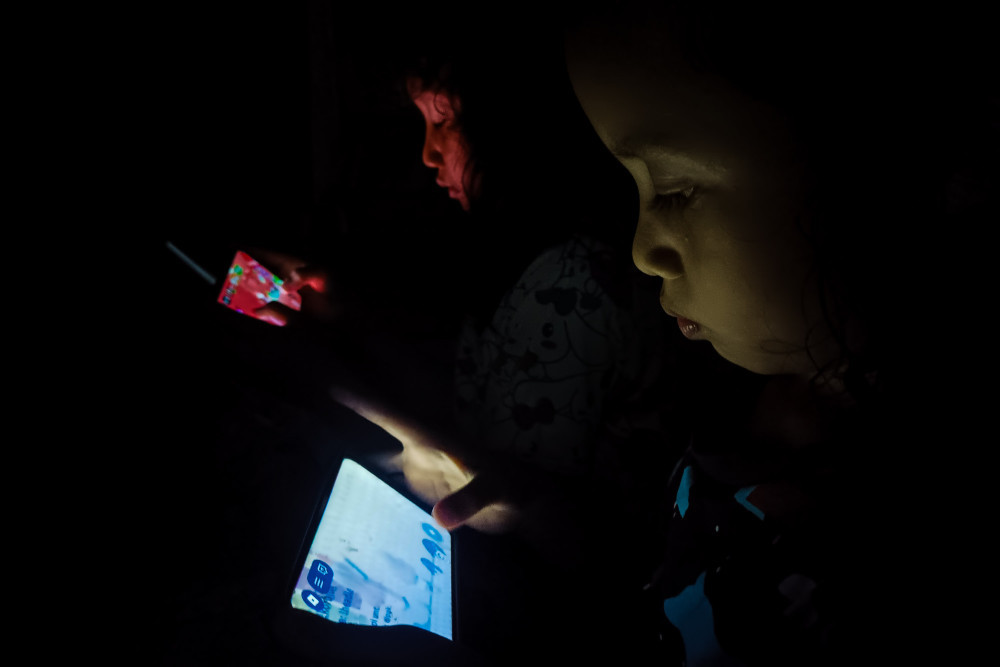
Child safety has become a sharper concern in Indonesia’s digital space as officials warn that social media is exposing young users to harmful material at scale. The issue is no longer limited to screen time or internet access, but to the kinds of risks children encounter while using platforms that are part of their daily lives.
A key point raised by Komdigi is that children remain among the most vulnerable groups online because they can face dangerous content and risky interactions with little real boundary. As technology expands opportunity, the digital environment has also become harder to control for younger users and the adults responsible for protecting them.
Exposure on social platforms
Alfreno Kautsar, Special Staff to the Minister of Communication and Digital, said 50.3% of children are exposed to sexually charged content through social media. He also stated that, out of 80 million children, 48% experience online gender-based violence.
Those figures show that the problem extends beyond passive exposure to content. Komdigi views repeated contact with harmful material as something that can shape children’s habits, character, and behavior in everyday life.
Social media makes it possible for children to encounter many kinds of content without clear limits. For that reason, support from parents and the closest people around them is considered essential so children are not drawn into material that is inappropriate for their age.
Two major risks under watch
Alfreno identified two major threats that need to be anticipated: content risk and contact risk. Both are considered serious because children may absorb the impact without fully realizing the danger entering their digital space.
Content risk appears when children use social media and come across material that is not suitable for their age. Contact risk emerges when children interact with strangers through social media or other digital platforms.
He also warned that such interactions can open the door to harmful information, including radicalism. In more severe cases, the same pattern can lead to child harassment.
A new regulatory response
To respond to these concerns, the government has issued Government Regulation No. 17 of 2025 on the Governance of Electronic Systems in Child Protection, known as PP TUNAS. The rule is designed as one of the measures to strengthen protection for children in an increasingly complex digital world.
Komdigi emphasized that PP TUNAS is not intended to hold back the creativity of young people. Instead, it is meant to ensure children and teenagers still have space to grow while learning how to recognize risks in digital environments.
According to Alfreno, the government does not want to restrict the innovation of the younger generation. The focus is on helping them understand what is right and wrong amid the heavy flow of digital information.
At the same time, the policy aims to make sure online spaces do not become easy entry points for dangerous content or contacts that threaten children’s safety.
Source: teknologi.bisnis.com