Honor is steering the WIN series in a noticeably different direction with WIN Turbo. Instead of leaning on active cooling for sustained gaming, the device puts its weight behind a massive 10,080 mAh battery and a display that reaches a peak brightness of 8,000 nits.
That shift changes the way the phone is positioned. WIN Turbo looks less like a pure gaming handset and more like a device built for long hours away from a charger, especially in situations where screen visibility and endurance matter most.
Built for endurance first
The 10,080 mAh battery is the clearest sign of Honor’s new focus. The capacity is said to match the one used in Honor Power 2, and that comparison points to the kind of usage Honor appears to have in mind.
The phone is being aimed at people with demanding mobile routines, including travelers, field workers, ride-hailing drivers, couriers, field journalists, students, and remote workers. With that battery size, the priority is not only performance, but also staying alive through extended, heavy use.
Honor Power 2, which uses the same battery cell, was said to last more than 15 hours in continuous use such as nonstop video streaming. For normal daily use, endurance was claimed to stretch to 2 to 3 days.
A screen meant for harsh light
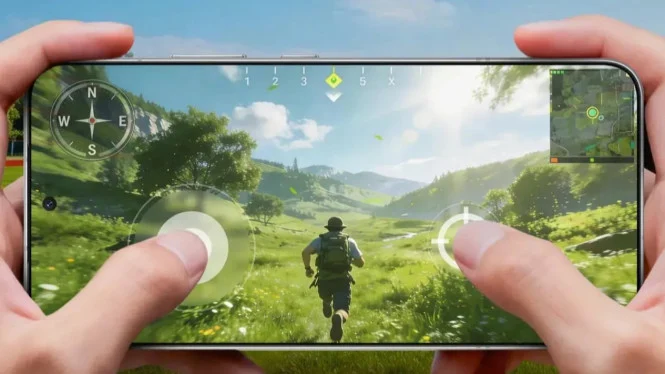
The display also pushes the same idea. WIN Turbo uses a 6.79-inch LTPS panel with 1.5K resolution, but the headline figure is its 8,000-nit peak brightness.
That level is far above what most flagship phones usually offer, which tends to sit around 2,000 to 3,000 nits. The practical goal is simple: the screen should remain readable under direct sunlight, whether on a beach, a busy road, or another open outdoor setting.
Honor also includes 3840Hz PWM dimming. The feature is intended to reduce flicker, which should make the screen more comfortable for long sessions, especially for users who are sensitive to display flicker.
A clear break from the old gaming formula
One of the most important changes is what Honor removed. WIN Turbo no longer carries an active cooling fan, which was a defining element for the earlier gaming-oriented approach.
That omission signals a broader shift in priorities. Rather than chasing sustained gaming performance, the device is being tuned for all-day reliability, quieter operation, and easier use in conditions where dust or moisture may be an issue.
The choice of LTPS also fits that direction. Honor sees it as a more efficient panel at high brightness, with longer service life and lower burn-in risk, making it more suitable for a battery-first device.
Rugged build and practical connectivity
Honor pairs the new direction with a metal frame that gives the phone a more premium and sturdier feel. The device also carries IP68/IP69K certification, meaning it is protected against dust, water, and high-pressure water jets.
On the connectivity side, the phone keeps a standard USB-C port and supports fast charging. Honor has not revealed the charging power yet, so the exact speed remains undisclosed.
The company has also not shared the full final design details. Even so, WIN Turbo is described as taking a similar approach to Honor Power 2, while using a more ergonomic body in the style of the WIN series.
A different identity for the WIN series
With WIN Turbo, the series appears to be moving away from the image of a gaming phone with active cooling. In its place comes a device built around endurance, outdoor visibility, and durability.
That combination of a 10,080 mAh battery, 8,000-nit screen, 3840Hz PWM dimming, and IP68/IP69K protection makes WIN Turbo stand apart from the usual flagship formula. Honor seems to be targeting users who need a phone that can keep going for long periods and remain dependable outside the reach of a charger.