Motorola has added a new option to the affordable tablet segment with the Moto Pad 2026, a 5G model that focuses on design, display quality, and productivity features. Priced at 250 USD, the tablet stands out because it supports a physical SIM card and brings a more premium look than many devices in the same price range.
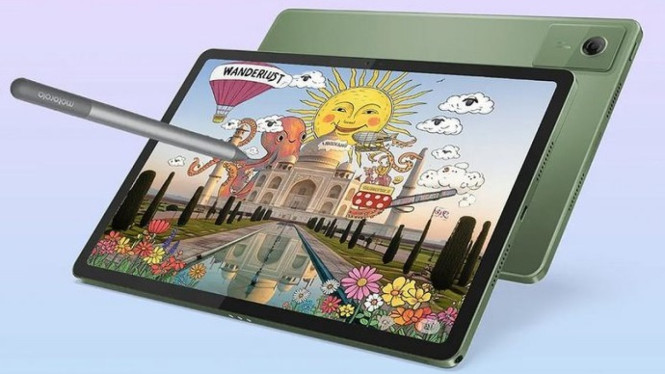
The most eye-catching part is its Pantone Bronze Green finish, which gives the device a distinctive aesthetic identity. Motorola pairs that color with a full metal back and frosted edges, creating a sturdier feel while keeping the tablet visually refined.
Premium look with practical touches
The tablet’s thick screen bezels may look conservative, but they also help reduce accidental touches during use. Motorola also gives the body splash resistance, adding a layer of protection for everyday handling.
That approach makes the Moto Pad 2026 feel less like a basic budget slate and more like a carefully positioned device for users who want style without giving up practicality. The overall design language suggests Motorola wants this model to appeal to students, casual users, and light productivity buyers.
Large display with smoother motion
The Moto Pad 2026 uses an 11-inch IPS display with a 16:10 aspect ratio, 1600 x 2560 pixel resolution, and 274 ppi density. It also reaches up to 500 nits of brightness, which should help visibility in typical indoor and mixed-light use.
A 90Hz refresh rate is another highlight, and it should make scrolling through social feeds and browsing feel noticeably smoother. For a tablet in this class, the screen specification is one of its strongest selling points.
Moto Pen support and PC Mode
Motorola also adds features that go beyond basic media consumption. The Moto Pad 2026 supports the Moto Pen, making it useful for note-taking, sketching, and other creative tasks.
It also includes PC Mode, a desktop-like interface aimed at users who want a more laptop-style workflow. The tablet has three magnetic pogo pins on the bottom, which point to future keyboard accessories, while third-party Bluetooth keyboards can already be used for a more desktop-like setup.
Hardware built for everyday tasks
Under the hood, the tablet runs on the MediaTek Dimensity 6300 chipset. That chip is not the fastest in its class, and some slight lag can appear when opening or switching heavier apps, but the overall setup is supported by 8GB of RAM and 128GB of internal storage.
Motorola also includes microSD expansion and a RAM Expansion feature that can add up to 4GB of virtual RAM from storage. For light gaming and routine multitasking, that combination should be enough for smooth everyday use.
Battery life is a strong point
Battery life looks like another area where the Moto Pad 2026 can deliver solid value. The 7,000 mAh battery is paired with the efficient Dimensity 6300 chip, helping the tablet last through a full day of use.
The downside is charging speed, which is limited to 20W. Motorola does not include a charger in the box, although it does provide a USB-C cable and a SIM tool.
Audio, cameras, and software support
For media use, the tablet includes quad speakers with Dolby Atmos support, which should offer louder and clearer sound for streaming and entertainment. It also keeps a 3.5mm headphone jack, a feature that still matters for wired audio users.
Camera hardware is modest, with an 8 MP rear camera and a front camera that is mainly suitable for video calls on apps such as Google Meet or Zoom. The tablet ships with Android 15 and comes with 2 years of OS updates plus 3 years of security patches.
Security remains basic, since there is no fingerprint scanner. Face Unlock is available, alongside PIN and password options, which keeps the device functional but not especially advanced in biometric protection.
The Moto Pad 2026 positions itself as a 5G tablet that mixes premium styling, a sharp display, stylus support, and PC Mode at a low entry price. For buyers who value design and productivity more than top-tier gaming power, it presents one of Motorola’s most interesting tablet offerings in the affordable segment.