Xiaomi 17T Pro and the Push to Make Android-to-iPhone Sharing Less Frictional
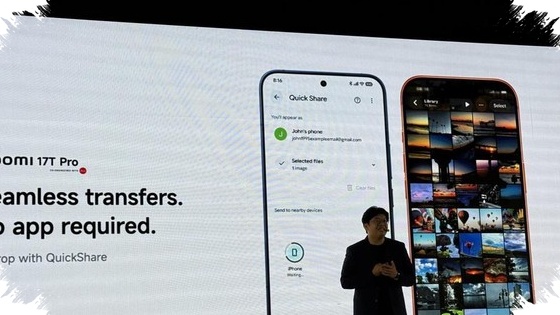
Xiaomi 17T Pro is drawing attention for one specific reason: it can send photos to an iPhone without requiring an additional app. The feature works through AirDrop support inside Quick Share, giving Android users a more direct path for cross-platform file sharing.
That matters because moving files between Android phones and iPhones has long been one of the most inconvenient parts of using different ecosystems. Through HyperOS 3, Xiaomi is positioning the 17T Pro as a device that makes that gap feel smaller, with less dependence on third-party tools.
The feature was first highlighted by Xiaomi HyperOS on Twitter/X. In Indonesia, Xiaomi also introduced it during the launch of the Xiaomi 17T series, where Product Marketing Lead Xiaomi Indonesia Jeksen said cross-ecosystem experience was one of the most positively received aspects of HyperOS 3.
What the feature is meant to solve
The main appeal is simple. Instead of installing another app just to move photos, users can rely on the built-in Quick Share route that now includes AirDrop compatibility.
For people who switch daily between Android and Apple devices, that can remove one extra step from a common task. Xiaomi has framed the feature as part of a broader effort to make file transfer feel smoother across different ecosystems.
Availability on the Indonesia unit
On the Xiaomi 17T Pro units sold in Indonesia, AirDrop via Quick Share is already available without needing any extra software update. That means users do not have to wait for a separate patch before finding the option on the device.
Still, the presence of the feature does not automatically guarantee a seamless experience in every test. In detikINET’s testing, an iPhone did not appear in the recipient list when a photo transfer was attempted, and the send process failed.
That result suggests the feature is present on the device side, but real-world implementation still needs to prove itself. Detection stability and compatibility remain important if the promised convenience is to feel truly consistent.
The settings that must be in place
There is also a condition on the Apple side when sending photos or videos from the Xiaomi 17T Pro to an iPhone. The iPhone’s AirDrop visibility must be set to “Everyone for 10 minutes” so the device can be detected as a target.
Without that setting, the search for the receiving device may not work as expected. In other words, the transfer is not fully passive and still depends on the right visibility setting at the moment of sharing.
The reverse direction also needs attention. If a user wants to send a file from an iPhone to the Xiaomi 17T Pro, the “Receive” tab in Quick Share must remain open on the Xiaomi device.
Not yet broad across Xiaomi’s lineup
At this stage, AirDrop via Quick Share is only reported on the Xiaomi 17T Pro. There is no certainty yet that the same capability will expand to other Xiaomi phones already running HyperOS 3.
That limitation matters because software alone may not be the only factor. Hardware-level restrictions could still affect whether the feature can move beyond this model.
So while HyperOS 3 is the platform behind the experience, it does not automatically mean every Xiaomi device will receive the same cross-ecosystem support. The rollout may remain tied to specific hardware conditions.
Why this feature matters in daily use
The practical value lies in routine sharing. Many users now live across more than one ecosystem, using Android phones alongside iPhones, tablets, or laptops.
In that kind of setup, quickly moving photos is one of the most common tasks. A built-in transfer option that avoids extra apps can therefore become a meaningful advantage, especially for people who share images frequently.
At the same time, the usefulness of the feature will depend on execution. If target devices do not appear reliably or transfers do not work consistently, the promise of easier sharing will remain limited by real-world performance.
Source: inet.detik.com