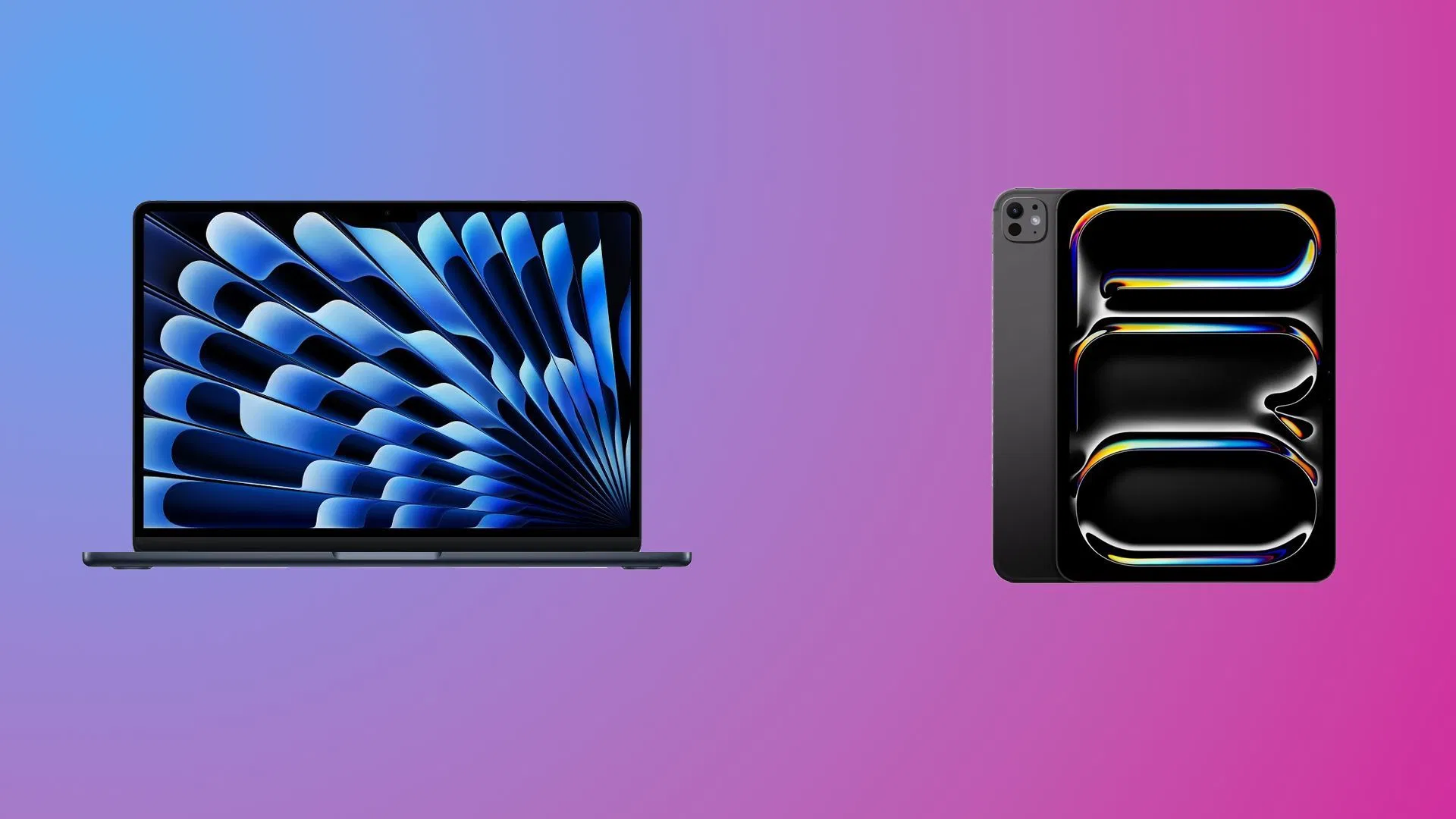
For buyers weighing a premium tablet against a thin-and-light laptop, the most important detail is not always the newest chip. In this case, MacBook Air M4 still makes more sense than iPad Pro M5 for many everyday and professional workflows.
That difference becomes clearer once the focus shifts from raw specifications to how each device actually works day to day. MacBook Air M4 offers a full Mac experience, broader software support, and a more mature desktop workflow, while iPad Pro M5 is built around touch, portability, and creative use cases that suit a tablet-first approach.
Why MacBook Air M4 remains the safer all-purpose choice
MacBook Air M4 is the more practical option for users who want a traditional computer with strong multitasking. It supports a wide range of software, handles local file management more freely, and makes it easier to keep many apps and windows open at once.
That desktop-style flexibility also matters for more technical work. Coding, app development, moving files across local drives, external SSDs, or NAS storage, and using Terminal all feel more natural on macOS than on a tablet-based system.
The Air M4 is also capable in heavier professional tasks. Video editing, 3D rendering, long background jobs, headphone use without an external amplifier, and third-party emulators for gaming are all within its reach.
Still, the MacBook Air M4 is not without limits. macOS does not offer full touch input, and its fanless design can lead to some performance drop during very demanding workloads that last for a long time.
Where iPad Pro M5 stands out
iPad Pro M5 takes a different route and puts touch interaction at the center. It is designed for mobility, fast bursts of performance, and flexible use as both a tablet and a laptop replacement when paired with the Magic Keyboard.
Its strongest appeal is in mobile creative work. Drawing, sketching, digital art with Apple Pencil Pro, photo editing, AI-based video editing, reading, note-taking, and content creation on the move are the kinds of tasks where it feels most at home.
The device also has an edge in media consumption. Its Ultra Retina XDR panel uses Tandem OLED technology and ProMotion from 10Hz to 120Hz, which gives it a better movie and HDR viewing experience than the Liquid Retina IPS LCD 60Hz panel on MacBook Air M4.
For modern creator needs, iPad Pro M5 adds features such as 4K ProRes video recording, LiDAR for scanning and AR apps, and fast charging for people who move between locations often.
The real limitation is software, not hardware
The main weakness of iPad Pro M5 is not its chip. The bigger issue comes from iPadOS 26, where some professional desktop apps are still unavailable or less capable than their Mac versions.
System-level file management and background rendering also remain constrained. For users used to a full desktop workflow, that means the tablet’s hardware may not always be fully utilized.
The spec comparison still favors different priorities
Both devices use Apple Silicon, unified memory, and storage options of 256GB, 512GB, 1TB, and 2TB. Even so, the details that shape real-world use are not the same.
MacBook Air M4 comes with a 10-core CPU, an 8-core or 10-core GPU, and 16GB, 24GB, or 32GB of RAM. iPad Pro M5 offers a 9-core or 10-core CPU, a 10-core GPU, and 12GB or 16GB of RAM.
Port selection also separates them clearly. MacBook Air M4 includes 2x Thunderbolt 4, MagSafe 3, and a 3.5mm audio jack, while iPad Pro M5 provides only 1x Thunderbolt/USB 4. Biometrics are different too, with Touch ID on the MacBook Air M4 and Face ID on iPad Pro M5.
| Feature | MacBook Air M4 | iPad Pro M5 |
|---|---|---|
| CPU | 10-core | 9-core or 10-core |
| GPU | 8-core or 10-core | 10-core |
| RAM | 16GB, 24GB, 32GB | 12GB, 16GB |
| Storage | 256GB, 512GB, 1TB, 2TB | 256GB, 512GB, 1TB, 2TB |
| Ports | 2x Thunderbolt 4, MagSafe 3, 3.5mm audio jack | 1x Thunderbolt/USB 4 |
| Biometrics | Touch ID | Face ID |
Which one fits the better buyer profile
For daily use such as browsing, email, office work, video calls, streaming, and light content creation, both devices are capable. The decision becomes sharper once the workflow becomes more specific.
MacBook Air M4 is the better fit for users who want a full computer with strong multitasking, professional software, open file handling, and long work sessions with fewer system limitations. iPad Pro M5 makes more sense for those who prioritize touch, handwriting, reading, media consumption, photography, and portable creative work.
The choice is therefore less about which device has the newer chip and more about which one matches the way the user actually works. In a similar price range, MacBook Air M4 remains the more versatile pick, while iPad Pro M5 is the more compelling tablet for buyers who want Apple’s premium touch-first experience.
Source: tech.sportskeeda.com-

-

-

-