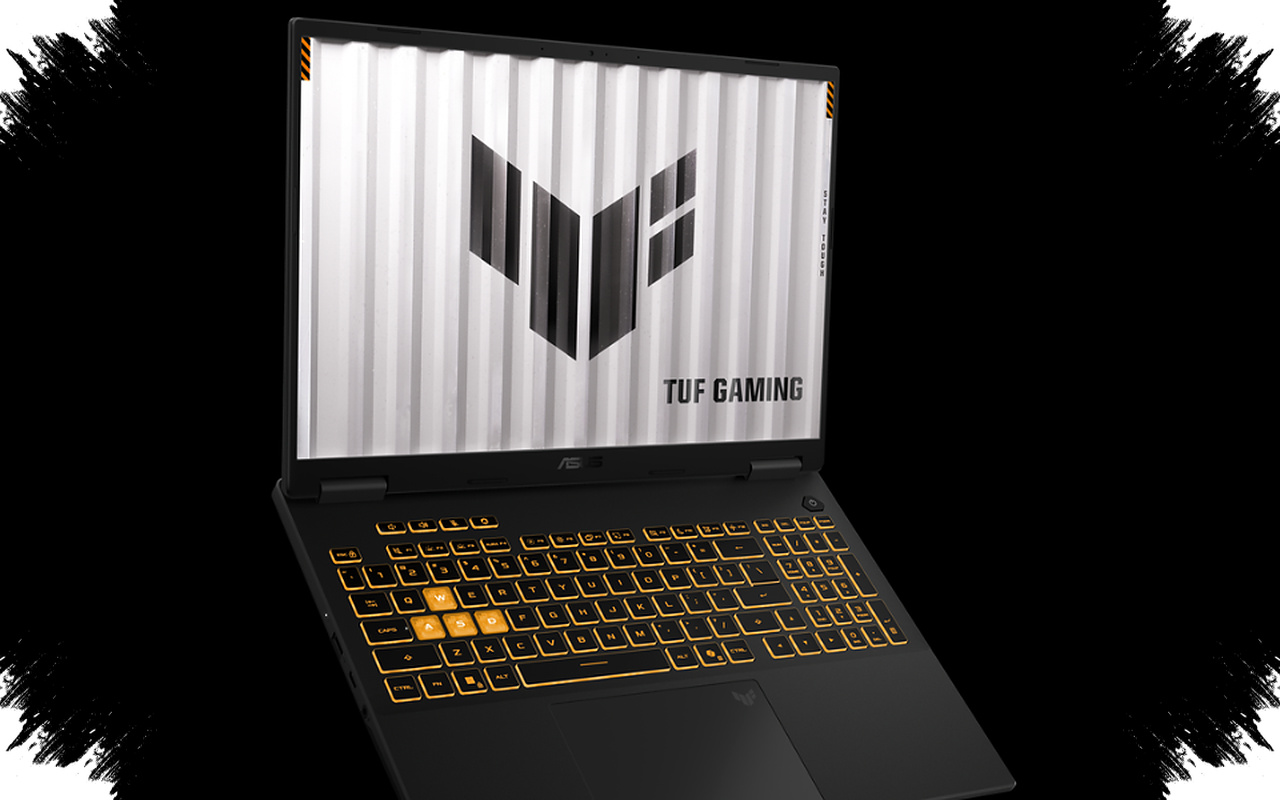
A quieter gaming laptop often matters more in daily use than a headline-grabbing spec bump, and that appears to be the direction Asus is taking with the TUF Gaming 16 2026. The machine still brings Nvidia GeForce RTX 50-series graphics, but the most noticeable change is the refined cooling setup that aims to keep fan noise down.
That shift gives the laptop a more practical identity. Instead of chasing extreme numbers, Asus seems to be targeting users who want a modern gaming device that feels easier to live with during long sessions, whether for play or work.
Cooling Takes the Lead
The biggest update sits inside the chassis. Asus uses two 80-blade fans and three heat pipes to manage thermals, while also adding an integrated dust filter to the cooling system.
According to Asus, fan noise can stay at 40dB or lower when the laptop is running under full load in Turbo Mode. For a gaming notebook, that makes the TUF Gaming 16 stand out for a more restrained acoustic profile.
The airflow path also crosses the motherboard to help cool components mounted on the main board. That design choice suggests Asus is focusing on more balanced everyday behavior, not just raw benchmark potential.
Modern Hardware Without an Extreme Power Target
On the performance side, the TUF Gaming 16 can be configured with up to an Intel Core i7-14650HX. That processor combines eight performance cores, eight efficiency cores, and boosts up to 5.2GHz.
For graphics, Asus offers up to an Nvidia GeForce RTX 5070 Laptop GPU. The GPU is capped at a maximum Total Graphics Power of 85W, which points to a more measured approach to power and heat management.
Even with that restraint, the laptop still remains relevant for current games because it supports Nvidia DLSS 4. The upscaling feature is intended to help performance in heavier titles.
Design Changes Aim at Better Everyday Use
Asus keeps the design relatively simple with a black finish. It also adds an anti-fingerprint coating to the keyboard deck, which should help the surface stay cleaner during regular use.
The display hinge can open flat to 180 degrees, adding flexibility for different setups. Like other TUF models, this one also carries MIL-STD-810H durability certification, indicating basic resistance to drops and vibration.
Another practical change is the port layout. Asus has moved larger connections such as the power jack, HDMI, and Ethernet to the back of the laptop.
That adjustment leaves the left and right sides less crowded. It also helps keep cables out of the way, which should make the desktop setup look tidier.
Upgradeable for Longer Use
The TUF Gaming 16 remains flexible for users who want more capacity later. Asus can ship it with up to 64GB of DDR5 RAM and a 2TB SSD from the factory.
Users can also upgrade the memory and storage themselves later on. The chassis allows access to two RAM modules and two SSD sticks, giving the laptop more room to grow with changing needs.
That kind of flexibility matters for a gaming notebook that may also handle editing or productivity work over time. It helps the system stay useful beyond its initial configuration.
Connectivity and Availability
For ports, the laptop includes three USB-A ports and one USB-C port. The USB-C connection supports DisplayPort 2.1 and USB power delivery.
Asus has not announced pricing or availability for the TUF Gaming 16 2026 yet. Even so, the combination of Intel Core i7-14650HX, RTX 5070 Laptop GPU support, quieter cooling, and rear-mounted ports makes it a notable update for users who value practical improvements over sheer spec escalation.
Source: www.gizmochina.com-

-

-
-