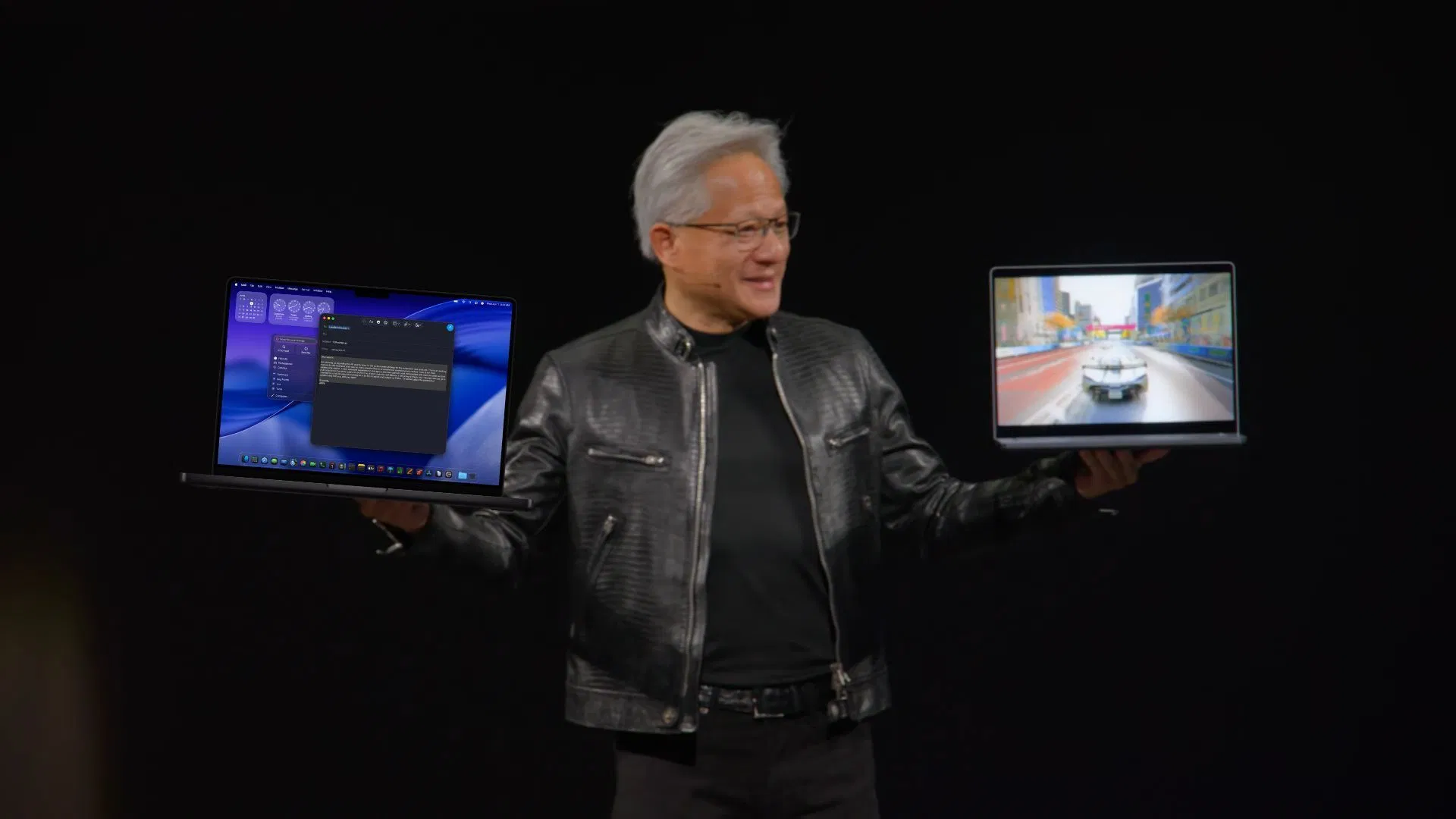
Nvidia’s RTX Spark is starting to look less like a conventional Windows laptop platform and more like a deliberate push into the same premium territory long dominated by MacBook Pro. The most talked-about detail is the price, and it immediately signals that Nvidia is not aiming at the mass market.
According to Morgan Stanley, the new Arm-based laptop platform is expected to arrive in two expensive tiers. The Spark N1X is projected to start at $2,899, while the Spark N1 is expected to cost about $1,799.
A premium strategy from the start
That pricing places RTX Spark far above mainstream laptops and firmly inside the professional class. Nvidia appears to be targeting creators, developers, AI researchers, and other users who value performance over affordability.
Morgan Stanley’s assessment also suggests that the platform will launch squarely in the premium notebook segment. That positioning makes the devices feel closer to professional work machines than to everyday consumer laptops.
Reports shared by @mweinbach on X point to the same split, with Spark N1X positioned as the more expensive variant and N1 serving as the lower-priced option, even if both remain expensive by laptop standards. Wccftech also noted that Morgan Stanley’s checks with PC brands at Computex 2026 further support the view that high pricing is difficult to avoid.
Why the price may still make sense
The hardware details help explain why Nvidia may be comfortable with such a high entry point. The Spark N1X is said to feature a 20-core Arm CPU, a Blackwell GPU with 6,144 CUDA cores, unified memory up to 128 GB, and AI performance reaching 1 petaflop.
That is a rare combination for a thin-and-light laptop design. Nvidia is also promising strong gaming capability, advanced AI workloads, and all-day battery life.
If those claims hold up, RTX Spark would try to combine efficiency, high-end graphics, and AI acceleration in one premium mobile package. That is exactly why comparisons with MacBook Pro are becoming more relevant, especially in a market where many Windows laptops have traditionally excelled in only part of the equation.
A wider ecosystem, not just one device
RTX Spark is also notable because it already has support from several major PC makers. The list includes Microsoft, Dell, HP, Lenovo, ASUS, and MSI.
That broad partner base gives Nvidia room to bring the platform to different designs and professional segments. It also suggests that the PC industry sees commercial potential here, even with the high entry price.
Many of those devices are expected to be positioned as premium productivity machines and laptops for creators. That approach feels similar to Apple’s strategy with MacBook Pro, although Nvidia’s path is shaped by the Windows ecosystem and a wider range of hardware partners.
With more manufacturers involved, RTX Spark could appear in more sizes, forms, and design approaches than a single-vendor lineup. That flexibility may become one of its biggest advantages if the platform delivers what Nvidia is promising.
Still a rumor-heavy picture
For now, the full picture remains tied to analysis and speculation. Final pricing, actual configurations, and real-world performance will only become clear once the products reach the market.
The challenge for RTX Spark is also broader than raw power. Premium laptops are judged not only on compute performance, but also on software consistency, thermal efficiency, battery quality, and everyday usability.
What is already clear is Nvidia’s direction. The company does not appear to be trying to undercut MacBook Pro on price, but to meet it at the premium end of the market with a Windows-based alternative.
If RTX Spark can deliver on its AI, graphics, and efficiency promises, the premium laptop segment may soon face a much more serious new competitor.
Source: tech.sportskeeda.com-

-
-

-