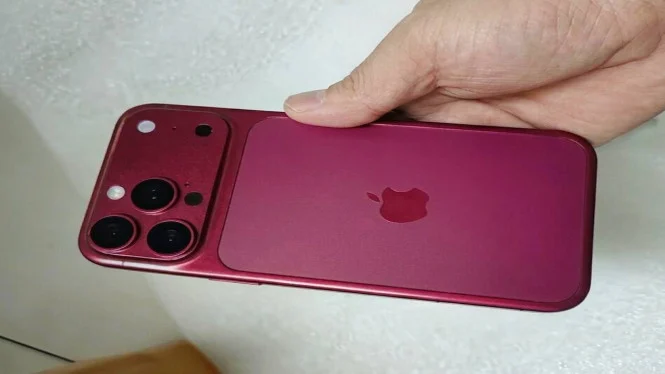
Apple’s next Pro iPhone may put a more practical upgrade in the spotlight than a design change: battery life. Recent leaks suggest that the eSIM-only versions of the iPhone 18 Pro and iPhone 18 Pro Max will receive larger batteries than the models that still use a physical SIM tray.
The reason is simple. Once the SIM slot is removed, Apple reportedly gains extra internal space that can be allocated to the battery without increasing the phone’s overall size. That means the benefit would come from internal redesign rather than a thicker body.
A small difference on paper, a noticeable one in use
Digital Chat Station on Weibo says the iPhone 18 Pro with a physical SIM card will carry a 4,056 mAh battery. The eSIM-only version is said to increase that capacity to 4,288 mAh.
The gap is not huge at first glance, but even a modest increase can matter during a full day of heavy use. For people who keep their phones busy with communication, navigation, photography, and AI-based apps, every extra bit of endurance can make a difference.
The same pattern is also expected on the iPhone 18 Pro Max. The eSIM-only model is reportedly headed toward a battery in the 5,100 to 5,200 mAh range, while the physical-SIM version is said to sit around 5,000 mAh.
Why the eSIM version gets the advantage
The reported battery boost comes from the space previously occupied by the SIM tray. Instead of using that room for another component, Apple is said to be directing it toward a larger battery cell in the eSIM-only variant.
That approach also fits Apple’s broader push toward a cleaner internal layout. Removing the physical SIM tray can help free up space while also eliminating one mechanical part from the device.
There is another possible side effect as well. With fewer openings and moving parts, the phone design may also support better resistance to water and dust.
Battery gains may be paired with a more efficient chip
The larger battery is not expected to work alone. Apple is also rumored to use the A20 Pro chip in the iPhone 18 Pro lineup, built by TSMC on a 2nm process.
That matters because a 2nm chip is expected to be more power efficient. When paired with a larger battery, it could extend real-world usage time more noticeably than either upgrade would on its own.
Better efficiency can also help with heat management. A chip that uses less power tends to run cooler, which is useful when the phone is handling navigation, camera tasks, or AI workloads for long periods.
Europe may also get the eSIM-only treatment
The leak also points to Apple expanding eSIM-only models to Europe. That would follow the direction already seen more broadly in the United States.
If that move happens, European users would directly get the version with the larger battery capacity. It would also show that Apple is becoming more committed to a slimmer device structure built around eSIM.
For markets such as Indonesia, the development is still worth watching because local carrier support for eSIM continues to grow. If eSIM adoption becomes more widespread, the battery difference between regional versions could become less relevant over time.
The potential appeal of the iPhone 18 Pro is therefore not only about a new chip or a familiar premium design. For many users, the most tangible change may be the extra battery life that comes with giving up the physical SIM slot.
-

-

-

-