The sub-Rp8 million tablet segment is no longer a compromise zone. In this class, buyers can now find large displays, flagship-class chips, big batteries, and fast charging in models that are practical for work, creativity, and heavy gaming.
That shift makes the decision less about whether a tablet is “good enough” and more about which strength matters most. Some models lean into raw performance, others focus on screen size, and a few stand out because they balance power, battery life, and everyday usability more convincingly than expected.
Performance-first options are now the headline attraction
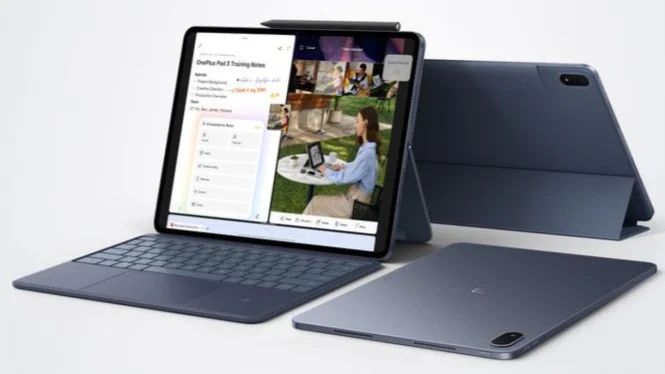
For users who care most about speed, OnePlus Pad 3 sits at the most extreme end of this list. It uses Snapdragon 8 Elite, and its AnTuTu score is said to reach 2.5 million to 3 million points, placing it among the strongest performers in this price range.
The hardware package is equally aggressive. OnePlus Pad 3 comes with 12GB LPDDR5X RAM, 256GB UFS 4.0 storage, eight internal speakers, a 12,140 mAh battery, and 80W SuperVOOC charging.
Xiaomi Pad 8 takes a more balanced route without giving up serious power. It is equipped with a 11.2-inch 3.2K display and Snapdragon 8s Gen 4, a chip still positioned in the flagship family.
Its battery capacity reaches 9,200 mAh, while the audio system is described as large and capable. The 8GB/128GB version starts from around Rp6.5 million, and the 12GB/256GB option is the better fit for users planning longer-term use.
Large-screen productivity still has a strong place
Lenovo IdeaTab Pro Gen 2 is aimed at buyers who want more visual space for multitasking and content creation. Its 13-inch panel uses a 3.5K resolution and a 144Hz refresh rate, making it one of the most spacious choices in the group.
Inside, Lenovo uses Snapdragon 8s Gen 4, paired with Android 16, a 10,200 mAh battery, and 45W charging. The 8GB/256GB variant sits around Rp7.7 million and already includes the Tab Pen Plus stylus.
That combination makes it especially relevant for users who want a tablet that feels closer to a portable work surface than a simple media device. The screen size alone sets it apart from most of the competition in this price band.
Productivity and ecosystem matter just as much as raw specs
Samsung Galaxy Tab S9 FE+ does not try to win the benchmark race. Instead, it relies on a more refined everyday experience built around Exynos 1380, 8GB of RAM, and 128GB of storage.
Its main advantage is the S-Pen, which is described as natural and precise for note-taking and drawing. One UI also adds a more mature tablet experience, especially for users who value stable apps and Samsung’s wider ecosystem.
That makes the Tab S9 FE+ a different kind of recommendation. It is less about maximum numbers and more about consistency, especially for those who already prefer Samsung devices and services.
iPad remains a safe option for Apple users
On the iOS side, the 11th-generation iPad remains a solid entry point for users who want something dependable for the next few years. It is powered by Apple A16 Bionic, paired with 6GB RAM and 128GB storage.
Apple’s iPadOS optimization helps keep power use efficient, while the base model is said to be available below Rp6.8 million. The battery capacity is listed at 7,600 mAh, and users who want to reduce cost can still rely on third-party styluses instead of the official Apple Pencil.
That makes it relevant for buyers who want access to the Apple tablet ecosystem without stretching the budget too far. It is not the most spec-heavy option here, but it remains one of the most straightforward choices for long-term use.
What the mid-range tablet market now looks like
The current lineup shows how much the mid-range tablet segment has changed. A budget near Rp6 million to Rp7 million no longer means basic screens and modest chips, because several models now bring flagship-level performance, large batteries, and displays built for serious use.
Xiaomi Pad 8 stands out as the most balanced overall package. OnePlus Pad 3 is the strongest pick for pure performance, Lenovo IdeaTab Pro Gen 2 offers the most room to work, Samsung Galaxy Tab S9 FE+ focuses on productivity and stylus use, and the 11th-generation iPad remains the most familiar route for Apple users.