


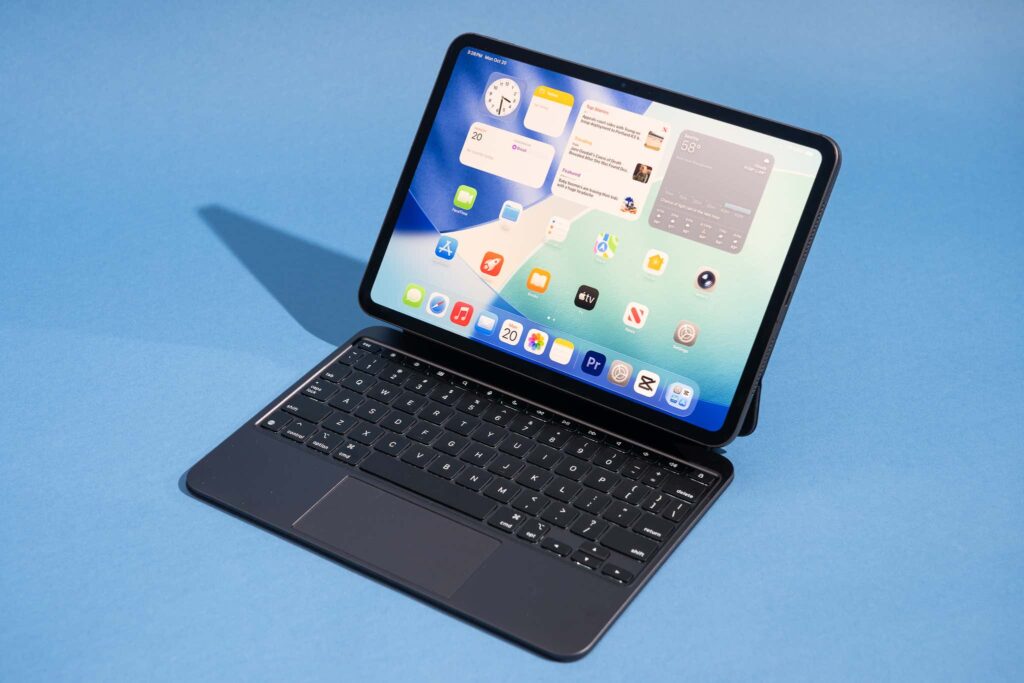
The most practical tablet is not always the cheapest one. For students, designers, and gamers, the better choice is usually the model that matches the workload without asking for too many compromises.
That is why the current spread from Rp2 jutaan to premium is interesting. Each of the six tablets below serves a different kind of user, from basic daily use to creative work, gaming, and cross-device productivity.
For basic use, Samsung keeps the entry point simple
Samsung Galaxy Tab A11 stands out as the safest low-cost option for light needs. It uses a MediaTek Helio G99, 4GB of RAM, and an 8.7-inch 90Hz display, with pricing in the Rp2 jutaan range.
This tablet is aimed at streaming, social media, and everyday tasks that do not demand heavy performance. Its 64GB storage, standard camera system, and lack of stylus support make it better suited to simple use than to creative or intensive work.
For students and office tasks, Redmi Pad 2 feels more complete
Redmi Pad 2 moves into a more serious class for campus and workplace use. It sits around Rp4 jutaan and combines an 11-inch IPS Full HD 90Hz display with Reduksi Cahaya Azul technology.
The rest of the package is also built for productivity. It includes a 9,000 mAh battery, MediaTek Helio G100 Ultra, 8GB of RAM, 256GB of storage, and stylus support with palm rejection.
For creative beginners, Lenovo adds more in the box
Lenovo IdeaTab is positioned as a stronger option for users who want to sketch, design, or edit more comfortably. Priced around Rp4.5 jutaan, it already includes a Digital Pen and a protective case in the box.
Its 11-inch IPS panel has a 2.5K resolution and a 90Hz refresh rate, which helps when viewing detailed visuals. The MediaTek Dimensity 6300 and 8GB of RAM also give it enough room for apps such as Adobe Photoshop or Clip Studio Paint.
For gaming, Xiaomi pushes performance the hardest
Xiaomi Pad 7 is the most aggressive choice in this group for gaming on a budget. At under Rp6 juta, it brings a Snapdragon 7+ Gen 3 processor, LPDDR5X RAM, and an Antutu score said to exceed 1,700,000 points.
The display is equally focused on speed and sharpness. It offers a 144Hz refresh rate, 3.2K resolution, an 8,850 mAh battery, and a 13MP rear camera that can record 4K video.
Apple users get a different kind of value from iPad 11
iPad 11 with the A16 Bionic chip is the most natural pick for people already using iPhone and MacBook devices. Its strengths are tied closely to Apple’s ecosystem, including Airdrop, iCloud syncing, and the ability to work more smoothly across devices.
It also supports Apple Pencil Pro and Magic Keyboard, which broadens its use for editing and productivity. The tablet can even act as a second monitor for a MacBook wirelessly over Wi‑Fi.
For Android and Windows users, Galaxy Tab S10 Lite offers broader flexibility
Galaxy Tab S10 Lite is aimed at users who want a versatile tablet that fits better into Android or Windows-based setups. It comes with a 12.1-inch AMOLED display at 90Hz, an S-Pen in the box, a 10,090 mAh battery, and 45W fast charging.
Its biggest advantage is integration with Windows PCs. Users can control the tablet with the same mouse and keyboard they use for a computer, and open PC document files directly on the tablet.
Each of these tablets makes sense for a different reason, which is why price alone does not decide the best choice. Samsung Galaxy Tab A11 covers the basics, while Redmi Pad 2, Lenovo IdeaTab, Xiaomi Pad 7, iPad 11, and Galaxy Tab S10 Lite each offer a clearer path for studying, creating, gaming, or working across devices.