Xiaomi is now being linked to a new generation of wide foldable phones expected to gain momentum in 2026. The latest chatter suggests the company is not limiting itself to a traditional book-style foldable, but is also preparing a wider format that could challenge the direction Apple and Samsung are reportedly exploring.
The timing matters because the foldable market appears to be entering a new phase centered on broader screen ratios. After Huawei launched the Pura X Max in China as the world’s first wide fold, attention has shifted to other major players that may follow the same path.
HyperOS clues point to a larger display strategy
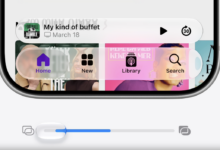
One of the newest hints came from a Weibo post by the account Beginners Review. The post showed an internal HyperOS interface prototype that appears to be designed for a wide-screen foldable device.
The interface included a home screen app layout, a recent windows overlay, and a preview of multi-screen app view mode. Those details suggest Xiaomi is adapting HyperOS for a device with a larger display area and a different aspect ratio from a conventional foldable.
That said, the software redesign does not automatically confirm a new foldable phone. The same interface work could also be tied to another Xiaomi product, including a new tablet line such as the Xiaomi Pad 8.
Still, the most widely discussed possibility is a passport-like foldable that opens into a wider screen. That form factor is also said to be under consideration by Apple for the iPhone Fold and by Samsung for the Galaxy Z Fold 8 Wide.
Another leak adds weight to the rumor
The wide fold theory gained more support from another leaker, Smart Pikachu. According to that tipster, Xiaomi is indeed developing a wide fold device.
Smart Pikachu also said the device will use Xiaomi’s own AI interaction system and a useful sidebar implementation. Both points make sense for a device that would need to make better use of extra screen space.
This matters because it frames the HyperOS leak as more than a simple interface experiment. If the details are accurate, Xiaomi seems to be planning a user experience tailored specifically to the new format.
Large-screen foldables usually require software changes that go beyond what is needed on a standard phone. A sidebar and AI-focused interaction could be Xiaomi’s way of turning extra display space into something genuinely useful.
What this means for Xiaomi’s foldable roadmap
The new reports also line up with earlier rumors that Xiaomi canceled the Mix Flip 6. At the time, the cancellation was said to help the company focus more heavily on its book-style foldable lineup.
That was initially read as a move to prepare a rival to the Galaxy Z Fold 7. The latest rumors suggest a different direction, however, with Xiaomi now being associated with a wider foldable format instead.
If that strategy is real, Xiaomi may be choosing a category where it can stand out more clearly. In a crowded foldable market, screen shape and software experience are becoming major differentiators.
Entering the wide fold segment early could also help Xiaomi move before some of its biggest rivals arrive with their own versions. That would give the company a chance to define the category while the market is still taking shape.
Names, model numbers, and chipset rumors
There is still no official name for the device. Rumors have floated possibilities such as Xiaomi 17 Fold or Xiaomi 18 Fold.
It has also been linked to model number 2608BPX34C, along with the internal Q18 designation and the codename “lhasa.”
On the hardware side, the device is said to use the successor to XRING O1, namely XRING O3. If that proves correct, the phone could become Xiaomi’s first foldable to use an in-house chipset.
That would be a meaningful step for Xiaomi, since it would extend the company’s self-developed silicon strategy into a more complex premium product category. The same rumor also claims XRING O3 could compete with Snapdragon 8 Elite Gen 5 and Dimensity 9500 in performance.
Even so, that part of the rumor should be treated carefully. XRING O3 has not been officially announced, and Xiaomi has not commented on its next foldable generation.
Launch timing remains unconfirmed
For now, the device remains unannounced and unconfirmed. There is no official design reveal, no full specification sheet, and no public statement from Xiaomi about a wide foldable.
Rumors currently point to a July 2026 launch window. If that schedule holds, more official information may begin appearing in the coming weeks.
The wider foldable race is becoming more interesting to watch as 2026 approaches. Xiaomi could enter it with HyperOS optimization, in-house AI interaction, and possibly its own chipset in a single device built around a new screen format.