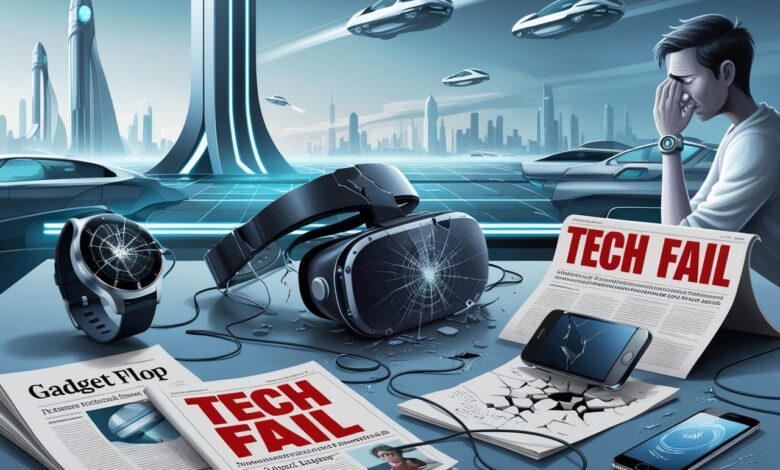
In technology, a bold idea can attract attention long before a product is ready for everyday use. That gap between anticipation and maturity has ended badly for several devices that arrived with strong branding, unusual features, or high expectations.
These failures were not caused by a single flaw. Some were too expensive, some lost access to key software or hardware ecosystems, and others arrived with confusing designs or features that did not solve a real consumer problem.
When a big idea collides with the market
Sony PSP Go is one of the clearest examples of a product that tried to change too much at once. Released in 2009, the handheld was a smaller and lighter version of the PSP, with a 3.8-inch screen that slid upward to reveal the gamepad below.
The problem was that Sony removed the UMD slot, which meant the device could not play physical PSP games. At a price of US$250, it was widely seen as too expensive for what it offered, and production ended in 2011.
Google Glass followed a similar pattern of early excitement meeting practical resistance. Launched in 2013 at US$1,500, it came with a 5MP camera, a 640 x 360-pixel display, the OMAP 4430 chipset, 2GB of RAM, 12GB of storage, and Glass OS.
Yet the device quickly ran into privacy concerns. The built-in camera drew criticism, while many users also felt it could interfere with ordinary activities such as driving.
When timing worked against the product
Sega Dreamcast arrived after Sega’s reputation had already suffered badly when Saturn lost to PlayStation. In 1999, Sega attempted a comeback with Dreamcast and 18 launch titles.
PlayStation 2 then arrived one year later with better game visuals, a DVD player, and backward compatibility with PS1 games. Sega stopped making Dreamcast in 2001 and left the console business, even though it continued developing games.
Microsoft faced a different version of the same problem with Windows Phone in 2010. Windows Phone 7 introduced live tiles and launched on ten phones from Dell, HTC, LG, Samsung, and others.
Microsoft later worked with Nokia to make it the main replacement for Symbian. By then, however, Android and the iPhone already dominated the market, making it difficult to gain meaningful traction.
Smart-looking hardware that still missed the point
Nintendo Wii U could not repeat the success of the original Wii. Released in 2012, the console centered on the GamePad, but the name “Wii U” and its confusing marketing led many people to think it was only an accessory.
On paper, the GamePad looked distinctive. In practice, it was bulky, awkward to hold, and had short battery life, while the console itself offered only average performance and lagged behind the PS4 and Xbox One.
The problem was made worse by a weak early software lineup. Many of the available games also appeared on other platforms, which left fewer reasons for buyers to choose Wii U.
Amazon Fire Phone showed that a major company name could not compensate for a weak mobile offering. The 2014 phone included a 4.7-inch display, Snapdragon 800 chipset, 2GB of RAM, and 32GB or 64GB storage options.
It ran Fire OS, a modified version of Android without Google Play Store access, so users had to install apps manually. High pricing, limited apps, and the fact that Dynamic Perspective did not add enough value all contributed to its failure.
High expectations, low practical value
Humane AI Pin entered the market with unusually high expectations, but the product struggled as soon as it reached users. The AI wearable clipped onto clothing and was designed for calls, messages, questions, photos, videos, and projecting text onto the user’s hand.
Its reception was poor because the functions were limited, the interface was complicated, the camera quality was average, and the price reached US$699. Buyers also had to pay US$24 per month for the Humane Plan, which made the total commitment even harder to justify.
Together, these products show that hype can fade quickly when the release comes before the product is ready. In the end, the market tends to reward devices that are useful, easy to understand, and priced in line with what they can actually do.