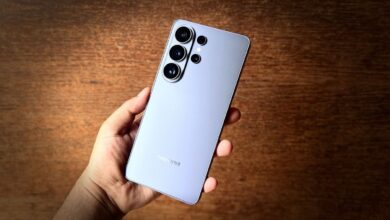
Xiaomi’s humanoid robot has drawn fresh attention after it was shown taking a photo with the Xiaomi 17T Pro. The brief demonstration suggested that the company’s robotics work is moving beyond simple movement and into precise interaction with consumer devices.
In the clip, the robot lifted the phone, adjusted the zoom using the physical volume buttons, and pressed the shutter to capture an image. The sequence looked controlled and smooth, reinforcing how far Xiaomi has pushed its combination of artificial intelligence and physical dexterity.
More than a basic robotics demo
The most striking part of the demonstration was not only the task itself, but the accuracy behind it. The robot handled the phone with enough stability to manage framing and operate the controls in a way that felt increasingly close to human movement.
That kind of precision matters because Xiaomi has been working toward practical robotics rather than showcase machines. The company has repeatedly positioned its humanoid projects as systems that can eventually operate in real-world environments, not just on a stage.
CyberOne and Xiaomi’s larger factory plans
Xiaomi has already outlined a broader path for its humanoid robot program. One of its earlier plans was to place CyberOne in Xiaomi’s self-operated manufacturing line.
Lei Jun, Xiaomi’s CEO, has also said the company aims to integrate humanoid robots into Xiaomi factories on a large scale within the next five years. That goal places the latest photo-taking demonstration in a wider industrial context rather than a one-off stunt.
Factory performance is improving too
Behind the polished public demo, Xiaomi has also reported meaningful progress in industrial testing. The company said its robots can work for three hours without stopping during tests at a self-tapping nut installation station in its electric vehicle assembly plant.
In that test, the robots recorded a 90.2 percent success rate for simultaneous bilateral installation. Xiaomi also said the process had to keep pace with production requirements, with a cycle time of just 76 seconds per component.
Smaller hands, higher dexterity
Xiaomi has also redesigned the bionic hand on its latest robot. The new version is said to be 60 percent smaller than the previous generation, bringing its size closer to that of an adult human worker’s hand.
It also offers 64 percent more degrees of freedom, which should help the robot move with greater flexibility. Xiaomi has paired that with an 8,200 square millimeter full-palm tactile sensor to help the robot detect texture and pressure in real time.
Durability remains another key feature. The gripping mechanism is claimed to last for more than 150,000 operation cycles, while a bionic sweat gland system is used to help regulate temperature and reduce overheating.
Practical use is the priority
Lei Jun recently said on his personal Weibo account that Xiaomi’s robotics team won first place in two different international competitions. He said the company beat the defending champion and its nearest rival by a wide margin.
Even so, the company’s broader message remains focused on usefulness. The latest Xiaomi 17T Pro photo demo fits that direction well, because it shows a robot performing a recognizable everyday action with increasing confidence and control.