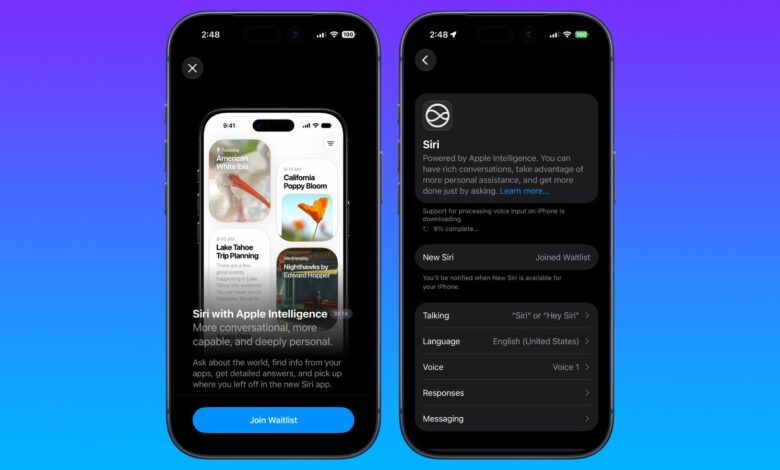
iOS 27 is shaping up to be more than a routine software update, with Apple Intelligence and Siri AI becoming a central part of the experience. But the new capabilities will not reach every iPhone that can install the update.
The dividing line is hardware. Apple’s on-device AI features depend on strong local computing power, a capable Neural Engine, and enough memory bandwidth to handle complex tasks smoothly and privately.
Which iPhone models are included
The compatible lineup covers the iPhone 17 family, the iPhone 16 series, and the iPhone 15 Pro line. That means iPhone 17e, iPhone 17, iPhone 17 Pro, iPhone 17 Pro Max, iPhone 16e, iPhone 16, iPhone 16 Plus, iPhone 16 Pro, iPhone 16 Pro Max, iPhone 15 Pro, and iPhone 15 Pro Max are set to receive Apple Intelligence.
By contrast, the standard iPhone 15 and iPhone 15 Plus are left out even though both devices can still run iOS 27. Apple is effectively drawing a line between models built for the newest AI workload and those that are not.
Why the iPhone 15 and iPhone 15 Plus are excluded
The limitation comes down to the A16 Bionic chip used in those two models. Apple considers it insufficient for running Apple Intelligence at the speed and consistency the feature set requires.
Tasks such as multi-turn conversation handling, text rewriting, email summarization, and complex request processing demand faster local performance. Apple also wants deeper interaction with third-party apps through new APIs, which adds more pressure to the device itself.
Because the system is designed to run on-device for privacy reasons, Apple needs a newer Neural Engine and higher memory capacity to keep the experience responsive. Without that headroom, the result could be lag, heat, or a feature set that feels incomplete.
What Siri AI is designed to do
Siri inside Apple Intelligence is no longer positioned as a simple voice assistant. It is being shaped into a more context-aware digital partner that can understand conversations, help draft messages, and carry out more complex commands.
Its expected capabilities include photo editing through natural language prompts, rewriting text to match a user’s style, and creating more personal message drafts. Apple says this approach still relies on on-device processing to better protect user data.
Other Apple devices on the list
Apple Intelligence is not limited to iPhone. On iPad, it is available on iPad mini with A17 Pro and on all iPads with M1 chip or newer.
On Mac, support extends to machines powered by M1, M2, M3, or M4 chips. Apple Watch Series 10 or later, Apple Watch Ultra 2 or later, and Apple Watch SE 3 are also included, although the SE model must be paired with a compatible iPhone.
Apple Vision Pro is also listed as fully supported. On wearables such as Apple Watch and Vision Pro, the capabilities are more limited, but they still take advantage of real-time user context.
When users may get access
iOS 27 is expected to arrive for the public around mid-September 2026, likely between September 15 and 18, alongside the launch of the iPhone 17 series. Those enrolled in the Apple Beta Software Program may be able to try the beta as early as July 2026.
Even then, Apple Intelligence in beta may still be limited before the final release. For users hoping to move into the Siri AI era, checking device compatibility remains the first step before considering an upgrade.