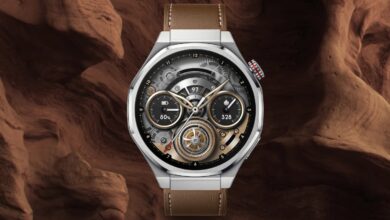
Amazfit has brought the Cheetah 2 Pro and Cheetah 2 Ultra to Indonesia, strengthening its position in the premium sports smartwatch segment. The biggest headline is battery life, especially on the Cheetah 2 Ultra, which is claimed to last up to 30 days under normal use.
The two watches are aimed at serious runners, marathon athletes, and trail runners who need accurate navigation, deeper training tools, and a device that can withstand intensive use. In the global market, the lineup is increasingly seen as an alternative to Garmin because it combines premium materials, broad sports features, and more competitive pricing.
Two models, two running priorities
Amazfit separates the lineup based on user needs. The Cheetah 2 Pro is designed for road running and marathon training, while the Cheetah 2 Ultra is built for trail runners and endurance athletes who often deal with tougher terrain.
The Cheetah 2 Pro uses Grade 5 Titanium and weighs around 45 grams. Its design is meant to stay light and comfortable during long runs.
The Cheetah 2 Ultra takes a more rugged approach. It comes with military-grade durability for use in extreme conditions.
Bright AMOLED displays and stronger navigation tools
Both smartwatches use AMOLED panels with brightness reaching 3,000 nits. That level of brightness is important for keeping the display readable under direct sunlight.
The Cheetah 2 Pro has a 1.32-inch screen protected by sapphire glass for better scratch resistance. The Cheetah 2 Ultra is larger, with a 1.5-inch display.
For navigation, the Cheetah 2 Pro includes dual-band GPS and support for six satellite positioning systems. The combination is intended to keep tracking accurate while running.
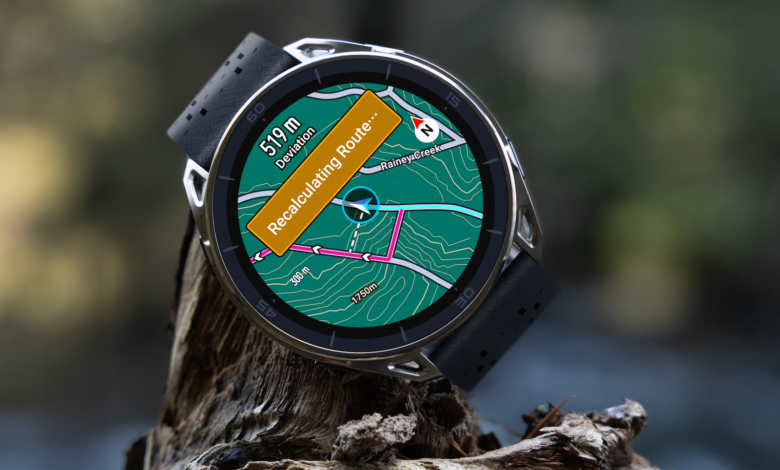
Navigation is also one of the strongest features in both devices. Users can rely on offline maps and route navigation directly from the smartwatch without depending fully on a phone.
The Ultra model goes further with full-color contour maps and an elevation overview. These tools help runners read terrain more clearly on trail routes.
AI training and advanced running metrics
Amazfit includes Zepp Coach AI as one of the main features on the Cheetah 2 Pro. The system can build personalized training plans up to a full marathon.
The watch also supports a wide range of professional running metrics. Available data includes running power, lactate threshold, ground contact time, and running posture analysis.
Both smartwatches connect to the Zepp App ecosystem. Through the app, users can monitor health and training data such as HRV, sleep quality, training load, recovery, and estimated VO₂ Max.
Amazfit also offers compatibility with several popular platforms. Training data can be synchronized with Strava, TrainingPeaks, Runna, and Intervals.icu.
Battery life is the main differentiator
Battery endurance is the clearest difference between the two models. The Cheetah 2 Pro is rated for up to 20 days of normal use and up to 31 hours in GPS mode.
The Cheetah 2 Ultra offers longer endurance. Under normal use, its battery is said to last up to 30 days.
In GPS and trail running mode, the Cheetah 2 Ultra is claimed to last between 33 and 60 hours, depending on the usage scenario. That makes the Ultra the more appealing choice for users who train or race over long periods.
More storage for offline use
The Cheetah 2 Ultra also comes with 64GB of internal storage. That gives users more space for offline maps and podcasts directly on the device.
This approach makes the Ultra more than just a sports tracker. It is also built to support more independent training and navigation in the field.
Official prices in Indonesia
The Amazfit Cheetah 2 Series went on sale in Indonesia on 10 June 2026. The official prices are Rp 7,799,000 for the Amazfit Cheetah 2 Pro and Rp 10,499,000 for the Amazfit Cheetah 2 Ultra.
With these two options, Amazfit is offering different answers for road runners and trail runners who need a tougher wearable. The combination of precise GPS, AI-based training tools, offline maps, and long battery life is the core pitch of the series in the local market.