


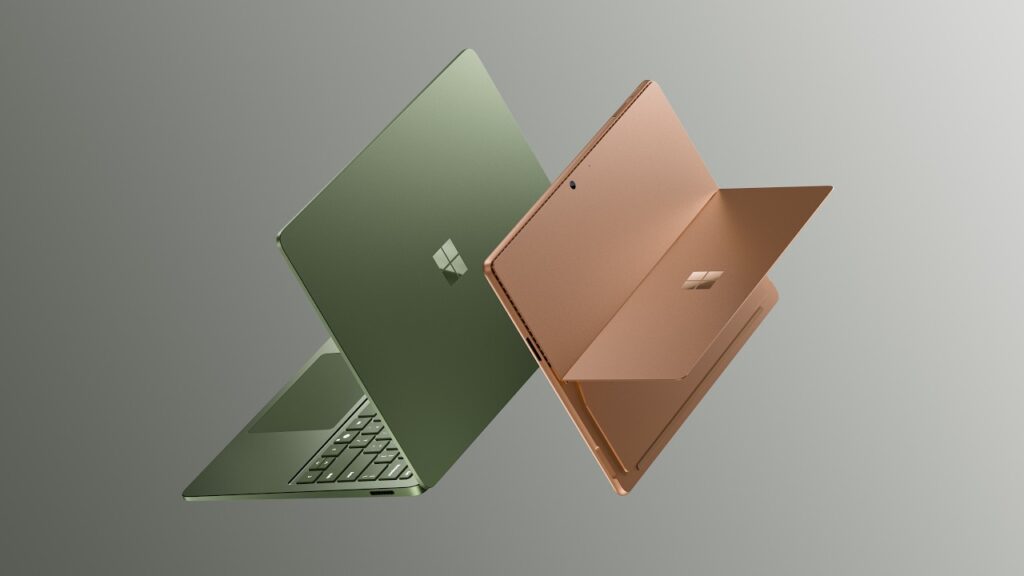
Microsoft has refreshed its Surface lineup with the new Surface Pro 13-inch and Surface Laptop in 13.8-inch and 15-inch versions. The biggest shift is not just the redesigned hardware, but the move to Snapdragon X2, which places these devices at the center of the Copilot+ PC era.
That transition matters because Microsoft is now treating on-device AI processing as a baseline for productivity machines. The company is also pushing stronger battery efficiency, better mobility, and more capable graphics performance for users who work on the move.
Surface Pro gets OLED for the first time
The Surface Pro keeps its role as a flexible 2-in-1 device, but the most notable update is the addition of an OLED display option for the first time in the lineup.
Microsoft says the OLED panel brings higher contrast, more accurate colors, and deeper blacks. It is also aimed at more demanding visual work, including users such as graphic designers who need a clearer display outdoors.
The performance side also gets a lift. With Snapdragon X2, Microsoft says graphics capability is up to 53% faster than the previous generation, a claim that makes the new Surface Pro especially relevant for tasks that rely on quicker visual response.
The accessory setup has also changed. The wireless Flex Keyboard now comes in Dune and is designed to remain usable even when detached from the main display.
For meetings and video calls, the Surface Pro includes a Quad HD 1440p camera. Microsoft says it is tuned to make framing look more natural during virtual conversations.
Surface Laptop focuses on battery life and display quality
For users who prefer a traditional laptop shape, the new Surface Laptop continues in a clamshell design. Microsoft has centered the update on longer battery life, a more immersive display, and a more responsive typing experience.
The 13.8-inch model is rated for up to 20 hours of local video playback, while the 15-inch version is said to last up to 19 hours.
Both displays also receive major attention through much thinner bezels. On the 15-inch model, pixel density rises from 201 PPI to 262 PPI for sharper visuals.
Microsoft also highlights a laptop camera it says was ranked No. 1 by DXOMARK. In addition, the touchpad now includes haptic feedback, giving tactile response during cursor movement and video scrubbing.
| Model | Key Highlight |
|---|---|
| Surface Pro 13-inch | First OLED option, Quad HD 1440p camera, Snapdragon X2 performance boost |
| Surface Laptop 13.8-inch | Up to 20 hours of local video playback |
| Surface Laptop 15-inch | Up to 19 hours of local video playback, higher 262 PPI density |
Copilot+ PC features run locally with Microsoft Pluton
Microsoft is framing the new devices around more than raw processor power. A dedicated NPU sits at the center of local AI processing so AI-driven commands can run faster and more securely without relying entirely on the cloud.
The company also includes Microsoft Pluton as part of the security setup. Together, the NPU and Pluton are intended to protect everyday data while supporting a more independent Copilot+ PC experience.
Three smart features are being emphasized. Recall helps users search old documents, browser tabs, or chats through natural-language descriptions, Cocreator assists with sketch refinement in real time, and Live Captions translates foreign-language audio into English text instantly.
Built with mobility and sustainability in mind
In Microsoft’s official explanation, Corporate Vice President Surface Brett Ostrum said flexibility and AI processing are central to this generation’s design. He also said Surface is built to move with the way people work.
Microsoft is also stressing the use of 100% recycled aluminum in the device chassis. That detail reinforces the company’s direction for Surface, combining performance gains, portability, and more sustainable materials.
For global markets, Microsoft has also set starting retail prices, or MSRP, for the new models. The Surface Pro 13-inch is positioned as the most flexible option, while the Surface Laptop 13.8-inch and 15-inch target users who want longer endurance and a more conventional notebook format.
The devices are not officially available in Indonesia, which means buyers there cannot purchase them through Microsoft’s official local channel.