


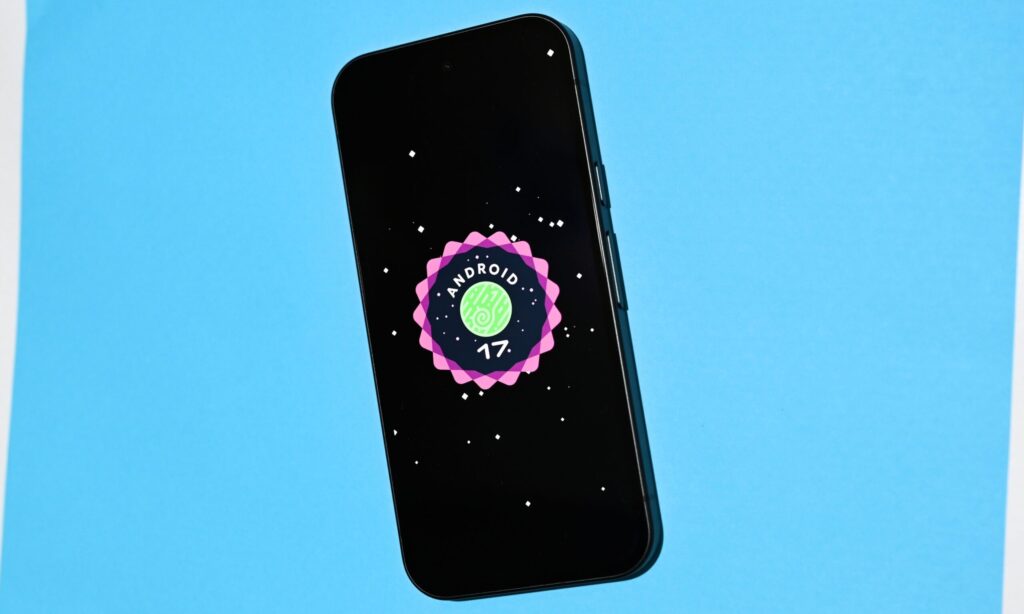
Android 17 is now rolling out in stable form on Pixel phones, and that immediately raises a more practical question for users: which devices are actually on the upgrade path. The answer is not the same across brands, because Android updates still depend heavily on the manufacturer’s policy, device class, and launch timing.
For many buyers, the biggest signal is age. Devices released in 2024 or later generally have a strong chance of receiving Android 17, while older phones face a much less certain future, especially in the budget and mid-range segments.
Google remains the fastest mover
Google’s own Pixel lineup is the simplest case. Pixel phones receive Android updates before most other brands, and that pattern continues with Android 17.
The eligibility list for Google includes 20 phones, with the Pixel 6 and newer already on the stable release track. For current owners, the most direct step is to check system updates in settings.
Samsung still offers one of the broadest safety nets
Samsung remains one of the most dependable names for long-term updates. The company promises seven Android OS upgrades for flagship devices and six years of support for many mid-range models.
In the Galaxy S family, every device from the Galaxy S23 onward is set to receive Android 17. In the Galaxy A series, models from the Galaxy A24 and newer are also included.
Samsung’s foldables and other mid-range lines also cover a wide span of devices. The Galaxy Z, Galaxy M, and Galaxy F families all appear in the update path, and the Galaxy Z Fold Special Edition plus the Galaxy Z Flip 7 FE are also part of the rollout picture.
Vivo, OPPO, and OnePlus remain competitive
Vivo has become more convincing on software support. The X300 series gets five years of software updates, while mid-range models such as the V70 and V70 Elite are guaranteed four Android OS upgrades.
Vivo and iQOO devices expected to move to Android 17 include the X, X Fold, V, T, Y, and iQOO lineups. Vivo is also described as more organized with updates, including regular security patches for the X300 Ultra and X300 Pro.
OPPO follows a similar pattern, especially at the premium end. The company offers five Android OS upgrades for high-end devices, and the Reno 15 series gets the same commitment.
Its Android 17 list spans the Find X, Find N, Reno, F, and A/K families, giving a large number of OPPO models a solid chance of landing the stable update.
OnePlus is less aggressive than before, but its newer devices still look relatively safe. Most phones released in the last three years are expected to receive Android 17, and the stable build should arrive a few weeks after availability because OnePlus software is now closely aligned with ColorOS.
The uneven cases are where the risk rises
Motorola has improved, but its approach is still uneven. The latest Razr Fold is notable because it is promised seven years of Android OS upgrades, matching Google and Samsung, while other Razr 2026 models receive only three.
The Moto G family is much less secure. Those devices generally get only one or two platform upgrades, which means many older Moto G phones are unlikely to make the jump to Android 17.
Nothing stands out in the budget and mid-range space for a different reason. With at least three upgrades guaranteed for entry-level and budget phones, most of its portfolio should move to Android 17.
Xiaomi remains the most complicated case
Xiaomi is still the least consistent name in this discussion. Many of its devices launch on older Android versions, and the company is also often among the slowest to deliver platform upgrades.
One important example is the Redmi Note 13 Pro+, which launched globally in January 2024 and will not receive Android 17 because it arrived with Android 13 rather than Android 14.
A similar pattern is said to apply to the Redmi Note 14 Pro+ and Redmi Note 15 Pro+, helping Xiaomi avoid meaningful major upgrades on some models. That is why users need to check the exact series and the Android version their phone shipped with before assuming it is covered.
With Android 17 now available in stable form, each manufacturer’s rollout list should become clearer as update schedules are announced. For now, the fastest way to confirm eligibility is to match the brand, series, and exact model against the company’s stated update policy.