


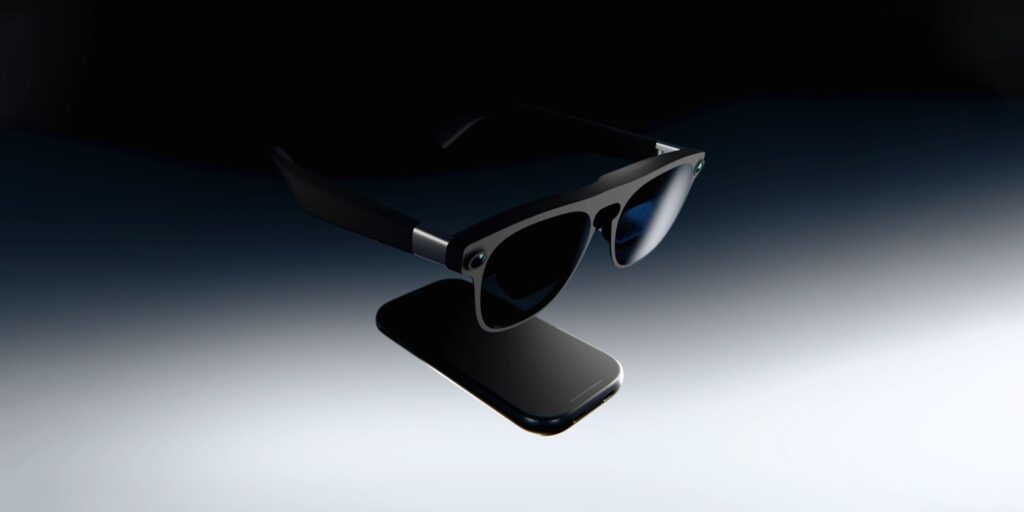
Xreal has finally detailed Aura, its first smart glasses built on Android XR, but the one number many buyers want most is still absent. The company has confirmed only that the base model will cost under $1,500, leaving the final retail price and exact launch date undisclosed.
That missing price matters because Aura is being positioned as a premium XR device. Xreal introduced the glasses after months of teasers under the Project Aura name, using the AWE 2026 stage to show how much deeper it wants to move into Google’s Android XR ecosystem.
A compute-first design instead of a fully self-contained headset
Aura does not try to do everything inside the glasses themselves. It relies on an external compute puck that houses Qualcomm’s Snapdragon Reality Elite processor and a 4,455mAh battery.
The puck can also be configured with up to 16GB of RAM and 512GB of storage, helping shift the heavier processing load away from the eyewear. Xreal is clearly aiming for stronger spatial computing performance without making the glasses body bulky.
Inside the glasses, Xreal also uses its own X1S coprocessor to handle spatial computing and rendering for the optical see-through display system. That setup reinforces the product’s focus on immersive XR use rather than a conventional standalone glasses format.
Display, tracking, and interaction
Aura offers a 70-degree field of view and uses Sony Micro-OLED panels with 1920 x 1200 resolution per eye. The display can refresh at up to 120Hz, which should help keep motion and interaction smooth.
Xreal also includes electrochromic dimming, allowing users to darken the lenses when they want to focus more fully on digital content. For interaction, hand tracking is the primary method, supported by front cameras that enable six degrees of freedom and gesture-based control.
Those features place Aura firmly in the immersive spatial computing category. Xreal says the device will support games, productivity tools, and other interactive experiences across its ecosystem.
Several titles have already been mentioned, including Fallout: Factions, Demeo, and Cubism. That lineup suggests Xreal is not aiming Aura only at media consumption, but also at more active use cases.
Reservations are open, but the real buying decision is still delayed
Even without a final price, Xreal has already opened reservations in the United States, the United Kingdom, and Japan. Buyers can place a $99 reservation that will count as credit toward the final purchase.
The company is also offering a limited Founder Priority Pass priced at $299. That early-access structure suggests Xreal is testing demand before the glasses reach a wider launch.
The first markets targeted for Aura are the US, Canada, Japan, South Korea, and the UK. Additional availability in Europe is planned to follow after that initial rollout.
What remains unclear is exactly when the device will go on sale. Xreal only says Aura is targeted to arrive by the end of this year, and the final price will likely decide how aggressively it can compete in the premium XR segment.
With Android XR, Gemini integration, Qualcomm’s new chip, a separate compute puck, and a high-end Micro-OLED display, Aura already looks like one of Xreal’s most ambitious products. The real test will come when the company finally reveals how much buyers will have to pay to bring it home.