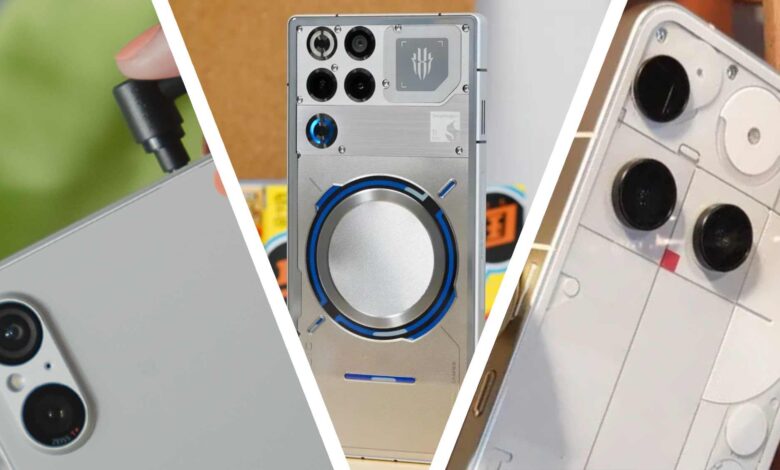
Discarded smartphones may have a second life far beyond storage drawers and recycling bins. Researchers are now testing whether thousands of old devices can be turned into a low-emission data center.
The effort, backed by Google and led by the University of California San Diego, is built around a simple idea: consumer hardware that is no longer wanted may still be capable of useful cloud computing work. The project was published through Google Research and is designed to reduce the environmental footprint of digital infrastructure.
Why old phones still matter
Many people replace smartphones every four years, often for reasons tied more to new models than broken hardware. Even after years of use, many older phones still carry functioning processors, memory, storage, and accelerators that can handle real workloads.
In some tests, the per-core performance of modern smartphones can come close to, or even exceed, parts of older multicore server systems. The limitation is not always raw capability, but scale and memory capacity.
Servers typically offer dozens of processor cores and much larger memory pools, while smartphones usually have only a few cores and around 8 to 12 GB of memory. That gap is why researchers are combining large numbers of devices instead of relying on one phone at a time.
How the cluster is built
To make the setup practical, the phones are not used in their original form. Batteries are removed to reduce degradation, swelling, and safety risks during long periods of continuous operation.
The main component kept is the motherboard, where the core computing ability remains. Android is replaced with a Linux distribution better suited to server use, allowing the phones to run cloud applications more like conventional machines.
At the management layer, the researchers use Kubernetes to coordinate thousands of devices. The phones are grouped into clusters of 25 to 50 units so they can operate as a single computing system with more manageable control.
From classroom tools to campus-scale infrastructure
UC San Diego plans to build a data center from 2,000 used Pixel smartphones. The facility is intended to support computer science teaching, programming systems, and parallel computing research.
Many academic cloud services do not require heavy hardware. One example cited by the researchers is an automated assignment grading backend that often runs on small instances such as AWS t3.micro, which has 2 vCPU and 1 GB of RAM.
That lighter workload profile makes older smartphones surprisingly relevant. In an early trial, a cluster of 20 phones handled class workloads for more than 75 students.
The same test also showed lower grading latency than the AWS backend previously used. If the target of 2,000 devices is reached, the system is expected to support roughly 100 classes at the same time.
Environmental upside, if the model scales
For some types of workloads, the aggregated computing capacity could approach that of about 50 modern servers. The focus is not on demanding commercial cloud services, but on education and research tasks that do not require extreme resources.
The environmental case is equally important. Hardware manufacturing still carries a carbon cost, from raw materials to the energy needed to build each new server.
Reusing old smartphones extends the lifespan of devices that would otherwise sit idle. It also reduces demand for new materials and helps cut emissions tied to fresh hardware production.
Whether consumer devices can remain reliable over long periods as server-like systems is still being tested. If the approach proves stable at scale, millions of used smartphones could shift from e-waste into a new source of computing power.