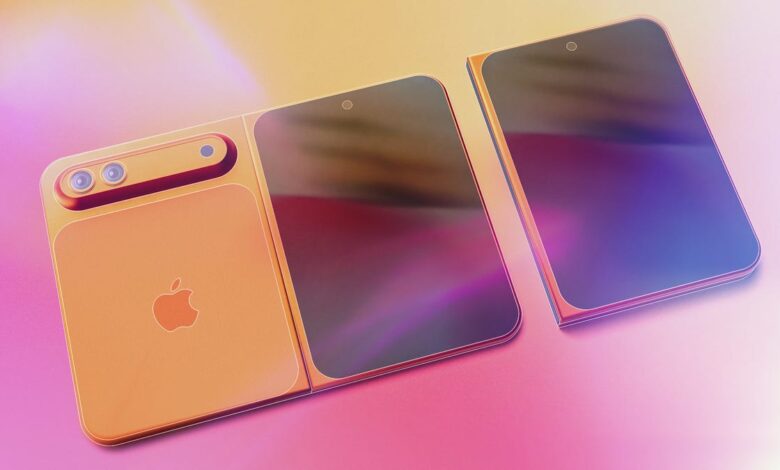
Apple is moving closer to the foldable phone market with a first production plan that already looks substantial. The company is reportedly preparing an initial run of about 3 million iPhone Fold units, a sign that it intends to enter the category carefully rather than aggressively.
What could determine the timing, however, is not the display. The main obstacle is still the hinge, which remains the most sensitive part of the device as Apple works toward a launch window that has been discussed for September.
Samsung Becomes the Key Display Supplier
Reports cited by Forbes indicate that Samsung will be the exclusive panel supplier for the iPhone Fold. According to The Elec and ET News, Samsung Display and LG have already started producing OLED panels for the iPhone 18 series, but the foldable model is expected to rely solely on Samsung.
The arrangement is not a short-term one. Apple and Samsung are said to have signed a three-year exclusive agreement for the OLED panels used in the foldable handset.
That setup gives Apple access to a supplier with deep experience in foldable screens. Samsung Display is said to have eight generations of experience building durable foldable panels, especially for the Galaxy Z Fold line.
Why the Display Side Looks Ready
The iPhone Fold is also expected to use CoE, or Color Filter on Encapsulation, technology. This approach makes the panel thinner, brighter, and up to 37% more efficient.
Apple’s foldable device is also said to use Samsung’s M16 OLED material. Together, those components are expected to improve power efficiency, color performance, and brightness.
Power matters more in a foldable device than in a standard phone. With two screens drawing from a single lithium-ion battery, efficiency becomes essential for practical everyday use.
The Hinge Remains the Hardest Problem
While the display side appears to be in place, the hinge is still not fully stable. The Elec reports that the iPhone Fold uses a 3D-printed hinge component, but the part has produced unwanted noise after assembly.
That issue could delay production by roughly 15 days to one month. An industry official quoted by The Elec said Apple is struggling to stabilize production of the hinge module for its first foldable phone.
The same official stressed that there is no problem with Samsung Display. The final launch schedule, the source said, depends mostly on Apple’s own component readiness, especially the hinge.
Early Volume Suggests Caution, Not Hesitation
Apple’s planned 3 million-unit initial run points to a measured entry into a new category. The number is still large for a first-generation foldable, but it also reflects how carefully Apple is approaching a market that has not yet fully proven itself.
The volume is said to align with the production scale being prepared by Samsung for the Galaxy Z Fold 8. Samsung’s total target for the Galaxy Z Fold 8 lineup, including Ultra, Wide, and Flip 8, is reported to be around 5 million to 6 million units.
Within that figure, the Wide model alone is said to reach 2 million units. Apple, meanwhile, is planning to produce 3 million iPhone Fold units before the end of the year.
Launch Timing Still Depends on Final Readiness
Talk of a September release has already surfaced, but the sources cited emphasize that the final schedule remains tied to the readiness of core components. The hinge is the most delicate point because it reportedly caused problems in testing only a few weeks ago.
Apple has faced related hinge challenges before while working on early generations of Samsung’s Fold devices. This time, though, the scrutiny is sharper because the iPhone Fold would be Apple’s first entry into the category, and even a minor delay could shape early market perception.
Beyond the hardware, foldable phones also require software support that can handle app resizing and multitasking on a flexible screen. That makes the category more complex than standard smartphones, and it raises the bar for a debut device.