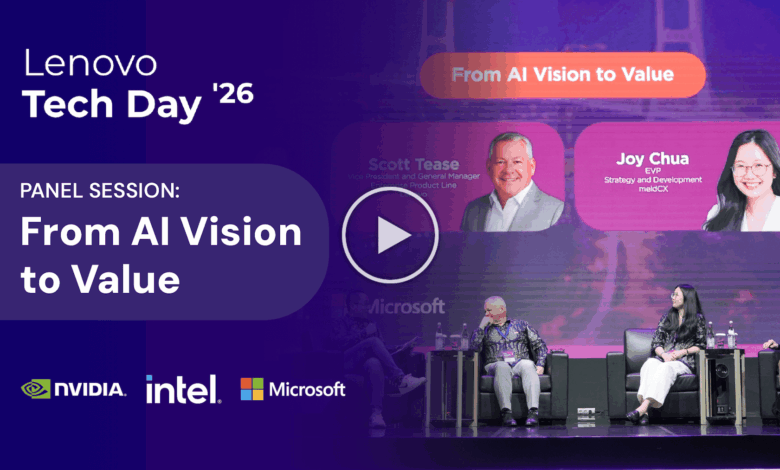
Lenovo is pushing harder into Indonesia’s enterprise market with an AI strategy designed to be used directly by organizations. Through Lenovo Tech Day 2026, the company presented an integrated ecosystem that combines devices, infrastructure, software, and services in one framework.
The move comes as more companies shift from exploring AI to deploying it in daily operations. Many of them still face the same obstacles: data security, system integration, and infrastructure readiness.
AI built for practical business use
Lenovo is positioning AI as a strategic need for multiple industries in Indonesia, not just as a showcase technology. The company says its approach is meant to make adoption simpler, safer, and scalable as business requirements grow.
Budi Janto, President Director of Lenovo Indonesia, said the integrated ecosystem helps customers adopt AI with greater confidence. He emphasized that the goal is to create real business value and a long-term foundation for sustainable growth.
That direction also reflects Lenovo’s long-running Smarter AI for All vision. The focus is not only on advanced technology, but also on business relevance, productivity, and operational efficiency.
A single ecosystem for devices, software, and services
On the workplace side, Lenovo highlighted AI integrations aimed at improving productivity across organizations. The company combines high-performance hardware with AI-based software to support workflows, collaboration, and everyday automation.
One of the featured tools is AI Now, an AI assistant designed to deliver a more personal and productive computing experience. It is also intended to support hybrid work patterns that are now common in many organizations.
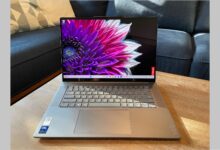
The ecosystem is backed by enterprise devices such as the ThinkPad T14 Gen 6 and ThinkSmart One Pro. Lenovo says both are built to combine high performance, mobility, security, and reliability for modern work environments.
Manufacturing and education are key targets
Lenovo also showed how AI can be applied in industry through a smart manufacturing concept. In this setup, AI is paired with computer vision, edge computing, and intelligent infrastructure to help manufacturers improve efficiency and speed up decision-making.
The technology can automate quality control in real time. It can also help optimize warehouses, supply chains, and large-scale visual data analysis that previously required more time and resources.
At Lenovo Tech Day 2026, the company demonstrated Robotic Inspection Solution for AI-based automated inspection, Miniature Smart Warehouse Solution for smart warehouse simulation, and computer vision with edge computing using the ThinkEdge ecosystem.
In education, Lenovo is promoting an AI-driven education approach to support learning transformation. Through the Smart Classroom concept, the company integrates AI, intelligent collaboration, and device management so institutions can better understand student learning patterns and improve engagement.
To support that effort, Lenovo is bringing ThinkSmart Hub 2, ThinkSmart Cam, the latest ThinkPad lineup, and the ThinkVision 27 3D monitor. The devices are aimed at visualization needs and modern collaborative workspaces in learning environments.
Security remains the foundation
As AI adoption expands, Lenovo is putting data security at the center of its enterprise message. The company is using an end-to-end security approach that combines enterprise devices, infrastructure, and supporting services to protect data and keep operations running.
Its enterprise portfolio is said to meet military-grade durability standards and is backed by Lenovo Premier Support. Lenovo also offers ThinkShield as an integrated security solution covering device protection, management, deployment, technical support, and supply chain security.
Budi Janto said the value of AI is not defined only by the technology itself. According to him, that value is seen in what it delivers to organizations, including higher productivity, better operational efficiency, and new opportunities for innovation when AI is applied according to business needs.