


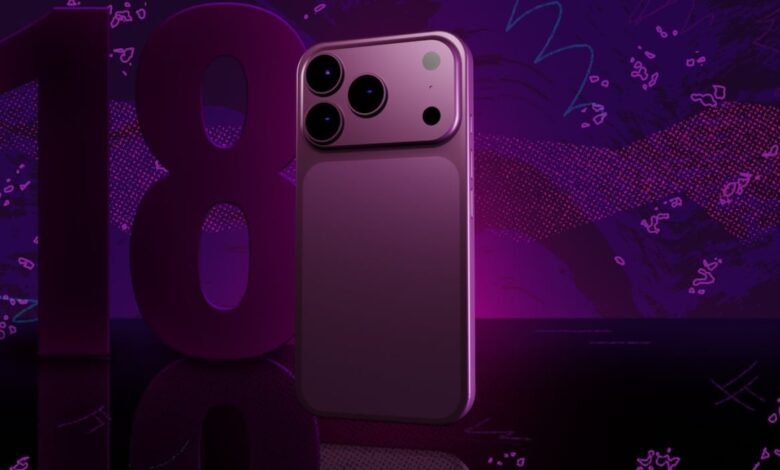
The iPhone 18 Pro Max is shaping up to be one of Apple’s most visible camera redesigns in years. Recent leaks suggest the rear camera plateau could be about 2 mm larger than on the iPhone 17 Pro, making the module look thicker and more pronounced.
That change is not just cosmetic. Test units reportedly show the device’s total thickness, including the protruding lenses, rising from around 12.92 mm to 13.77 mm as the camera module grows in proportion.
A larger module to support a new optical system
The main reason behind the redesign appears to be Apple’s new variable aperture system. Apple is also said to be preparing a 48MP main sensor with a 1/1.12-inch size, which would be significantly larger than the current sensor.
Sources in China and the supply chain indicate Apple may use three camera openings of similar size. The approach is reportedly meant to preserve visual balance while making the camera array look more muscular and immediately noticeable from the back.
On current iPhone Pro models, the main camera still uses a fixed f/1.78 aperture. That means the lens cannot adjust its opening to suit different lighting conditions in the way a variable aperture system can.
With the new mechanism, the lens opening could adapt automatically. In bright conditions, a narrower aperture may improve sharpness, increase depth of field, and keep more of the scene in focus.
In low light, the aperture could open wider to capture more light. That could also reduce reliance on AI-based image processing and the multi-frame techniques commonly used in modern smartphones.
More control for photography enthusiasts
The combination of a larger 48MP sensor and variable aperture is expected to create more room for creative control. One of the biggest gains would be more natural bokeh, closer to what users typically see from DSLR or mirrorless cameras.
Instead of relying entirely on software to separate the subject from the background, the new hardware could produce a more realistic optical blur directly from the lens system. For portrait photography, that could mean a more natural look and greater control over depth of field for advanced users.
This also matters in the broader battle at the high end of mobile photography. Many Android manufacturers have already adopted similar approaches, so the iPhone 18 Pro Max could help Apple narrow the gap with premium Android phones in camera capability.
Higher costs and technical trade-offs
Analyst Ming-Chi Kuo previously said the new lens system on the iPhone 18 Pro Max would cost around 50% more to produce than Apple’s current camera module. Even so, production is reportedly already underway, suggesting Apple is serious about bringing the upgrade to market.
The new design also brings complications. iPhones are not currently known for especially strong close-focus performance through the main camera, since Apple often relies on the ultra-wide camera for macro shots.
Adding a mechanical aperture and a larger sensor could make the optical system more complex. That may affect minimum focus distance or create new challenges in maintaining image quality, autofocus speed, and camera stability.
Apple has not yet explained how it will solve those engineering issues. Still, with its long record of tuning hardware and software together, the company is widely seen as capable of finding a workable balance.
iPhone 18 Pro and iPhone 18 Pro Max are said to launch officially in about three months. The growing number of prototypes and leaked images in recent weeks suggests Apple is nearing final decisions on the device’s design and core specifications.