


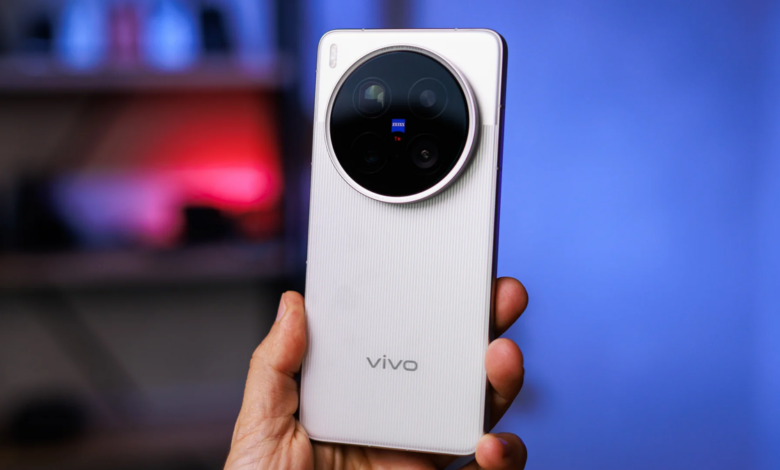
Vivo’s X300 Ultra and X300 FE do not compete on price alone. They split the flagship market into two very different propositions, with the Ultra positioned as the no-compromise model and the FE built around a far lower entry point.
The gap is significant. The X300 Ultra is priced at around $1,500 (₹1,60,000), while the X300 FE comes in at around $950 (₹80,000), making the cheaper model far easier to justify for many buyers.
Two flagships, two priorities
The X300 Ultra is aimed at users who want the most complete premium package available. That audience includes mobile photographers, content creators, gamers, and power users who tend to push a phone across every major category.
The X300 FE takes a more practical route. It targets buyers who still want flagship speed, premium design, and strong overall value, but do not need every extreme feature that Vivo reserves for the Ultra.
Display size sets the tone
The X300 Ultra uses a 6.82-inch LTPO AMOLED panel with a 144Hz refresh rate, QHD+ resolution, Dolby Vision, and Ultra HDR. It is built for a large-screen experience that favors media consumption and heavy use.
The X300 FE goes smaller with a 6.31-inch LTPO AMOLED display, a 120Hz refresh rate, HDR10+, and a peak brightness rating of 5000 nits. The result is a more compact phone that still keeps the premium display credentials intact.
Performance stays flagship-grade either way
Under the hood, the X300 Ultra uses the Snapdragon 8 Elite Gen 5, a chipset positioned for top-tier workloads and users who want maximum performance. The X300 FE relies on the Snapdragon 8 Gen 5, which still sits firmly in flagship territory.
Memory and storage options further separate the two. The Ultra goes up to 16GB RAM and 1TB of UFS 4.1 storage, while the FE tops out at 12GB RAM and 512GB UFS 4.1.
That makes the Ultra more appealing for demanding users who edit video, carry large files, or keep many heavy apps open at once. The FE still offers enough headroom for gaming, photography, and everyday premium use.
The camera gap is where the split becomes clear
Vivo gives the X300 Ultra a far more ambitious rear camera setup. It includes a 200MP main camera, a 200MP periscope lens, and a 50MP ultrawide lens.
The X300 FE uses a 50MP main camera, a 50MP periscope lens, and an 8MP ultrawide camera. It remains a capable flagship camera system, but it is not tuned to match the Ultra’s level of flexibility.
Extra camera features reinforce that divide. The Ultra adds gimbal OIS, Zeiss T* coating, 3D LUT support, and an optional Zeiss zoom lens, while the FE keeps Zeiss optics and 3x optical zoom.
On the front, both phones use a 50MP autofocus selfie camera. The Ultra is said to offer more advanced HDR and video features, while the FE supports 4K recording.
Battery life is close, charging behavior is not identical
The X300 Ultra carries a 6600mAh battery with 100W wired charging and 40W wireless charging. The X300 FE is close behind with a 6500mAh battery, 90W wired charging, 40W wireless charging, and bypass charging.
That bypass charging feature may be especially useful for gamers, since it can help route power without putting as much strain on the battery during play while plugged in.
In practical terms, both phones should deliver strong endurance. The Ultra has the advantage in wired charging speed, while the FE adds a feature that speaks directly to gaming use.
Connectivity and software round out the decision
The Ultra also pulls ahead in connectivity. It supports USB 3.2, DisplayPort, and Satellite SOS on the 1TB version, while the FE is limited to USB 2.0.
Both phones run Android 16 with OriginOS 6. The FE, however, stands out for longer-term support, with Vivo saying it will receive up to 5 Android upgrades.
That detail may matter to buyers planning to keep the device for years. In the end, the X300 Ultra is the clear pick for those who want the strongest hardware possible, while the X300 FE looks like the more rational choice for anyone who wants flagship performance and core premium features at a much lower cost.