


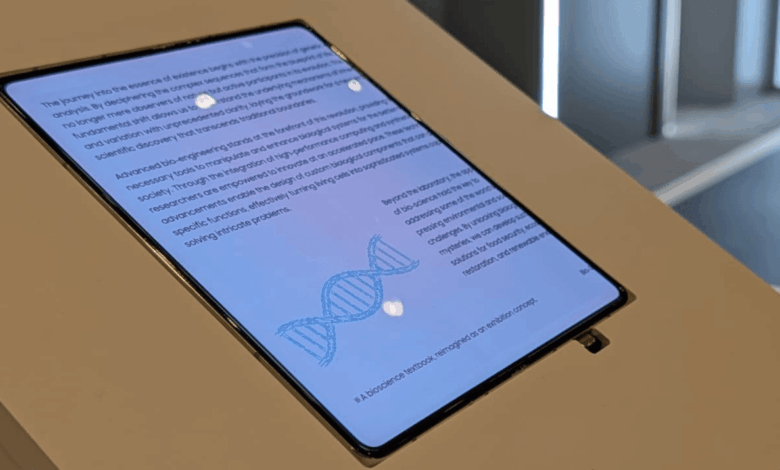
Samsung Display has reportedly begun mass-producing OLED panels for Apple’s first foldable iPhone, a development that suggests the device is moving closer to launch readiness.
The display maker is said to be producing the panels at its Vietnam facility after securing Apple’s approval for mass production. That approval appears to have hinged on one of the most demanding parts of foldable hardware: display quality.
Why this supply deal matters
According to TheElec, Apple required suppliers to meet a final assembly yield of at least 70% before receiving approval. Samsung Display reportedly cleared that hurdle with a result above 80%, strengthening its position as a key panel supplier for the project.
The same report says Samsung is preparing to fulfill an order for around 3 million panels, with shipments expected to be completed by the end of the year. That scale suggests Apple is moving well beyond early testing and into a more concrete production phase.
| Reported Detail | What It Means |
|---|---|
| Production site | Samsung Display’s Vietnam facility |
| Approval threshold | At least 70% final assembly yield |
| Samsung’s reported result | Above 80% |
| Planned volume | About 3 million panels |
| Shipment target | By the end of the year |
Crease-free OLED is the key selling point
The panels are described as crease-free OLED displays, a notable ambition in a product category where visible folding lines remain a persistent complaint. For Apple, that detail could become one of the most important differentiators for the iPhone Fold, or iPhone Ultra, depending on the final branding.
The report also says the panels are likely to use Colour Filter on Encapsulation technology, which removes the polarizer and places the filter directly on top of the display layer. The goal is a thinner structure that better fits the demands of a foldable design.
In addition, TheElec says the display may be based on Samsung’s latest M16 OLED generation. That panel family is associated with improvements in power efficiency, color reproduction, and brightness.
Apple is leaning on a proven supplier
Samsung Display has long been one of the leading names in OLED technology, especially in the foldable segment. In this case, the company is also said to have a three-year contract with Apple to supply panels for the foldable iPhone.
Filling such a large order is made more feasible by the company’s manufacturing scale. Samsung’s Vietnam unit reportedly operates 80 production lines, giving it the capacity to handle the expected volume without excessive strain.
That manufacturing readiness matters because the display is the most sensitive component in a foldable phone. Any weakness in folding durability, energy use, or visual quality can quickly affect the overall user experience.
Launch timing is still under debate
The launch window for Apple’s foldable iPhone remains uncertain. Some reports have pointed to a delay until 2027, while newer leak-based roadmaps suggest a possible debut at the end of 2026.
With OLED production now reportedly underway, the earlier timeline appears more plausible than before. Attention is now likely to shift toward Apple’s product plans ahead of the iPhone 18 Pro lineup expected in September 2026.
Apple has not disclosed official specifications for the foldable model yet. Even so, Samsung Display’s move offers one of the strongest signs so far that the project has moved past rumor and deeper into commercial preparation.