


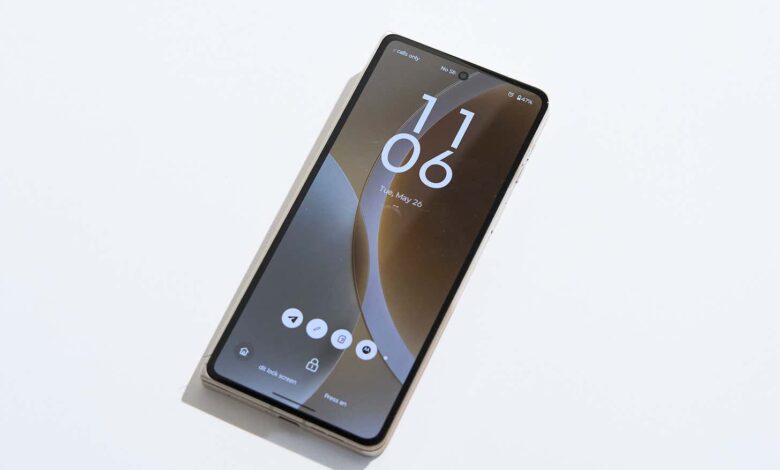
July is shaping up to be a crowded month for smartphones, even though the overall number of launches may be lower than usual. Rising memory costs and an ongoing chip shortage are slowing the market, but several notable devices are still set to arrive with a mix of bigger batteries, new designs, and sharper product strategies.
The most closely watched names come from Samsung, Oppo, Nothing, and Motorola. Together, they point to a month where mid-range premium phones and high-end foldables could attract very different kinds of buyers.
Launches already on the calendar
Oppo’s Reno 16 series is expected first, with a launch scheduled for 2 July. Nothing Phone (4b) follows on 7 July, while Samsung’s next Galaxy foldables are tipped for 22 July.
Motorola has not announced a fixed date, but the Razr 70 series is reported to arrive in India during July. That timing places four major families of phones in the same month, even before every official detail is confirmed.
Oppo and Nothing are aiming at broader buyers
Oppo is expected to introduce two models, the Reno 16 and Reno 16c, with different positioning for different budgets. The Reno 16 is being framed as a compact mid-range premium phone, while the Reno 16c is the more affordable option with a slightly larger body.
| Model | Key Display and Battery Details | Core Chipset |
|---|---|---|
| Oppo Reno 16 | 6.32-inch AMOLED, 120Hz, 1800 nits peak brightness, 6700mAh battery, 80W charging | Snapdragon 7 Gen 4 |
| Oppo Reno 16c | 6.57-inch AMOLED, 120Hz, 1400 nits peak brightness, 7000mAh battery, 80W charging | MediaTek Dimensity 7300-Energy |
The Reno 16 comes with a 6.32-inch Full HD+ AMOLED display, a 120Hz refresh rate, and 1800 nits peak brightness. Oppo also adds an AI Snap Key, which can quickly save content to MindSpace.
Its camera setup stands out on paper, with three 50MP sensors for the main, ultrawide, and telephoto cameras. The telephoto unit offers 3.5x optical zoom, and all three rear cameras support 4K 60 fps video recording, while the front camera is also 50MP.
The device is said to use the Snapdragon 7 Gen 4, paired with a 6700mAh battery and 80W fast charging. Oppo also lists IP66, IP68, IP69, and IP69K protection, which makes the phone unusually well protected for its class.
The Reno 16c keeps a similar formula but shifts to a 6.57-inch AMOLED display with the same 120Hz refresh rate and 1400 nits peak brightness. It is reported to run on the MediaTek Dimensity 7300-Energy and to carry a larger 7000mAh battery with 80W charging.
Like the main model, the Reno 16c is said to include the AI Snap Key, an aerospace-grade aluminium frame, and the same IP66, IP68, IP69, and IP69K certifications. That combination gives the lower-priced model a more ambitious spec sheet than many rivals at the same level.
Nothing Phone (4b) takes a different route by becoming the first model in the company’s new “B” series. It is designed to bring the core Nothing experience to a wider audience while keeping the brand’s signature visual identity.
Teaser material shows a compact Glyph Bar on the back with five LED panels, plus a dual-camera setup built around a 50MP main sensor and an 8MP ultrawide camera. Leaks also point to a 32MP front camera, a 6.7-inch AMOLED 120Hz screen, and a 5400mAh battery with 50W fast charging.
Benchmark leaks suggest the phone may use the Snapdragon 6 Gen 4, along with 8GB of RAM and up to 256GB of storage. That would place it below the main Nothing line, but still within a range that keeps the design story front and center.
Samsung is preparing the most aggressive foldable update
Samsung is expected to go beyond the usual Galaxy Z Fold 8 and Galaxy Z Flip 8 pair by adding a Galaxy Z Fold 8 Ultra. If that happens, the company would be pushing its foldable line further into the premium end of the market.
The standard Galaxy Z Fold 8 is said to shift to a wider 4:3-like form factor, with a 7.6-inch foldable display, a 5.4-inch cover screen, and the Snapdragon 8 Elite Gen 5. Other leaks mention up to 16GB of LPDDR5X RAM and storage of up to 1TB.
Samsung is also rumored to drop the 200MP sensor from the main Fold model, instead using a 50MP main camera and a 50MP ultrawide camera. Two 10MP selfie cameras are also mentioned, along with a 4800mAh battery, 45W wired charging, and 15W wireless charging.
The Galaxy Z Fold 8 Ultra is expected to keep the previous form factor but upgrade the hardware. Leaks point to an 8-inch foldable display, a 6.5-inch cover screen, the Snapdragon 8 Elite Gen 5 for Galaxy, a vapor chamber, and a 5000mAh battery with 45W charging.
| Samsung Foldable | Display | Battery and Charging | Camera Highlight |
|---|---|---|---|
| Galaxy Z Fold 8 | 7.6-inch foldable, 5.4-inch cover screen | 4800mAh, 45W wired, 15W wireless | 50MP main, 50MP ultrawide, two 10MP selfie cameras |
| Galaxy Z Fold 8 Ultra | 8-inch foldable, 6.5-inch cover screen | 5000mAh, 45W charging | 200MP main, 50MP ultrawide, 10MP telephoto with 3x optical zoom |
| Galaxy Z Flip 8 | 6.9-inch main screen, 4.1-inch cover screen | 4300mAh, 25W wired, possible 15W wireless | Not fully detailed in the leaks |
The Galaxy Z Flip 8 is also expected to appear at the same event. Leaks suggest a 6.9-inch AMOLED main display with a less visible crease, a 4.1-inch cover screen, a 4300mAh battery, and 25W wired charging, with possible 15W wireless support.
Samsung is also said to use two chipsets for the Flip 8. The US, Canada, China, and Japan could get the Snapdragon 8 Elite Gen 5 for Galaxy, while India and other markets may receive the Exynos 2600.
Motorola keeps the focus on flip phones
Motorola’s Razr 70 series is also expected to land in India during July, with the Razr 70 and Razr 70 Ultra leading the line-up. Both models continue to lean on large outer displays and practical camera hardware for everyday use.
The Razr 70 is said to include a 6.9-inch 120Hz AMOLED panel with Dolby Vision and a 3000-nit peak brightness level. Its outer display measures 3.6 inches, supports HDR10+ and 90Hz refresh, and the phone is powered by the Dimensity 7450X.
Motorola is also reportedly fitting the Razr 70 with a 4800mAh battery, 30W wired charging, and 15W wireless charging. The rear camera system uses a 50MP main sensor and a 50MP ultrawide sensor, while the front camera is 32MP.
The Razr 70 Ultra moves up with the Snapdragon 8 Elite, up to 16GB of RAM, and up to 512GB of storage. It also brings a 7.0-inch 165Hz main display with 5000 nits of peak brightness and a 4-inch outer screen.
Power comes from a 5000mAh battery with 68W wired charging, 30W wireless charging, and 5W reverse-wired charging. Its camera setup keeps the 50MP main and 50MP ultrawide arrangement, but the front camera rises to 50MP.
With these launches, July looks set to be busy even under pressure from higher component costs and supply constraints. The competitive picture is clear enough already, with Oppo and Nothing targeting broader audiences while Samsung and Motorola use foldables to push design and hardware in different directions.
Source: www.gizmochina.com