
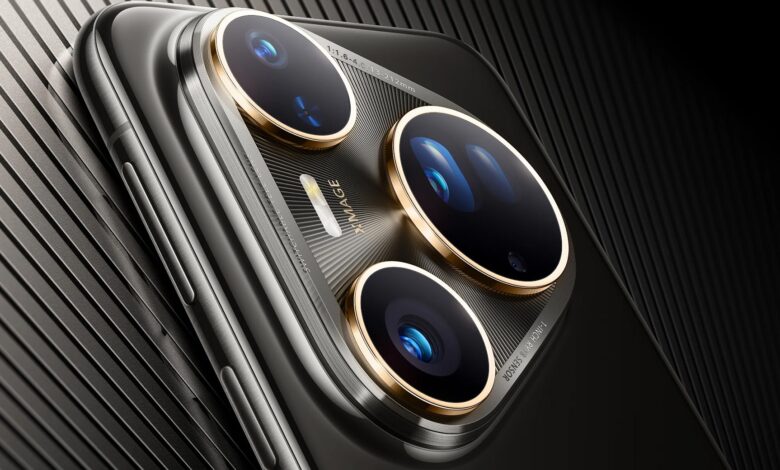
Huawei Pura 80 Ultra has emerged as the biggest name in DXOMARK’s 2026 ranking of the world’s best smartphone cameras. The device overtook major rivals such as iPhone and Samsung, underscoring how premium camera competition is increasingly led by Chinese manufacturers.
The latest ranking reflects a broader shift in what premium users value. DXOMARK evaluates devices across photo quality, color reproduction, zoom capability, low-light performance, and video output, showing that mobile photography now goes far beyond megapixel counts or sensor size.
Huawei Claims the Top Spot
Huawei Pura 80 Ultra finished first with an overall score of 175 points. Its main strength lies in still photography, where it earned 180 points, while the main camera reached 184 points.
Huawei relies on a switchable telephoto lens and a 1-inch Ultra Lighting HDR sensor to preserve detail across different lighting conditions. The result reinforces Huawei’s reputation as a serious camera innovator, even as it continues to face global app ecosystem challenges.
| Model | Total Score | Photo Score | Video Highlights |
|---|---|---|---|
| Huawei Pura 80 Ultra | 175 | 180 | Switchable telephoto lens, 1-inch Ultra Lighting HDR sensor |
| Vivo X300 Pro | 171 | – | 200 MP Zeiss telephoto, gimbal stabilization, 4K 120fps Dolby Vision HDR |
| Oppo Find X8 Ultra | – | – | Hasselblad collaboration, 175-point bokeh score, 200 MP telephoto |
| iPhone 17 Pro | 168 | – | 172-point video score, accurate color reproduction |
| Vivo X200 Ultra | 173 | 174 | Very strong telephoto performance, Snapdragon 8 Elite |
| Oppo Find X9 Pro | 166 | – | Hasselblad 200 MP telephoto, 4K 120fps Log video |
| Xiaomi 17 Ultra | 165 | 170 | 1-inch main sensor, 200 MP periscope, Night 3.0 |
Vivo, Oppo, and Xiaomi Close In
Vivo X300 Pro took second place with 171 points. It features a 200 MP telephoto camera tuned with Zeiss technology and gimbal stabilization to make video steadier.
The phone also supports 4K 120fps Dolby Vision HDR recording, which strengthens its position in a segment increasingly shaped by short-form content and vlogging. Oppo Find X8 Ultra followed in third place, helped by its ongoing partnership with Hasselblad.
DXOMARK gave Oppo’s bokeh effect a high score of 175 points, while its 200 MP telephoto camera improved long-range zoom performance. Oppo continues to position the line as one of the most photography-focused premium families on the market.
Xiaomi 17 Ultra completed the top seven with a score of 165 points. It uses a 1-inch main sensor and a 200 MP periscope camera.
Xiaomi also adds a mechanical optical zoom range of 75 mm to 100 mm to improve distant shots. Its photo score reached 170 points, while telephoto performance was rated at 169 points.
Apple Still Leads in Video
iPhone 17 Pro placed fourth with an overall score of 168 points. Its main camera scored 175 points thanks to accurate color reproduction, strong detail, and a wide dynamic range.
The device’s biggest advantage remains video, where it scored 172 points. That keeps the iPhone 17 Pro among the strongest options for professional content creators.
This position shows that Apple still holds a strong reputation in mobile video capture. For users who regularly create content for social media or work, video performance remains a critical differentiator.
Vivo X200 Ultra ranked fifth with 173 points for photo and 174 points for the main camera. Its telephoto system is also described as highly capable, while the Snapdragon 8 Elite chipset helped it score more than 3.3 million points on AnTuTu.
The combination of performance and imaging makes Vivo X200 Ultra one of the most complete flagship phones in the field. Oppo Find X9 Pro came next in sixth place with a score of 166 points.
Oppo Find X9 Pro is said to use a Hasselblad 200 MP telephoto camera with up to 120x zoom. It also offers 4K 120fps Log video recording, a feature many professional creators now expect.
What the 2026 Ranking Reveals
Xiaomi 17 Ultra’s Night 3.0 feature helps improve low-light photography, although its large camera module makes the body thicker than some rivals. That trade-off shows that premium camera innovation still often comes at the expense of design slimness.
DXOMARK’s 2026 list highlights a clear change in the smartphone camera race. Chinese brands now dominate the top positions, Apple remains a benchmark for video, and the flagship market is moving toward AI, computational imaging, and more advanced zoom systems.