


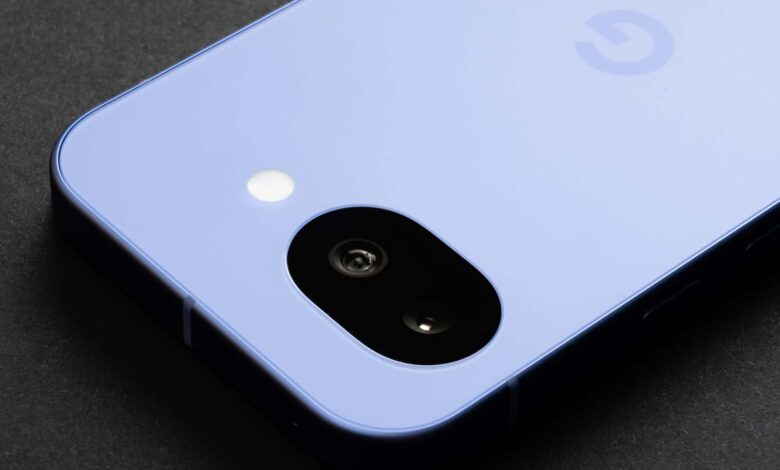
Android phones are still often judged unfairly, largely because many comparisons are built on mismatched price tiers. A budget Android handset is frequently placed against a premium iPhone, then the entire platform is treated as if it cannot compete.
That view becomes weaker the moment the comparison moves to the same class. Many Android phones now use premium materials, advanced cameras, strong performance, and long software support, making the gap far smaller than the old stigma suggests.
Design is where the first bias appears
One of the biggest reasons Android phones are dismissed is appearance. Lower-end models still commonly rely on plastic bodies, polycarbonate frames, thick bezels, and water-drop style front camera cutouts.
Those choices help keep phones light and less fragile, but they also reduce the sense of luxury. Thick bezels, in particular, can make a device look dated even when the hardware inside is perfectly capable.
Price has shaped the stereotype
Another driver of the stigma is market positioning. Many Android phones sell for Rp1 juta–2 jutaan, and that low entry price makes some buyers assume Android as a whole is simply cheap.
That assumption ignores the higher tiers. Android mid-range and flagship models can reach Rp8 juta–30 jutaan, so the real comparison should always be based on class, not on a single low-cost segment.
Cameras are no longer a fixed weakness
Android is still sometimes seen as trailing iPhone in photography, but the gap has narrowed sharply. The strongest gains are visible in flagship and mid-range devices, where camera systems have become far more ambitious.
| Model | Camera Detail | Notable Capability |
|---|---|---|
| Samsung Galaxy S26 Ultra | 200 MP camera | Up to 100x zoom |
| vivo X300 | 200 MP camera | Up to 100x zoom |
| vivo V70 | Periscope telephoto | 3.5x optical zoom |
| OPPO Reno 15 | Video recording on all cameras | 4K 30 FPS |
Performance criticism often uses the wrong benchmark
Claims that Android phones are slow usually come from another unfair comparison. Entry-level Android models are often measured against iPhones that cost many times more, which distorts the result before performance is even discussed.
At the top end, Android performance is very strong. Samsung Galaxy S26 Ultra and vivo X300 Pro use Snapdragon 8 Elite Gen 5 and MediaTek Dimensity 9500, while Xiaomi 17T and vivo V70 bring Snapdragon 7 Gen 4 and MediaTek Dimensity 8500.
Those chipsets produce AnTuTu scores in the range of 1–3.9 million, enough for heavy games to run smoothly at the highest settings. In the premium segment, Android is no longer the easy target it once was.
Security concerns also keep the old reputation alive
Android is often viewed as more vulnerable because it is based on open-source software. Compared with iPhone, which is more tightly controlled by Apple, Android gives users far more room to customize the system.
That freedom can also create risk when users install suspicious apps or download unsafe files. Livewire cited a study showing that 97 percent of malware attacks target Android phones, while iPhone accounts for just 1 percent, and Malwarebytes said Android malware risk rose by 151 percent.
Durability is no longer tied to one ecosystem
Another outdated view is that Android phones wear out faster. The assumption is often tied to the belief that cheaper phones automatically have shorter lifespans and weaker update support.
In practice, many Android models now include IP68, IP69, IP69K, and MIL-STD-810H compliant durability ratings. Some also use Corning Gorilla Glass Armor, metal frames in the mid-range and flagship tiers, and software updates that can last 4–7 years.
That combination shows how much the category has changed. When the comparison is fair, Android phones can stand out in cameras, displays, performance, and body durability rather than fall behind by default.