


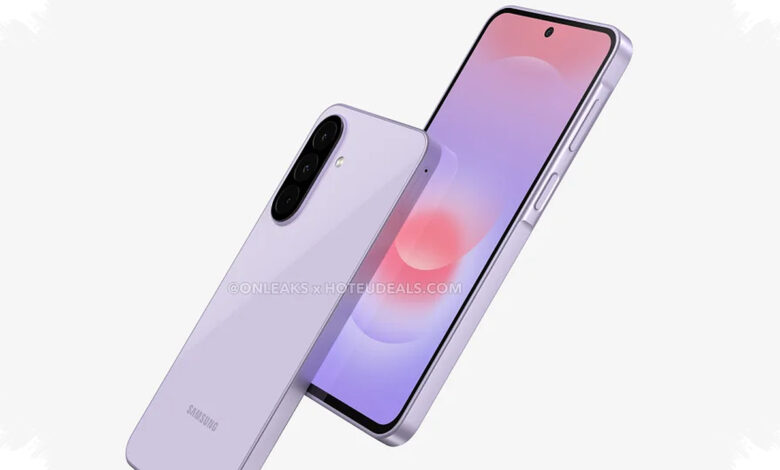
Samsung Galaxy A27 arrives with several upgrades on paper, but its compromises are hard to ignore. In a crowded mid-range market, the phone stands out less for what it adds and more for what it gives up.
For buyers comparing options, the most important question is whether its familiar Samsung strengths are enough to offset the weaker parts of the package. The answer depends heavily on which features matter most in daily use.
A camera downgrade that is easy to notice
One of the clearest setbacks is the ultrawide camera. GSMArena says the sensor is only 5MP, down from the 8MP ultrawide camera on the Galaxy A26.
That shift suggests less detail and weaker low-light performance, which may matter to users who often rely on ultrawide shots for landscapes, group photos, or indoor scenes.
Security hardware feels behind the times
The fingerprint reader also feels less current than what many mid-range phones now offer. SamMobile explains that the Galaxy A27 uses a side-mounted fingerprint scanner built into the power button.
It still works as a normal security feature, but the placement gives the device a more dated feel than in-display fingerprint readers commonly seen in this price range.
| Feature | Galaxy A27 | Galaxy A26 |
|---|---|---|
| Ultrawide camera | 5MP | 8MP |
| Fingerprint sensor | Side-mounted | Not stated in the source |
| Water resistance | IP64 | IP67 |
Water protection is modest for a modern phone
Samsung Galaxy A27 carries an IP64 rating, which Clarion UK describes as protection against dust and water splashes. That is acceptable for light exposure, but it is not especially impressive by current smartphone standards.
The comparison becomes harsher because the Galaxy A26 had IP67, while many competing models now reach IP66, IP68, or even IP69. For users who want stronger durability, this is a meaningful step back.
Charging and battery capacity remain ordinary
The phone supports 25W super fast charging and uses a 5000 mAh battery. Samsung says the battery can reach 45 percent in 30 minutes, which is respectable but not class-leading.
That combination leaves the Galaxy A27 trailing rivals that push faster charging and larger batteries. REDMI Note 15 Pro 5G offers 45W, vivo V70 FE goes up to 90W, and OPPO Reno 15F supports up to 80W.
| Model | Charging | Battery |
|---|---|---|
| Samsung Galaxy A27 | 25W | 5000 mAh |
| REDMI Note 15 Pro 5G | 45W | Not stated in the source |
| vivo V70 FE | 90W | Not stated in the source |
| OPPO Reno 15F | 80W | Not stated in the source |
RAM options are limited by today’s standards
Samsung Newsroom says the Galaxy A27 comes in only two RAM variants: 6GB and 8GB. In a segment where many brands are still trimming specifications, that lineup is not disastrous, but it is not especially generous either.
The 6GB version is the one most likely to raise concerns. For gaming, editing, rendering, and multitasking, that capacity is less comfortable, which makes the 8GB variant the safer choice.
| RAM variant | Practical outlook |
|---|---|
| 6GB | Less suitable for gaming, editing, rendering, and heavy multitasking |
| 8GB | The more secure option for broader everyday use |
Samsung introduced the Galaxy A27 in June 2026 as the successor to the Galaxy A26, but the phone does not automatically become the most attractive option in its class. Its main challenge is simple: several rivals look stronger in the areas that matter most to buyers.
For users who prioritize a better ultrawide camera, an in-display fingerprint scanner, higher water resistance, a bigger battery, or faster charging, the Galaxy A27 may feel like a compromise too far. It remains a possible choice, but only if its trade-offs fit the buyer’s daily needs.