


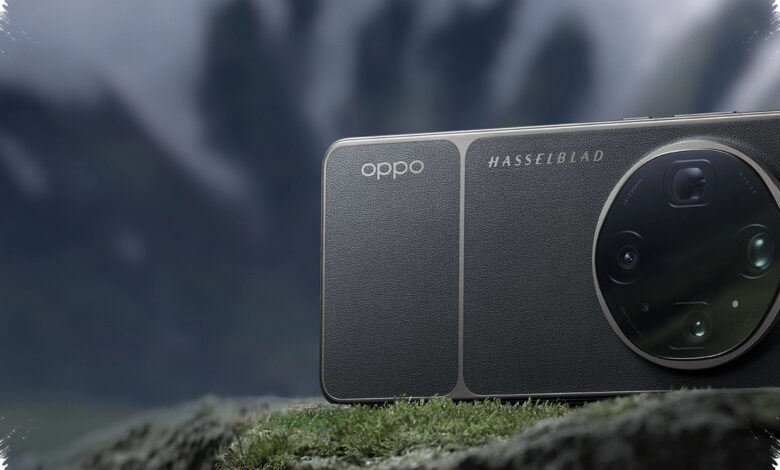
Ultrawide cameras on smartphones rarely use OIS, and the reason is not that the feature is unimportant. The lens design itself already reduces the need for optical stabilization in many everyday shooting conditions.
Because ultrawide lenses capture a very broad field of view, small hand movements are less noticeable in the final image. That is why manufacturers often decide that OIS brings only a limited benefit on this type of camera, while still adding significant hardware cost.
Why OIS is more common on main and telephoto cameras
According to Dedy Irvan from JagatReview, ultrawide cameras do not really require OIS in the same way as main or telephoto cameras. Longer lenses benefit more from mechanical stabilization because their narrower angle of view makes shake easier to see.
OIS works best when it is placed on lenses with a longer reach. On main and telephoto cameras, the effect is more visible in low-light photos and video, where hardware-based stabilization can make a clear difference.
OIS itself is a motor-driven hardware system. Since it relies on physical components, the cost of adding it is naturally higher than using a camera module without optical stabilization.
Ultrawide cameras serve a different purpose
Ultrawide cameras are designed to capture a wider scene. Android Authority notes that ultrawide field of view can vary widely and may reach 120°, while main cameras are usually around 85°.
That wide perspective makes ultrawide cameras especially useful for landscapes and group shots. In those situations, the key advantage is coverage, not optical stabilization.
Some phones also equip the ultrawide camera with autofocus. That allows the same camera to double as a macro shooter, making it possible to focus on very close subjects without losing sharpness.
Specifications are usually more modest
Ultrawide cameras generally come with lower resolutions. Common figures are 8, 12, or 50 MP, while main or telephoto cameras can reach 108 to 200 MP.
The sensor size is also usually smaller, and the aperture is often narrower than on the main camera. Those limits show that the ultrawide module is not usually tuned to compete with the main camera across every category.
| Camera Type | Typical Field of View | Common Resolution Range | Hardware Note |
|---|---|---|---|
| Ultrawide | Up to 120° | 8, 12, or 50 MP | Smaller sensor, often no OIS |
| Main | Around 85° | 108 to 200 MP | More likely to use OIS |
| Telephoto | Narrower than ultrawide | 108 to 200 MP | More likely to use OIS |
This combination of a wide angle, smaller sensor, and different usage profile is why OIS is usually not treated as a top priority on ultrawide cameras. Brands often reserve budget and hardware space for the cameras that have the biggest impact on overall image quality.
There are exceptions in the premium segment
Although uncommon, OIS on ultrawide cameras does exist on a few devices. GSMArena lists the vivo X200 Ultra and vivo X300 Ultra as examples of phones that include OIS on the ultrawide camera.
On those models, the feature is used to maximize stabilization and image quality in more situations. Their ultrawide cameras also come with a 50 MP sensor, an f/2.0 aperture, a 116° field of view, and a large 1/1.28-inch lens.
Those devices show that OIS can be applied to ultrawide cameras when a manufacturer wants to push performance further. For most smartphones, however, the technical payoff still does not justify the extra cost and hardware complexity.