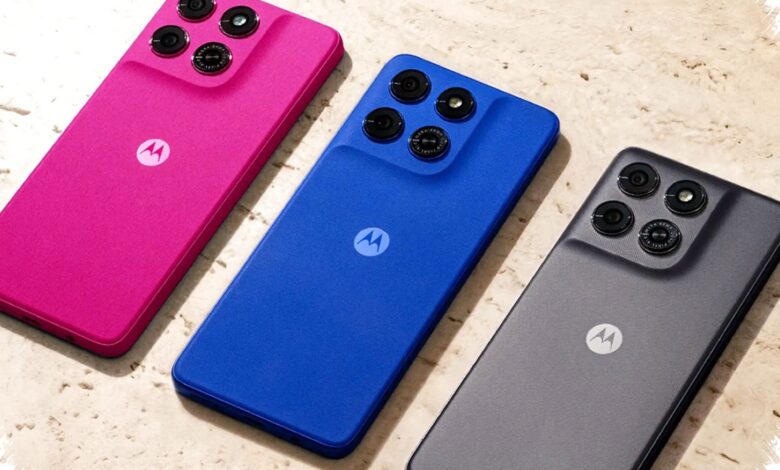
Moto G77 Power is shaping up as a more practical alternative to Moto G77, but not without a clear trade-off. Motorola is set to launch the phone in India on 8 July, and the early details point to a device that leans harder on endurance than on premium visuals.
The comparison is straightforward on paper: both models use the same MediaTek Dimensity 6400 chipset and run Android 16. That makes the split between them less about core performance and more about the everyday experience users will notice most.
Display is where the gap becomes obvious
Moto G77 carries the more premium panel of the two, using a 6.78-inch Extreme AMOLED display. It also supports 10-bit color, 100 percent DCI-P3 coverage, and a peak brightness of up to 5,000 nits.
Moto G77 Power, by contrast, uses a 6.72-inch LCD panel with 8-bit color and peak brightness of up to 1,050 nits. Both phones still offer Full HD+ resolution and a 120Hz refresh rate, but the overall viewing experience is not in the same class.
| Model | Display | Color | Peak Brightness |
|---|---|---|---|
| Moto G77 | 6.78-inch Extreme AMOLED | 10-bit, 100% DCI-P3 | 5,000 nits |
| Moto G77 Power | 6.72-inch LCD | 8-bit | 1,050 nits |
That difference matters in real use. AMOLED typically offers deeper contrast and richer color, while LCD is more conservative in presentation and keeps the focus on practicality rather than visual impact.
What stays the same between the two phones
Despite the display split, the two devices still share the same foundation. The Dimensity 6400 chipset means their baseline performance direction remains aligned, and Android 16 keeps the software side consistent.
Motorola is therefore separating the phones less by raw platform capability and more by how premium each model feels during daily use. For buyers, that puts the screen at the center of the decision.
Moto G77 aims higher, while the Power model stays functional
Moto G77 is clearly positioned as the more upscale option. Its larger Extreme AMOLED panel, 10-bit support, wider DCI-P3 coverage, and 5,000-nit peak brightness make it better suited for media consumption and color-sensitive viewing.
Moto G77 Power does not abandon the basics, because Full HD+ resolution and 120Hz refresh rate are still part of the package. Even so, its LCD panel and lower brightness ceiling show that it is not trying to match the more premium model feature for feature.
Why the name “Power” may still matter
The “Power” label could suggest a focus on battery-first priorities, but the revealed details show that the most visible difference so far is actually the display. That makes the model easier to read as a compromise variant rather than a direct upgrade.
For users who care most about display quality, Moto G77 remains the stronger choice. For those who want the same chipset and Android 16 experience without pursuing the higher-end screen, Moto G77 Power appears to be the more restrained option.
Availability also adds context to the comparison. Moto G77 Power is scheduled to arrive in India on 8 July, while Moto G77 has already debuted globally and has not yet been introduced in India.
That positioning means Moto G77 Power may become the first model in the series to reach the Indian market. It also gives buyers a clear reason to compare both devices closely before deciding which version best fits their priorities.