Motorola and Xiaomi are pushing mid-range Android tablets that are no longer aimed only at entertainment. Moto Pad 70 Pro and Xiaomi Pad 8 both run on the Snapdragon 8s Gen 4, but their design choices show very different priorities.
The most important difference is not raw performance. It is how each tablet fits daily use, with Motorola leaning toward a desk-based work device and Xiaomi focusing on lightness and mobility.
Different shapes, different jobs
Moto Pad 70 Pro comes with a 13-inch display and weighs 589 grams. That makes it more suitable for a more stationary setup, especially when paired with a stand or keyboard.
The Motorola tablet also offers a 144Hz refresh rate, which helps motion feel smoother, while four JBL speakers add extra value for media playback and video meetings.
Xiaomi Pad 8 takes a different route with an 11.2-inch display and a lighter 485-gram body. Its smaller footprint makes it easier to slip into a bag and more comfortable to carry throughout the day.
It also uses a 3:2 aspect ratio that is better suited to reading documents. Xiaomi even offers a textured-screen option that helps reduce glare, especially for outdoor use.
| Model | Display | Weight | Key Advantage |
|---|---|---|---|
| Moto Pad 70 Pro | 13 inches, 144Hz | 589 grams | Larger, better for desk-based work |
| Xiaomi Pad 8 | 11.2 inches, 3:2 ratio | 485 grams | More portable and easier to read on |
Performance is even, but software steers the experience
On paper, both tablets sit on the same performance level because they use the same chipset and come with generous RAM. That means processing power is not the main reason to choose one over the other.
The real split appears in software and workflow features. Motorola highlights AI tools and connectivity, including document-reading assistance and smoother file synchronization across devices.
Xiaomi answers with HyperOS 3, which integrates WPS Office directly into the device. That gives the Pad 8 a more laptop-like approach for spreadsheets, presentations, and other office tasks.
The Xiaomi Pad 8 browser also supports more complex navigation. For users who work with detailed documents or dense web pages, that can be an important practical advantage.
| Model | Software Focus | Work Feature | Productivity Angle |
|---|---|---|---|
| Moto Pad 70 Pro | AI and connectivity | Document-reading aid, file sync | Convenient for connected work |
| Xiaomi Pad 8 | HyperOS 3 | Built-in WPS Office, advanced browser navigation | Closer to a laptop-style workflow |
Accessories and battery may decide the purchase
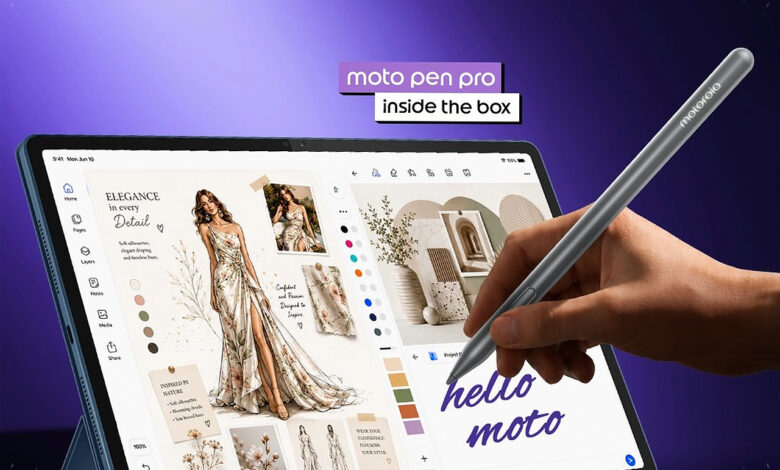
Motorola stands out by including a stylus in the box. For users who want to write, sketch, or annotate documents, that bundled accessory can reduce the need for extra spending.
Xiaomi buyers, by contrast, must purchase the digital pen and keyboard separately. For someone planning to use the tablet as a work device, that can raise the total cost noticeably.
Battery life also helps separate the two models. Moto Pad 70 Pro carries a 10,200mAh battery and adds splash resistance, while Xiaomi Pad 8 uses a 9,200mAh cell that is still adequate for a standard workday.
The larger battery gives Motorola more breathing room away from a charger, but Xiaomi remains attractive for users who value portability, a glare-friendly screen, and a lighter body over sheer endurance.
| Model | Battery | Accessory Situation | Extra Note |
|---|---|---|---|
| Moto Pad 70 Pro | 10,200mAh | Stylus included | Splash resistance included |
| Xiaomi Pad 8 | 9,200mAh | Pen and keyboard sold separately | More portable overall |
For buyers who want a tablet that feels more complete for work out of the box, Moto Pad 70 Pro has the clearer edge. For those who prioritize a lighter device that is easier to carry and more comfortable for reading, Xiaomi Pad 8 looks like the more practical pick.