


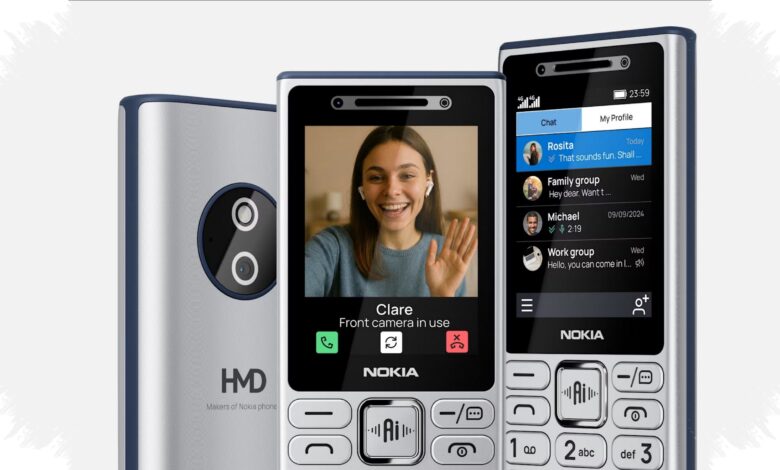
HMD is trying to reshape the image of the feature phone with four new Nokia models that add a dedicated AI button. The move is unusual because devices long associated only with calls and SMS are now being positioned as entry points to practical AI tools.
The lineup consists of the Nokia 200 4G, Nokia 210 4G, Nokia 215 4G (2026), and Nokia 235 4G (2026). All four keep the familiar physical keypad design, but each one also brings modern features aimed at making everyday communication easier.
AI support on a simple handset
The most notable addition is the dedicated AI button connected to a voice assistant developed through a collaboration between HMD and Sikey AI. Users can ask questions, issue voice commands, and access several phone functions without having to move through complicated menus.
HMD is using that approach to bring AI experiences to a simpler and more affordable device category. The company also appears to be broadening access to digital assistance for users who have not moved to smartphones.
Classic design, updated connectivity
Despite their simple appearance, all four models support 4G networks. That should improve call quality compared with older feature phones and make them more relevant for current communication needs.
The phones also run on S30+, the operating system long used across Nokia’s feature phone line. HMD has focused the series on ease of use and battery durability rather than complexity.
Xpress video calling is also built in, giving the keypad phones a more complete communication profile. That feature moves them beyond basic voice and text use.
| Model | Display | Battery / Camera |
|---|---|---|
| Nokia 200 4G | 2.4-inch QVGA | 1,450 mAh removable battery |
| Nokia 210 4G | 2.4-inch QVGA | 1,450 mAh removable battery |
| Nokia 215 4G (2026) | 2.8-inch IPS | Removable battery not specified |
| Nokia 235 4G (2026) | 2.8-inch IPS | 2 MP rear camera, VGA front camera |
Where the four models differ
The Nokia 200 4G and Nokia 210 4G both use a 2.4-inch QVGA display, a size that suits calls, messaging, and basic menu navigation. Their 1,450 mAh removable batteries also make them practical for users who want a quick battery swap.
Meanwhile, the Nokia 215 4G (2026) and Nokia 235 4G (2026) step up to a 2.8-inch IPS screen. The larger panel should make menus and content easier to view on a compact device.
The Nokia 235 4G (2026) adds a 2 MP rear camera and a VGA front camera. That combination is meant for video calling and simple documentation needs.
Practical extras that complete the package
All four phones support microSD cards up to 32 GB. HMD also included a USB Type-C port for easier charging, which is a noticeable upgrade for a keypad phone family.
By bringing AI, cloud services, and video calling to an affordable handset, HMD is pushing feature phones into a more modern role. The strategy may divide opinion, since some users still prefer feature phones to stay minimal and distraction-free.
Even so, the Nokia 200 4G, Nokia 210 4G, Nokia 215 4G (2026), and Nokia 235 4G (2026) show that Nokia’s classic keypad phones are still evolving. They are no longer defined only by basic utility, but increasingly by how much modern function can fit into a familiar shell.