


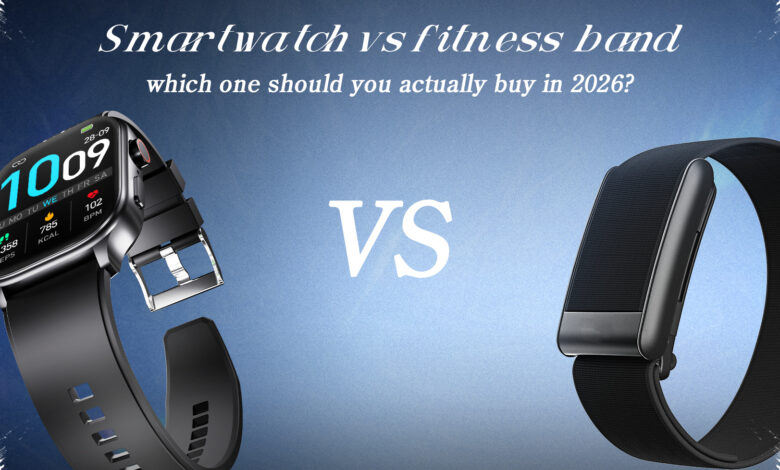
Wearables are entering a new phase in 2026, and AI-powered smartwatches are beginning to pull attention away from smart bands in the affordable segment. The shift is being driven by more makers embedding AI functions directly into wrist-worn devices.
The change matters because smart bands and smartwatches are no longer competing only on price and basic tracking. The newest devices are pushing wrist wearables toward a more personal and context-aware experience, especially for users who want more than step counts and sleep graphs.
Smartwatches Are Moving Beyond Basic Tracking
Samsung is among the most closely watched names ahead of Galaxy Unpacked in July 2026. At that event, the latest Galaxy Watch line is expected to bring more complete AI-based health and productivity features.
Google is also expanding its AI presence through Gemini and Wear OS development. Together, those moves are helping reshape wearables into digital assistants that can respond to context rather than act only as companion devices for smartphones.
That shift is visible in the feature sets now being associated with AI smartwatches. These devices are starting to offer health analysis, daily activity recommendations, adaptive workout reminders, Gemini integration, and widget layouts that adjust to user needs.
| Device Type | Main Focus | Typical Capabilities |
|---|---|---|
| Smart Band | Basic needs | Steps, heart rate, sleep, light exercise |
| AI Smartwatch | Productivity and health | Health analysis, activity recommendations, notifications, navigation, AI integration |
At the system level, Wear OS 7 is also expected to bring dynamic widgets, better battery efficiency, safety features, and stronger AI integration. For users, that means the watch is becoming less of a passive tracker and more of an active interface for everyday tasks.
Smart Bands Still Have a Clear Role
Even with that momentum, smart bands remain relevant for users with simpler expectations. They are still attractive because they are much more affordable and usually deliver longer battery life.
Core functions such as counting steps, monitoring sleep quality, tracking heart rate, and recording light workouts are still handled well by smart bands. For many buyers, that is enough to justify choosing the simpler device.
By contrast, AI smartwatches are a better fit for users who want higher productivity from a wearable. They can combine notifications, apps, navigation, deeper health insights, and AI ecosystem features in one device.
AI Alone Should Not Be the Buying Decision
Samsung has also introduced new health features such as Heart Health Score, Daily Cardio Load, and Fitness Index through a Samsung Health update for Galaxy Watch devices. At the same time, the growing role of Wear OS and Gemini shows that AI is becoming central to the user experience, not just an extra feature.
Still, buyers are being reminded not to choose a wearable simply because it carries an AI label. Smartphone compatibility, software update support, sensor accuracy, battery life, and daily needs remain important factors in any purchase decision.
In the end, the choice between a smart band and an AI smartwatch depends on budget, expectations, and how much value the user will actually get from the device. Smart bands are still likely to hold their place as a practical option as long as they continue to cover the basics at a competitive price.