


Apple is reshaping its Mac chip roadmap around artificial intelligence, and the shift is more aggressive than many expected. The company is no longer treating CPU speed, battery efficiency, or thinner designs as the main priorities, according to Bloomberg’s Power On newsletter cited by gadget.viva.co.id.
The revised plan stretches through 2028 and changes the role of the M-series line in a major way. M6 is now expected to arrive only as a base chip, while M7 and M8 are being prepared as the next foundation for Macs and Apple’s AI server ambitions.
M6 Is Being Kept to a Base Version Only
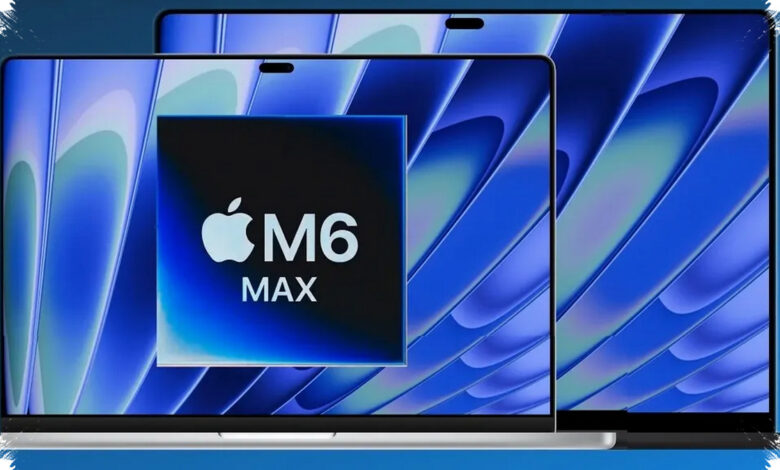
Apple reportedly plans to release M6 at the end of 2026, but only in its standard form. The Pro, Max, and Ultra variants are said to be removed, which would make it the first time Apple Silicon skips its usual multi-tier rollout.
The chip is expected to debut in the first touchscreen MacBook Pro, but Apple appears to be slowing the expansion of the M6 family. The company’s attention has already shifted toward the next generation.
| Chip Generation | Planned Release | Variant Status |
|---|---|---|
| M6 | End of 2026 | Base version only |
| M7 | H1 2027 to 2028 | Base, Pro, Max, Ultra |
| M8 | 2028 | Base and high-end versions |
M7 Is Positioned as the Real AI Leap
M7 is being designed as Apple’s major jump in on-device AI capability. The rollout begins with the base chip in H1 2027, followed by M7 Pro and M7 Max in late 2027, and M7 Ultra in 2028.
The standout part is M7 Ultra, which is said to support up to 1.5 TB of unified memory. That is twice the capacity of M5 Ultra, and it is meant not only for creative workstations but also for Apple’s next-generation AI servers.
M8 Moves Toward a 1.4nm Process
M8 is being developed on TSMC’s 1.4nm process, a step that goes well beyond the 3nm era of M4 and the 2nm era planned for M7. Apple is using the codename “Soko” for the base version and “Cardinal” for the high-end variant.
With a smaller manufacturing node, Apple wants stronger on-device AI performance while maintaining power efficiency. The broader goal is to build a chip lineup that can compete more directly with Nvidia toward the end of the decade.
Why Apple Is Removing M6 Pro, Max, and Ultra
The decision to narrow M6 is tied to the pace of internal development. Bloomberg’s Power On said the M7 design was completed only six months after work on M6 started, which is unusually fast by chip development standards.
Rather than add variants that could fall behind quickly, Apple seems to be choosing a leap-ahead strategy. The approach echoes the company’s 2020 move away from Intel, when it opted for a bigger shift instead of a slow transition.
Apple Is Building Its Own AI Server Stack
Apple’s AI push is not limited to consumer devices. The company is also preparing its own server infrastructure, separate from AWS, Google Cloud, and Azure.
In the near term, Apple is said to use M5 Ultra-based servers with the internal codename J246. For the longer term, it is preparing next-generation servers based on M7 Ultra in 2029, with support for up to 1.5 TB of memory.
| Server Focus | Chip Base | Target Timing |
|---|---|---|
| Short-term server | M5 Ultra | 2026–2027 |
| Long-term server | M7 Ultra | 2029 |
This strategy is meant to give Apple control over the full AI stack, from user devices to data centers. It also supports Apple Intelligence with lower latency, stronger privacy protection, and less dependence on third-party cloud providers.
The Apple Car Project Still Casts a Shadow Over the New AI Strategy
One of the most notable threads in this shift comes from the canceled Apple Car project in 2024. The project reportedly consumed more than $10 billion, but its work did not disappear when it ended.
Thousands of engineers, hundreds of patents, and dedicated research facilities were redirected into the Neural Engine and Apple Intelligence. Machine learning technologies originally built for autonomous vehicles are now becoming part of AI features in iOS 18, macOS Sequoia, and newer M-series chips.
Apple now appears determined to make AI private, fast, and tightly integrated with its devices. In that vision, the chip is no longer just a performance component, but the center of a strategy Apple wants to control from end to end.