


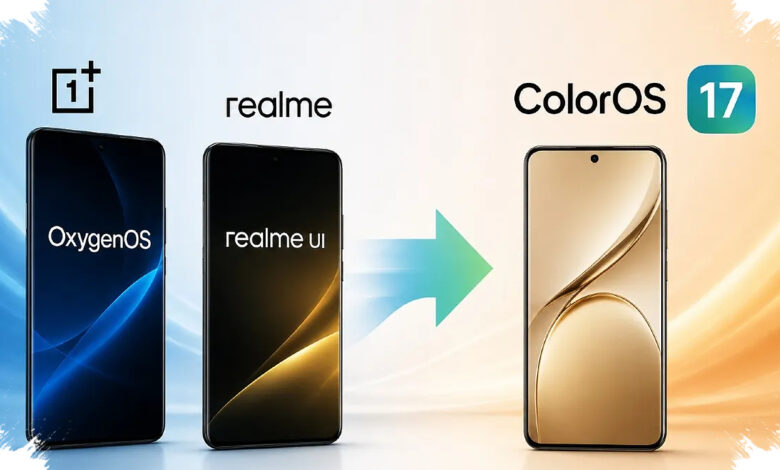
Realme is preparing to stop using Realme UI on new smartphones in India, with ColorOS 17 set to take its place. The move brings Realme closer to Oppo and OnePlus through a more unified software development strategy.
The decision gives users a clearer view of how the three brands may handle software in the future. Rather than maintaining separate interfaces, the companies are moving toward a shared platform intended to streamline engineering and updates.
A Common Platform for New Realme Phones
Realme India confirmed in a media briefing, as reported by GSMArena, that upcoming smartphones will launch with ColorOS 17 instead of Realme UI. The company has not identified the first model that will make the transition.
ColorOS 17 is expected to arrive on Oppo devices before reaching the next Realme lineup. For existing users, the change may not feel like a complete departure because Realme UI and ColorOS already share many design elements, features, and system applications.
| Device | Software Status | Transition Detail |
|---|---|---|
| Upcoming Realme smartphones | ColorOS 17 | Will no longer use Realme UI |
| Realme GT 8 Pro | Launched with Realme UI 7 | Will move to ColorOS 17 before the next software version |
Realme has also said that eligible devices will receive the ColorOS 17 update in line with their individual software support commitments. The Realme GT 8 Pro is one named example, having debuted with Realme UI 7 and carrying a promise of four Android OS updates.
OnePlus Keeps an Option to Return
OnePlus has announced a similar path for eligible smartphones after the official release of ColorOS 17. Users will be able to move from OxygenOS to ColorOS, while the company will also provide an option to return to OxygenOS later.
The company said a common software platform can improve update delivery, software quality, and engineering efficiency. Existing OnePlus devices will continue to receive software updates, security patches, warranty coverage, and after-sales support according to their established schedules.
The latest shift also carries a historical irony for Realme, which began with ColorOS before introducing Realme UI in 2020. Its return to ColorOS therefore represents a consolidation of platforms rather than an entirely new software direction.
For some users, the move may signal a weaker distinction between the software identities of individual brands. From a business perspective, however, Realme and OnePlus are positioning a shared foundation as a way to manage future update cycles more efficiently.