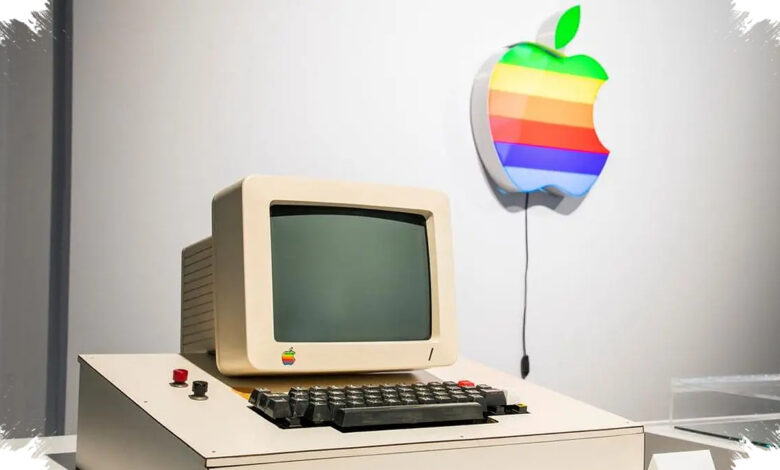
A 50-unit order from Byte Shop gave Apple’s first computer project a route beyond the hobbyist market. The opportunity also imposed a demanding condition: every Apple-1 board had to be delivered as a fully assembled computer rather than a kit for customers to solder.
Paul Terrell, owner of the Mountain View store, agreed to buy the 50 Apple-1 boards for USD 500 each. That order pushed Steve Jobs and Steve Wozniak to take assembly, testing, and delivery seriously at a time when personal computing remained a small, undeveloped market.
The Apple-1 was publicly introduced in July 1976 at the Homebrew Computer Club in Palo Alto, California. Its production process involved Jobs’ family garage, where friends helped install chips, test completed boards, and prepare them for shipment.
The garage was not the main birthplace of the Apple-1 design. Wozniak developed, tested, and refined the machine’s code in his Cupertino apartment and at his Hewlett-Packard work cubicle.
A Computer That Still Needed Key Parts
Buyers paid USD 666.66 for an Apple-1 board, but the purchase did not provide a complete modern-style computer. They still needed to obtain essentials such as a keyboard, display, case, and power supply.
The price came from a one-third profit margin above the USD 500 wholesale cost, along with Wozniak’s interest in repeating numbers. Even with its limitations, the board could display text on a composite monitor, an important capability in the early personal-computer era.
| Component | Details | Included in Initial Package |
|---|---|---|
| Processor | MOS Technology 6502 at about 1 MHz | Yes |
| Memory | 4 KB RAM | Yes |
| Display support | 40 columns by 24 rows on a composite monitor | Supported by circuitry |
| Keyboard, display, case, power supply | Basic computer equipment | No |
| Cassette interface | For loading programs, including Wozniak’s BASIC | Optional |
Personal Belongings Funded the First Boards
Before the Byte Shop order, Jobs and Wozniak had limited funds to turn their prototype into a more reproducible product. They used proceeds from selling personal belongings to order professionally made printed circuit boards.
Wozniak sold his HP-65 scientific calculator for USD 500, although he later recalled that the buyer paid only about half that amount. Jobs sold his Volkswagen van for only a few hundred US dollars and then relied on a bicycle for transportation.
Those sales reflected the financial risk behind the company’s earliest steps. Wozniak brought the technical ability to build the computer, while Jobs helped turn it into a product intended for sale.
From Rough Board to Major Collectible
Apple produced only about 200 Apple-1 boards before shifting its attention to the more developed Apple II. The limited production has made surviving units historically significant collectibles.
Apple-1 units now regularly sell at auction for hundreds of thousands of US dollars, with exceptional examples commanding much higher values. In early 2026, a very early Apple-1 prototype board sold for USD 2.75 million during Apple’s 50th anniversary period.
The auction result stands far from the project’s modest origins in a calculator sale and a used van. It also underlines how the early Apple-1 helped move personal computing from enthusiast-built hardware toward ready-to-sell machines.