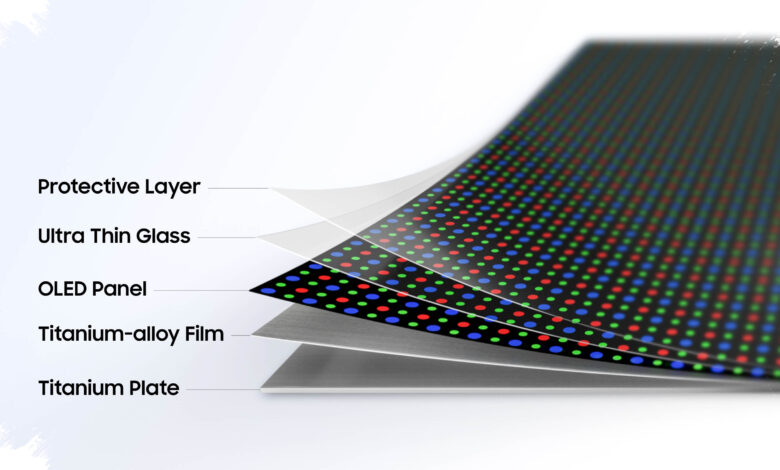
Samsung Electronics is using titanium in a new display structure intended to make foldable screen creases less visible while preserving a thin and light device design. Called Flex Titanium, the technology addresses durability and crease visibility, two continuing concerns for foldable smartphone users.
The development is focused on the structure behind the OLED panel rather than on removing the need for the display to bend. Samsung Display is combining material engineering with display design to support repeated folding in daily use.
Two Titanium Components Inside the Display Module
Flex Titanium combines two titanium-based components that perform different structural roles inside the display module. One reinforces the internal display structure, while the other supports flexible movement and stability around the folding area.
| Component | Position or Function | Main Benefit |
|---|---|---|
| Titanium-alloy film | Placed beneath the OLED panel | Reinforces the internal display structure |
| Titanium plate | Supports the display module | Maintains flexibility and display stability |
The titanium-alloy film is positioned below the OLED panel as an internal reinforcing layer. Samsung says the material offers mechanical stiffness up to 20 times higher than conventional polymer film.
Despite that stiffness, the layer can be made as thin as about one-third of the diameter of a human hair. This characteristic matters for foldable devices, which require stronger components without adding excessive thickness.
The titanium plate supports the display module through precision hole processing. Its structure is intended to let the screen move flexibly at the fold while remaining stable when the device is fully opened.
Samsung Display applies micropatterned hole technology to the folding section of the titanium plate. The approach is designed to create a flexible structure at the bend without overlooking long-term device durability.
Kyung-Jin Yoo, EVP and Head of Mobile Display Product Development Team at Samsung Display, said, “Through the application of micropatterned hole technology to the folding section of the titanium plate, we were able to create a structure that remains flexible while delivering strong durability.” The statement underlines the importance of the hinge and folding area in foldable display development.
Display Quality Remains Part of the Plan
Samsung is also pairing its high-resolution display architecture with the latest generation of organic OLED materials. The combination is intended to deliver sharper images, improved color reproduction, and more efficient power use.
According to Samsung Display, material development and display structural design are being advanced together. The company is therefore positioning durability improvements as part of a broader display experience rather than as a trade-off against visual quality.
Sunghoon Moon, EVP and Senior Executive of the Mobile R&D Office – H/W at Samsung Electronics, said Samsung’s foldable strengths stem from understanding user needs and translating them into practical innovation. He also pointed to development experience from seven Galaxy Fold generations as a foundation for the next generation of foldable displays.
Samsung has linked its forthcoming Galaxy foldable generation to a more advanced viewing experience built on years of display and material engineering. Flex Titanium shows how premium phone competition is increasingly involving mechanical design, materials, and OLED efficiency alongside conventional hardware specifications.