


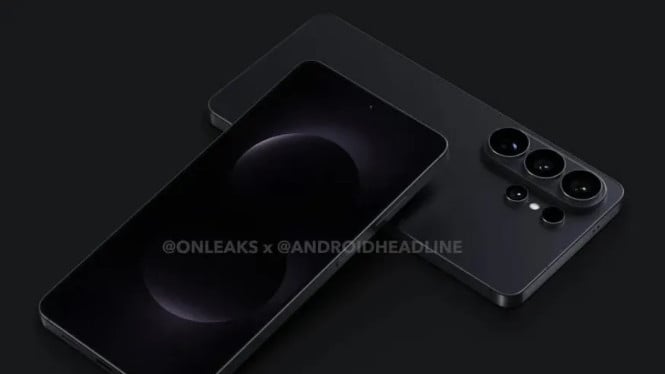
Samsung is set to launch the Galaxy S26 Ultra with a camera system almost identical to its predecessor, the S25 Ultra. According to the latest leak from the tech insider @Yawn on X (formerly Twitter), Samsung retains nearly all camera hardware from the previous generation.
The Galaxy S26 Ultra will feature the same main 200 MP ISOCELL HP2 sensor as the S25 Ultra. Alongside it, the ultrawide and 5x telephoto lenses remain unchanged, while only the 3x telephoto lens receives a slight upgrade. This marks a rare move by Samsung to abstain from major camera innovations in their flagship lineup.
Camera Specifications: Mostly Unchanged
The S26 Ultra continues with a four-camera rear setup and a single front camera. The details are as follows:
- Main camera: 200 MP, Samsung ISOCELL HP2 sensor (unchanged)
- Ultrawide camera: 50 MP, Samsung JN3 sensor
- Telephoto 5x zoom: 50 MP, Sony IMX854 sensor with periscope lens
- Telephoto 3x zoom: 12 MP, Samsung S5K3LD sensor (up from 10 MP)
- Front camera: 12 MP, Sony IMX874 sensor
Three of the four rear cameras remain the same, with only the 3x zoom lens seeing a minor resolution bump from 10 MP to 12 MP. This is the first time in several Samsung generations that no major sensor upgrades occur.
The Single Upgrade: Telephoto 3x Lens
Samsung’s only hardware tweak for the S26 Ultra is the replacement of the 10 MP 3x telephoto sensor with a 12 MP Samsung S5K3LD sensor. This new sensor offers:
- Aperture of f/2.4
- About 20% more pixels than the old sensor
- Slight improvements in detail and low-light performance
However, this change does not affect the optical zoom range or introduce advanced stabilization or new image processing features. It is a cautious enhancement rather than a generational leap.
Introducing APV Video Format
Samsung will introduce a new video recording format called APV (Advanced Photo Video) on the Galaxy S26 Ultra. APV aims to blend photo and video capabilities, allowing users to extract high-quality still frames from video footage more easily.
APV comes in two versions:
- APV HQ (High Quality): Approximately 1.5 GB per minute of footage
- APV LQ (Low Quality): Roughly 750 MB per minute
For comparison, standard 4K 60fps video consumes between 300 to 600 MB per minute. This makes APV files notably larger and more storage-intensive. While innovative, APV is likely targeted at content creators rather than casual users.
Reasons Behind Minimal Camera Changes
Several strategic factors explain Samsung’s decision to keep the camera mostly the same:
-
S25 Ultra Already Very Competitive
The 200 MP ISOCELL HP2 sensor on the S25 Ultra has received excellent reviews for image quality and detail. Samsung may see limited value in replacing a well-optimized sensor. -
Shift in Focus to AI and Software
Rather than upgrading hardware, Samsung appears to prioritize AI-driven photography features, such as real-time image processing and integration within its Galaxy AI ecosystem. -
Tick-Tock Release Strategy
The S26 Ultra cycle may represent a “tick” year focused on refinements and efficiency, following a “tock” introduction of major changes with the S25 Ultra. - Global Market Challenges
With premium smartphone sales slowing and fierce competition from Apple and Google, conserving production costs while maintaining user experience might be Samsung’s approach.
Other Notable Upgrades in the Galaxy S26 Ultra
Although the camera hardware sees little change, the S26 Ultra offers enhancements in other areas:
- Snapdragon 8 Elite Gen 5 for Galaxy chipset with exclusive tuning
- Larger 5,500 mAh battery (up from 5,000 mAh)
- 60W wired fast charging
- Support for Qi2 wireless charging standard with magnetic accessory compatibility, similar to Apple’s MagSafe
- Slimmer, larger device body with slightly curved edges for improved grip comfort
These updates demonstrate Samsung’s commitment to performance, battery life, and user convenience instead of purely camera innovation.
Community Reaction to the Leaks
The news of minimal camera upgrades sparked divided opinions among tech communities on Reddit and X. Some praised Samsung for retaining a proven system, while others expressed disappointment over the lack of groundbreaking features. One comment noted, “If Samsung doesn’t upgrade the camera on the S26 Ultra, when will they? This is supposed to be the flagship for 2025.”
The consensus is that the S26 Ultra will appeal to users upgrading from older models like the S23 Ultra but might feel underwhelming to those expecting a major leap, especially against rival flagships rumored with new sensors.
Samsung’s Galaxy S26 Ultra is poised to be a refinement rather than a revolution in smartphone photography. Until its official release in early 2026, enthusiasts will watch closely to see if “good enough” translates to sustained market success or if the company must push the envelope further in future iterations.