


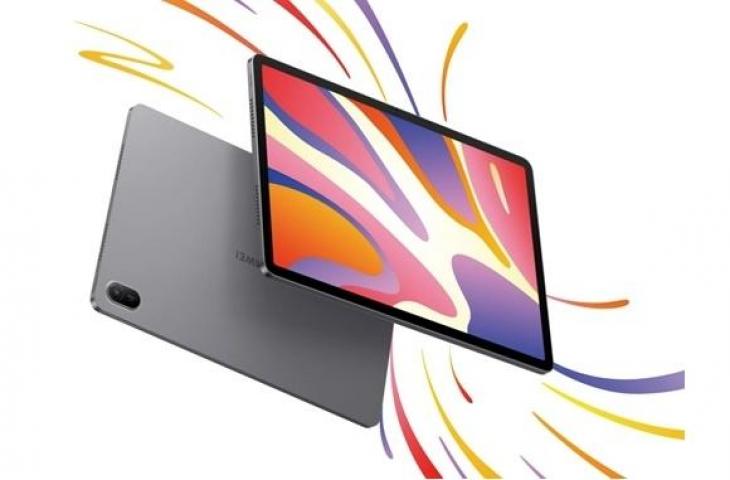
Comparison Between Motorola Moto Pad 60 Neo and Huawei MatePad SE 11: Detailed Review and Key Features
Choosing between the Motorola Moto Pad 60 Neo and Huawei MatePad SE 11 inches can be challenging for users seeking a capable Android tablet with a good display, solid performance, and affordable pricing. Both tablets offer distinct advantages in design, screen quality, battery capacity, and accessory support.
Price and Positioning
The Motorola Moto Pad 60 Neo costs approximately $180 (IDR 2.75 million) for the 4GB RAM and 128GB storage variant. In contrast, the Huawei MatePad SE 11-inch model with 6GB RAM and 128GB storage is slightly cheaper at around $163 (IDR 2.5 million). This pricing difference makes Huawei more budget-friendly, especially for users favoring additional RAM.
Design and Build Quality
Motorola’s tablet features a unibody aluminum chassis measuring 254.59 x 166.15 x 6.99 mm and weighing 490 grams, finished in Pantone Bronze Green with a matte texture. It carries an IP52 rating, providing moderate protection against dust and splashes, and includes a bundled Moto Pen stylus powered by AAAA batteries. This design emphasizes ruggedness and creativity support.
Meanwhile, the Huawei MatePad SE 11 measures 252.3 x 163.8 x 6.9 mm and weighs lighter at 475 grams. Its sleek frame combines aluminum and glass, offered in Nebula Gray and Crystal Blue finishes. The tablet boasts a superior IP65 rating, granting enhanced splash resistance. The M-Pencil Lite stylus is compatible but sold separately, catering more to users who prioritize portability and style over included accessories.
Display Features
The Motorola Moto Pad 60 Neo is equipped with an 11-inch IPS LCD panel at 2.5K resolution (1600 x 2560 pixels). It supports a 90Hz refresh rate and up to 500 nits brightness, delivering sharp visuals with a pixel density near 274 PPI. This screen is suitable for multimedia consumption with Dolby Atmos audio, but the lower refresh rate may affect smoothness compared to competitors.
On the other hand, Huawei’s MatePad SE 11 uses an 11-inch IPS LCD 2.2K panel (1200 x 2000 pixels) with a smoother 120Hz refresh rate but slightly lower brightness of 400 nits. Its 3:2 aspect ratio and anti-glare coating benefit productivity, especially in vertical usage. The more fluid scrolling and wet touch technology enable better stylus responsiveness but with marginally less brightness for outdoor use.
Performance and Software
The Moto Pad 60 Neo runs on a MediaTek Dimensity 6300 chipset built on a 6nm process, featuring an octa-core CPU up to 2.4 GHz. It includes 4GB RAM, expandable virtual memory up to 8GB, 128GB storage, and supports 5G connectivity. Running stock Android 15 with Motorola’s AI tools, this setup scores around 350,000 on AnTuTu, capable of handling lightweight gaming like Free Fire at low settings and multitasking of six or more apps with ease.
Meanwhile, the MatePad SE 11 uses the Kirin 710A octa-core processor up to 2.0 GHz, paired with 6GB RAM and 128GB storage. It achieves an AnTuTu score near 250,000. HarmonyOS 3.1 powers the device, offering the AppGallery ecosystem without Google Mobile Services. Its GPU Mali-G51 is sufficient for basic office applications and media playback, making it suited for everyday use but less optimized for gaming or 5G.
Camera Capabilities
For casual photography and video calls, the Moto Pad 60 Neo’s rear camera is 8MP (f/2.0, autofocus), accompanied by a 5MP front camera. It supports 1080p video recording at 30fps with AI document scanning mode. The Huawei MatePad SE 11 slightly edges ahead with an 8MP rear camera and a higher-resolution 8MP front camera featuring dynamic HDR. This configuration is better for selfies and video blogging, though neither device includes optical image stabilization.
Battery Life and Charging
Motorola’s tablet contains a 7040mAh battery with 20W charging, delivering 10 to 12 hours of typical screen-on time. It takes about two hours to fully recharge and benefits from the energy-efficient Dimensity platform to maintain standby life up to two days. Conversely, Huawei extends battery capacity to 7700mAh with 22.5W fast charging, offering 9 to 11 hours of screen time and a faster 1.5-hour recharge. HarmonyOS’s optimizations contribute to a smooth power experience with quad speakers tuned by Histen 9.0 for enriched audio.
Summary Table
- Price: Moto Pad 60 Neo ~$180; MatePad SE 11 ~$163
- Design: Moto – 490g, IP52, bundled stylus; Huawei – 475g, IP65, stylus sold separately
- Display: Moto – 11" 2.5K, 90Hz, 500 nits; Huawei – 11" 2.2K, 120Hz, 400 nits
- Processor: Moto – Dimensity 6300, 5G; Huawei – Kirin 710A, no 5G
- RAM/Storage: Moto – 4/128GB; Huawei – 6/128GB
- Camera: Moto – 8MP rear/5MP front; Huawei – 8MP rear/8MP front HDR
- Battery: Moto – 7040mAh, 20W; Huawei – 7700mAh, 22.5W
- Audio: Moto – Dolby Atmos; Huawei – Histen 9.0
Both tablets serve distinct user needs. The Motorola Moto Pad 60 Neo is optimal for users wanting a better display, 5G connectivity, and a bundled stylus for creativity and entertainment. Meanwhile, the Huawei MatePad SE 11 is ideal for those preferring a lighter, splash-resistant device with more RAM and longer battery life for productivity and media consumption.
Choosing between these models depends on personal priorities like stylus inclusion, portability, screen refresh rates, and network preferences. Both options offer solid value below $200, addressing the entry-level tablet market effectively in 2025.