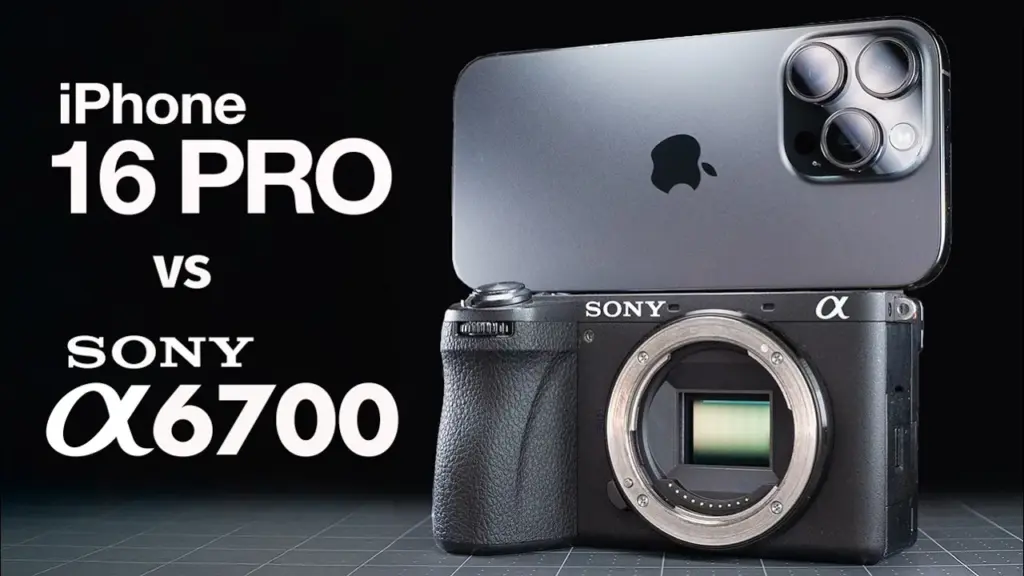
The battle between the iPhone 17 Pro and the Sony a6700 is heating up as 2025 approaches. Both devices push the boundaries in their respective categories, targeting content creators seeking the best camera performance for various needs. This article breaks down their key features and performance differences to help you decide which camera suits your lifestyle or professional work.
Apple’s iPhone 17 Pro integrates a 48MP Pro Fusion sensor powered by the A19 Pro chip. It supports 4K video recording at up to 120fps in ProRes RAW format, accompanied by Apple Log 2 for easier color grading. On the other hand, the Sony a6700 features a larger 26MP APS-C sensor and impresses with AI-assisted autofocus covering up to 759 focus points. It offers a rapid burst shooting speed of 11fps, appealing especially to photographers who want precise manual control.
Camera Sensor and Optics
Sensor size plays a critical role in image depth and quality. The iPhone 17 Pro leverages computational photography to simulate shallow depth of field effects, enhancing background blur or bokeh. In contrast, the Sony a6700 offers true optical control over depth of field thanks to interchangeable E-mount lenses like the Sigma 18-50mm f/2.8. However, achieving optimal output with the Sony requires investing in additional lenses and accessories, while the iPhone’s zoom optics provide a flexible 5x optical zoom in a pocket-friendly design.
Battery life differs based on shooting duration and style. The iPhone 17 Pro lasts between 6 to 12 hours for video recording depending on usage. Meanwhile, the a6700 uses the NP-FZ100 battery, which generally supports longer continuous shooting sessions, making it suitable for lengthy professional projects.
Image and Video Quality
When tested in bright lighting conditions, the Sony a6700 excels with natural highlight rolloff and filmic skin tones free from magenta bias. This makes it a popular choice among filmmakers and photographers seeking authentic color reproduction. The iPhone 17 Pro offers vibrant color saturation designed for social media sharing, providing vivid images directly on its display.
Low-light performance is an area where the iPhone 17 Pro shines due to its advanced AI algorithms, producing sharp images with minimal noise even without stabilizers. The Sony a6700 needs fast lenses to come close to this level but benefits from in-body image stabilization (IBIS). Despite IBIS, Sony’s stabilization lags slightly behind Apple’s superior handheld video smoothing, which removes the need for external gimbals in many scenarios.
The slow-motion capabilities also differ. The iPhone supports 4K at 120fps, allowing flexible editing options without compromising resolution. Sony matches the 120fps frame rate but at a lower resolution, requiring additional post-production effort to maintain quality.
Usability and Workflow
In terms of portability, the iPhone 17 Pro’s slim and lightweight build fits easily in pockets, making it convenient for everyday use. The Sony a6700, with its magnesium alloy grip and articulating screen, caters to users who prefer solid handling for extended shooting sessions and versatile framing angles.
Connectivity reflects their target audiences. Sony’s a6700 offers multiple inputs such as microphone and HDMI ports, supporting professional audio and video setups. The iPhone 17 Pro relies on a single USB-C port, often necessitating adapters for advanced rigs. However, Apple’s seamless integration with iCloud and editing tools like Final Cut Pro simplifies workflows compared to the manual file transfers required by Sony’s SD cards.
Photographers leaning towards cinematic photography appreciate the Sony a6700’s broader tonal ranges and more film-like photo quality. The iPhone 17 Pro excels in speed but may lack some depth in static image aesthetics, suiting creators prioritizing ease and rapid turnaround.
Pricing and Value
Price points influence decision-making strongly. The Sony a6700, priced around $1,360 including a basic lens, targets users willing to invest in high-quality interchangeable optics. The iPhone 17 Pro starts at approximately $1,020 and offers a multifunctional device combining phone and camera capabilities in one package. Both provide long-term value depending on your artistic demands and budget constraints.
Discussions on tech forums like Reddit highlight the a6700’s sensor size and control advantages for serious creators. Meanwhile, the iPhone’s night photography and video features continue receiving praise for AI enhancements. Ultimately, testing each device yourself is recommended to determine fit.
This comparison reflects the dynamic evolution of camera technology in smartphones and mirrorless systems. Apple pushes innovation in mobile photography, while Sony maintains traditions favored by professionals requiring dedicated equipment. Both the iPhone 17 Pro and Sony a6700 remain crucial tools shaping creative industries in 2025.