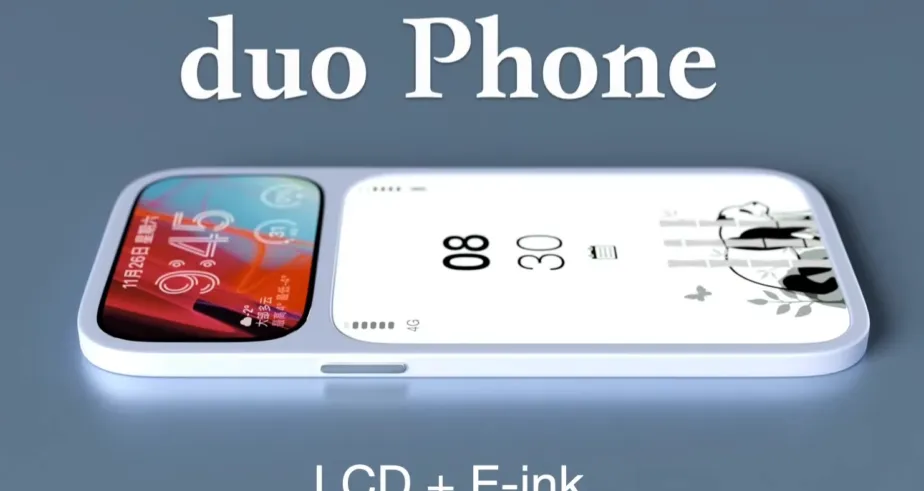
A new smartphone design concept called Pixel Duo presents a unique approach to front displays. Instead of a single large screen, it features two separate front-facing panels with distinct technologies and functions.
Unlike typical dual-screen smartphones, where the second screen is often on the back or side, Pixel Duo places both screens on the front. This innovative layout combines a 3.5-inch LCD and a 5.2-inch E-ink display, creating a hybrid user experience.
The smaller LCD screen offers a resolution of 1280 x 800 pixels and a smooth 120Hz refresh rate. It is designed for fast, colorful tasks such as camera preview, video playback, and quick app interactions.
Meanwhile, the larger 5.2-inch display uses E-ink technology with a resolution of 1300 x 838 pixels. Known for low power consumption and eye comfort, E-ink is ideal for prolonged reading sessions like browsing articles or e-books.
This dual-screen setup aims to balance productivity and multimedia use. Users can enjoy vibrant content on the LCD while benefiting from the energy efficiency and readability of the E-ink screen for static content.
In terms of battery life, Pixel Duo’s concept holds promise. Because E-ink screens consume power only when updating content, using it for reading tasks could extend battery longevity beyond conventional smartphones.
Currently, Pixel Duo remains a concept without any official production plans by manufacturers, including Google Pixel. Such design experiments often explore innovation but may not reach commercial markets.
The concept reflects ongoing efforts in the mobile industry to break free from the standard flat slab design. It adds to a growing trend where multiple displays and hybrid technologies aim to enhance smartphone versatility.
Other manufacturers have explored secondary screens for notifications or selfies and foldable designs doubling as tablets. Pixel Duo’s dual front displays and mixed technology panels highlight a new direction focused on specialized functionality.
Software integration will be a critical challenge if such designs come to market. Operating systems need to seamlessly switch content between a fast, color LCD and a slower monochrome E-ink screen without disrupting user experience.
Ergonomics and durability with two front panels also require thorough testing. Despite challenges, concepts like Pixel Duo show that smartphone innovation is far from stagnant.
The idea of combining an E-ink reading screen with a traditional LCD display could influence future device designs. It offers a fresh way to optimize both usability and power management in a single device.
While the market response to these radical concepts is uncertain, they push boundaries and stimulate new thinking. Pixel Duo encourages the industry to rethink what a smartphone’s form and function can be moving forward.
-
-
-
-