


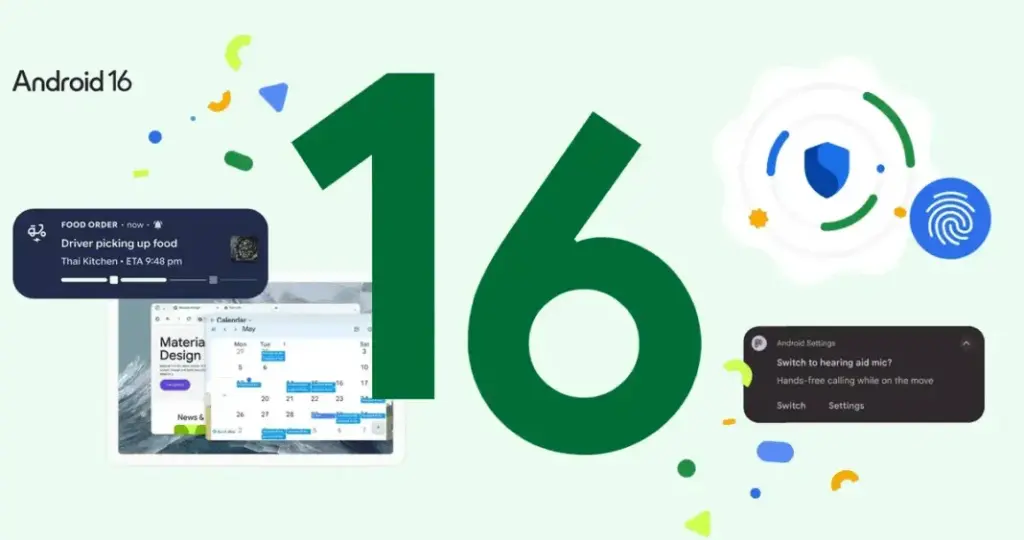
Google has officially released Android 16, their latest mobile operating system version aimed at significantly enhancing artificial intelligence, security, and overall performance. This update continues Google’s commitment to delivering a more personalized and context-aware smartphone experience for users worldwide.
One of the flagship AI features introduced is “AI Assistant+,” a digital assistant designed to be more proactive by understanding conversational context. It analyzes usage patterns, suggests actions, and can automate simple tasks based on user habits, going beyond voice commands to integrate deeply with third-party apps for complex automation.
On the security front, Android 16 debuts a new protection layer called “Privacy Sanctuary.” This feature provides users with granular control over app permissions, including options to selectively share blurred or edited versions of location data and photos. Google has also strengthened kernel-level encryption to safeguard sensitive information against increasingly sophisticated cyber threats.
Performance improvements are powered by “Adaptive Performance” technology, which dynamically allocates processor and memory resources depending on the active applications. This approach aims to deliver smoother system responsiveness while optimizing battery consumption and extending device longevity, especially for mid-range smartphones.
Key Features of Android 16
- AI Assistant+ for enhanced, context-aware digital assistance.
- Privacy Sanctuary for detailed permission management and stronger data encryption.
- Adaptive Performance for balanced resource usage and battery efficiency.
- Cross-Device Continuity enabling seamless activity transfer between smartphones, tablets, Chromebooks, and smart home devices.
Android 16 places emphasis on ecosystem integration, with “Cross-Device Continuity” allowing users to move tasks effortlessly across compatible devices. For example, a document open on a phone can be instantly displayed on a larger screen with a single tap, underscoring Google’s strategy to create a smooth and unified user experience across hardware.
Google Pixel phones are first in line for the Android 16 update, expected to roll out within weeks. Other brands such as Samsung, Xiaomi, Oppo, and Vivo may experience longer waits, ranging from several weeks to months depending on their update policies. Google’s “Android Ready” program is notably designed to accelerate security updates and system upgrades by working closely with these manufacturers.
Android 16 also offers expanded APIs for developers, enabling applications to leverage AI capabilities directly on devices without depending heavily on cloud services. This local processing not only enhances app intelligence but also better protects user privacy by minimizing data transmission.
In a competitive OS landscape where rival platforms are also investing heavily in AI, Android 16’s success will depend on vendor adoption speed and the value users perceive from new features. Many manufacturers might overlay their own custom interfaces and enhancements, influencing the final user experience.
The introduction of Android 16 highlights the importance of keeping devices updated for security. Using outdated systems can expose phones to vulnerabilities, a reality that complements previous findings on how device safety extends beyond physical handling to software maintenance.
For users eager to experience Android 16’s innovations, selecting devices with proven fast update records or choosing Pixel models is advisable. Meanwhile, companion gadgets like Realme Watch 2 Pro and gaming devices like Asus ROG series are expected to benefit from Android 16’s performance and integration improvements.
Android 16 sets a new foundation for mobile experiences by combining smarter AI, enhanced security layers, and deeper cross-device connectivity. Its real-world impact will become clearer as hundreds of millions of diverse Android devices worldwide gradually receive the update and incorporate its advancements into daily use.