


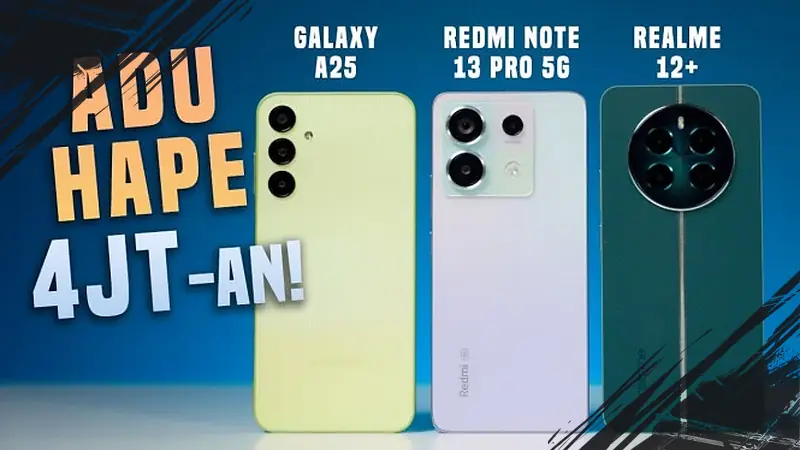
December 2025 is the prime time to hunt for a new budget-friendly smartphone. Among the fierce contenders in the $270 range are the Redmi Note 13 Pro 5G, Realme 12 Plus, and Samsung Galaxy A25 5G. Each device has distinct strengths, making the decision challenging for many buyers.
These three phones target users who want solid all-rounder performance without breaking the bank. This comparison covers performance, battery life, camera quality, display, and design, helping you find the best fit for your daily needs.
Performance: Redmi Leads in Heavy Use
The trio employs different chipsets: Redmi with Snapdragon 7s Gen 2, Realme using Dimensity 7050, and Samsung powered by Exynos 1280. Realme hits the highest Antutu score, boosted by UFS 3.1 storage and Android 14. Redmi tops Geekbench 6 multicore tests, showing superior raw power.
Multitasking runs smoothly across all three, thanks to efficient RAM management. Samsung offers the most balanced experience for daily use. Realme excels in app-launch speed, while Redmi shines in demanding, heavy-duty scenarios.
Battery: Efficient with Variances in Charging Speed
Under heavy usage for 20 minutes, Redmi consumed only 5% battery, while Realme and Samsung each used 6%. Body temperatures during gaming showed Samsung heating up to 46°C, noticeably warmer than Redmi and Realme’s cooler 40-42°C range.
Charging speed reveals a clear gap. Redmi and Realme recharge from 10% to 90% in about 30-40 minutes using 67W chargers. Samsung lags behind, taking over an hour with its 25W charger, marking fast charging as Samsung’s weakest aspect in this comparison.
Camera: Sharp Details vs Vibrant Tones vs Natural Output
The Redmi Note 13 Pro uses a massive 200MP main sensor, while Realme and Samsung opt for 50MP sensors. With 2x zoom on flower shots, Redmi produces the sharpest and most detailed images with accurate color representation. Samsung’s photos tend to look washed out with noticeable oversharpening.
In low-light and night mode, Redmi effectively reduces flare and noise, offering a wider viewing angle than its competitors. Outdoors, ultrawide shots from Samsung and Redmi look natural, though Samsung slightly edges in distortion control.
Macro photography remains the weakest point for all, with digital 2x zoom outperforming dedicated macro lenses. For selfies, Redmi displays natural skin tones, whereas Samsung captures more accurate group photos. When recording 4K video at 30fps, Redmi maintains realistic color, while Realme’s rendition is overly vibrant.
Display: Samsung’s Super AMOLED vs Redmi’s Sharp Resolution
Samsung sports a 6.5-inch Super AMOLED screen with a 120Hz refresh rate, smaller than the 6.67-inch AMOLED 120Hz displays on Redmi and Realme. Samsung’s thicker bezels make it look less modern compared to rivals. Samsung’s panel shines with warm and vibrant colors, but Redmi and Realme offer more balanced visual tones.
Redmi boasts the highest resolution at 1.5K, providing crisp visuals ideal for media consumption. Realme leads in peak brightness, reaching up to 2000 nits for excellent outdoor visibility. Notably, only Redmi supports HDR Dolby Vision for enhanced Netflix streaming.
Design: Elegance, Luxury, or Comfort?
Redmi presents a sleek, elegant, and modern aesthetic. Samsung features a small square pattern that some may feel is outdated. Realme incorporates luxurious design elements reminiscent of its Pro Plus series, emphasizing premium appeal.
In hand, Samsung feels the most comfortable due to smooth edges and pronounced buttons. Samsung is also the heaviest at 197 grams, while Realme weighs 190 grams and Redmi is the lightest at 187 grams. Samsung’s design language carries a flagship vibe even in this affordable segment.
Final Observations
Each phone brings a unique proposition for users seeking the best budget all-rounder. Redmi leads in performance, camera detail, and charging speed. Realme excels in app responsiveness and outdoor display brightness. Samsung offers balanced daily usage and comfortable ergonomics but falls behind in fast charging and camera vibrancy.
Shoppers should consider personal priorities when choosing among these models. Monitoring official prices and special year-end promotions can provide additional value. Investing in any of these smartphones around $270 promises a solid package for diverse everyday needs.