


Samsung Galaxy A36 and A55 both attract attention among budget phones priced around IDR 5 million (~$330) in early 2026. Choosing between a newer model with fresh features and a proven performer can be tricky. Both devices bring unique advantages tailored to different user priorities.
Design and Display Differences
The Galaxy A36 features a new design reminiscent of the S26 series, weighing a lighter 195 grams with a slim 7.4 mm thickness. It uses a plastic frame while still offering Gorilla Glass Victus Plus protection on the back cover. In contrast, the A55 boasts an aluminum frame, providing a premium feel, and also uses Gorilla Glass Victus Plus for durability. The display on A36 measures slightly larger at 6.7 inches versus A55’s 6.6 inches, with A36 achieving a brighter peak brightness of 1200 nits. Both support 120Hz refresh rates and have in-screen fingerprint sensors, but A36’s thinner bezels give a more immersive viewing experience.
Camera Capabilities
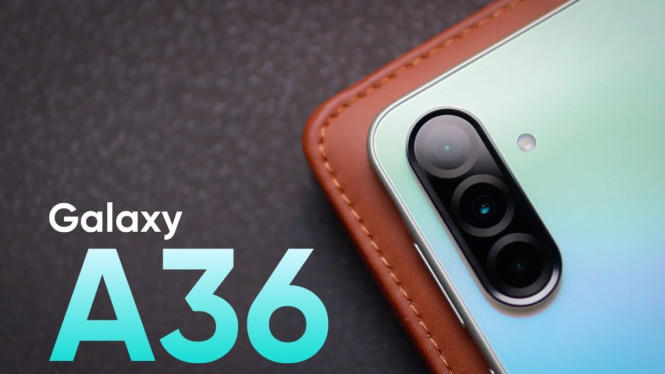
Samsung equipped the Galaxy A36 with a 50MP main camera featuring Optical Image Stabilization (OIS), an 8MP ultrawide lens, a 5MP macro sensor, and a 12MP selfie camera. The Galaxy A55, however, carries a higher resolution ultrawide camera at 12MP and a 32MP front camera. Despite these differences, the A36 utilizes improved sensor technology, resulting in comparable photo quality. Both phones can record 4K video at 30fps using front or rear cameras, making them equally capable for content creators. The newer sensor on A36 mitigates the impact of lower megapixels, delivering sharp selfies and consistent image quality.
Performance and Storage Options
The A36 runs on the Snapdragon 6 Gen 3 chipset clocked at 2.4 GHz, while the A55 is powered by Exynos 1480 with a slightly higher 2.75 GHz clock speed. Benchmark scores from AnTuTu reveal the A55 scoring around 700,000 points, significantly above the A36’s 500,000, highlighting superior raw performance for gaming and multitasking on the A55. Both devices use efficient 4nm fabrication processes and offer RAM/storage options up to 12GB/256GB. Notably, the A36 omits a microSD slot, limiting storage expansion, whereas the A55 retains an external memory slot, which is advantageous for users requiring more space.
Battery and Software Support
Battery capacity for both models is identical at 5,000 mAh; however, A36 supports faster 45-watt charging compared to A55’s 25-watt, reducing recharge time. Software-wise, the Galaxy A36 offers longer future-proofing with six promised Android OS upgrades, starting from Android 15 One UI 7. Meanwhile, the A55 guarantees four upgrades beginning from Android 14, with three upgrades remaining. Both models come with IP67 water and dust resistance, stereo speakers, NFC, and enhanced AI features, although A36 integrates a more complete and practical AI suite.
| Summary of Key Features | Feature | Galaxy A36 | Galaxy A55 |
|---|---|---|---|
| Design Frame | Plastic, lightweight (195g) | Aluminum, sturdier build | |
| Display Size | 6.7 inches, 1200 nits brightness | 6.6 inches, slightly dimmer | |
| Main Camera | 50MP OIS, 8MP ultrawide | 50MP OIS, 12MP ultrawide | |
| Front Camera | 12MP, latest sensor | 32MP | |
| Processor | Snapdragon 6 Gen 3, 2.4 GHz | Exynos 1480, 2.75 GHz | |
| AnTuTu Score | ~500,000 | ~700,000 | |
| Storage Expansion | No microSD slot | Supports microSD slot | |
| Charging Speed | 45W fast charging | 25W charging | |
| Battery | 5,000 mAh | 5,000 mAh | |
| OS Upgrades | 6 updates from Android 15 | 4 updates from Android 14 | |
| Other Features | IP67, stereo speakers, better AI | IP67, stereo speakers, NFC |
Choosing the Samsung Galaxy A55 makes sense for users prioritizing stronger raw performance, expandable storage, and a tried-and-true experience. Meanwhile, the Galaxy A36 appeals more to buyers seeking the latest features, faster charging, brighter display, and longer software support in a lighter package. Considering the budget constraint of around $330, both phones deliver remarkable value but address different needs and preferences.