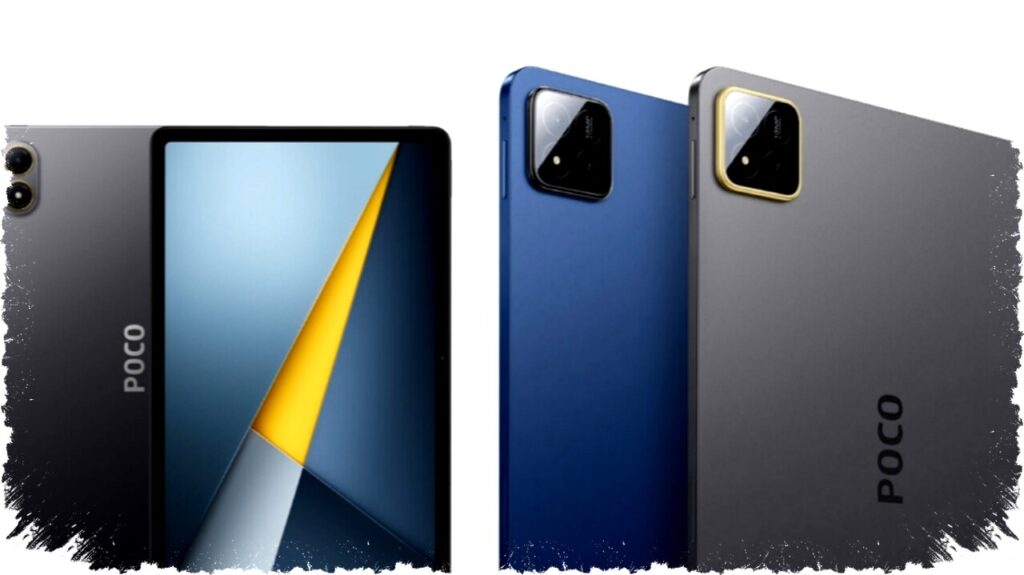
Poco has recently launched two new tablets in Indonesia: the Poco Pad X1 and Poco Pad M1. Both devices aim to offer a compelling multimedia experience but cater to different user needs and budgets.
The Poco Pad X1 features a more compact and lightweight design with an 11.2-inch display. Its screen boasts a sharp 3.2K resolution (3200 × 2136 pixels) and a high refresh rate of 144 Hz. This combination ensures crisp visuals and smooth animations, enhanced further by Dolby Vision support for vibrant video playback.
In contrast, the Poco Pad M1 offers a larger 12.1-inch screen with a 2.5K resolution (2560 × 1600 pixels) and a 120 Hz refresh rate. The wider display makes it suitable for multitasking, reading, and extended viewing sessions. Additionally, it carries TÜV Rheinland certification, which guarantees eye comfort during long use.
When comparing performance, the Poco Pad X1 clearly takes the lead. It is powered by the Snapdragon 7+ Gen 3 chipset, a high-end midrange processor, supported by 8 GB RAM and 512 GB of UFS 4.0 storage. This setup handles gaming, intensive multitasking, and light editing tasks efficiently. Meanwhile, the Poco Pad M1 runs on Snapdragon 7s Gen 4, tailored for everyday activities, with 256 GB storage expandable via microSD cards up to 2 TB.
Battery capacity differs significantly between the two models. The Poco Pad M1 includes a robust 12,000 mAh battery, supporting 33W fast charging and 27W reverse charging, ideal for all-day usage like streaming or hybrid learning. The Poco Pad X1 comes with an 8,850 mAh battery and 45W fast charging. Despite the smaller battery size, its power-efficient processor and faster charging still allow comfortable daily use.
Both tablets have a quad-speaker system with Dolby Atmos for immersive sound. However, the Poco Pad M1 retains a 3.5 mm headphone jack, providing flexibility for wired audio devices. The Poco Pad X1 omits this feature but optimizes sound quality for gaming and multimedia enjoyment.
Camera setups are modest but functional in both devices. The Poco Pad X1 is equipped with a 13 MP rear camera and an 8 MP front camera, suitable for quick snaps and video conferencing. The Poco Pad M1 features identical 8 MP cameras on front and back for simple video calls and casual photography.
In terms of pricing, the Poco Pad X1 is priced at approximately $385 USD, while the Poco Pad M1 is significantly more affordable at around $270 USD. The price gap reflects the trade-off between higher performance on the X1 and better battery endurance on the M1.
Summary Table: Poco Pad X1 vs Poco Pad M1
| Feature | Poco Pad X1 | Poco Pad M1 |
|---|---|---|
| Display Size | 11.2 inches | 12.1 inches |
| Resolution | 3.2K (3200×2136), 144 Hz | 2.5K (2560×1600), 120 Hz |
| Processor | Snapdragon 7+ Gen 3 | Snapdragon 7s Gen 4 |
| RAM | 8 GB | Not specified |
| Storage | 512 GB UFS 4.0 | 256 GB + microSD slot |
| Battery | 8,850 mAh, 45W fast charging | 12,000 mAh, 33W fast charging + 27W reverse charging |
| Audio | Quad speakers, no headphone jack | Quad speakers, 3.5 mm headphone jack |
| Camera (rear/front) | 13 MP / 8 MP | 8 MP / 8 MP |
| Price (USD approx.) | $385 | $270 |
Choosing between these two tablets depends on user priorities. If performance and smoother visuals are paramount, the Poco Pad X1 stands out. For users valuing longer battery life and a larger screen for productivity or entertainment, the Poco Pad M1 offers better value.
Both tablets support a solid multimedia experience with quad-speaker Dolby Atmos systems, making them suitable for gaming, movies, or video calls. The Poco Pad X1’s higher refresh rate and better processor make it more future-proof, while the Poco Pad M1’s expansive battery and headphone jack provide practical advantages for everyday use.
In sum, Poco’s new tablets address different segments by balancing features, price, and user experience. Prospective buyers should carefully evaluate their needs in terms of display size, performance, battery life, and budget to select the right Poco Pad model.